Weekly Writing Summary For The Week Ending 04/16/2026
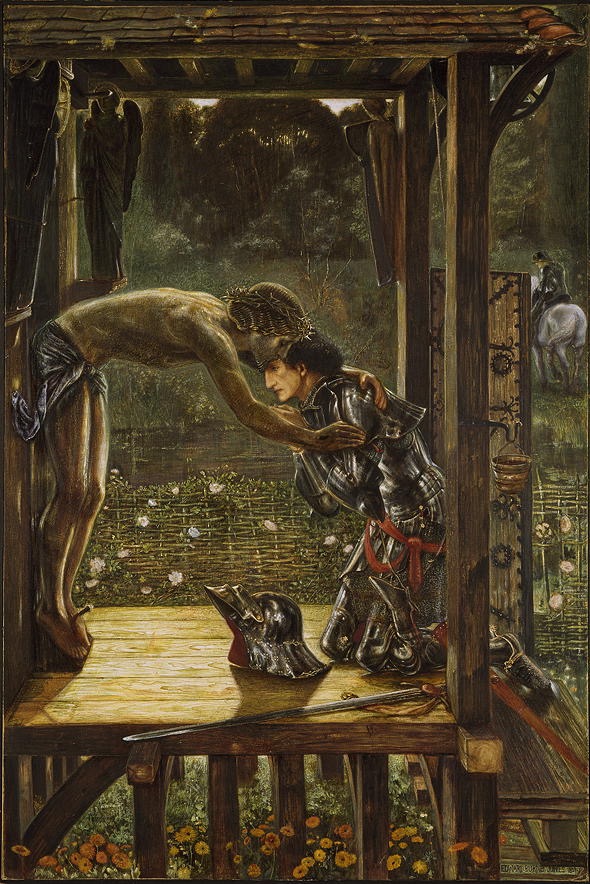
Sir Edward Coley Burne-Jones:
The Merciful Knight
(c. 1863)
This week's EndDays dispatches traced the arc of a chronicler straining under the weight of his own dedication. The series moved from outrage through exhaustion, from the streets of Budapest to a pile of fresh fava beans, from the spectacle of a collapsing administration to the quiet renewal of a Spring kitchen. The week asked how any serious person sustains witness through an ending that refuses to end on schedule, and found its answer not in resolution but in rhythm — the diastolic pause embedded in every heartbeat, the sanity found inside a pea pod, the glimpse of a future already arriving somewhere else in the world.
Thank you for following along!
— — —
Weekly Writing Summary
Parody
“…Make America Meaningful Again, please!”
I register this EndDays Story as a complaint against the serious unseriousness of the present administration, still dedicated to not competently administering anything.
I described myself as a serious person — neither pious nor frivolous — who finds the current administration’s relentless superficiality not entertaining but genuinely threatening. I couldn’t locate any antibodies against the encroaching frivolity. I found myself worrying when I should be singing, fussing when I should be celebrating, sensing the wasting away of something unspeakably precious. These are not Americans, I insisted, though I’ve grown wary of that characterization. They are people who apparently absorbed the opposite of respect as they grew up and learned to administer it with relish. I prayed for a return to serious nonfiction. Make America Meaningful Again.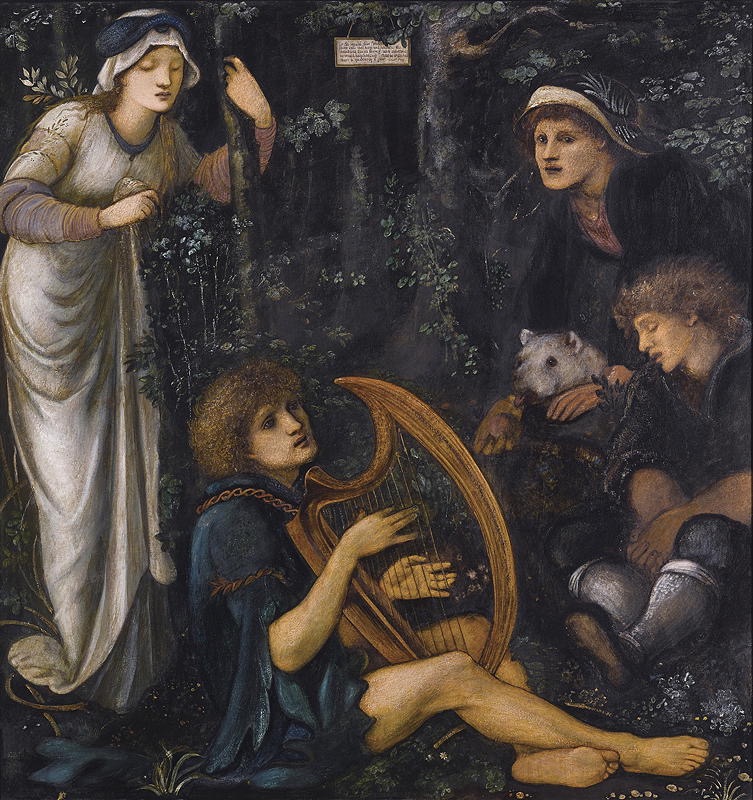
Sir Edward Coley Burne-Jones: The Madness of Sir Tristram (c. 1892)
——
TalkinInto
“Now that it’s here, I fear it might not go away.”
I fear this EndDays Story might prove to be too self-disclosing.
I confessed to something genuinely troubling: I have to talk myself into engaging every morning now. The naturally flowing before-times have given way to extended internal negotiations, to soliloquies I catch myself conducting with no clear resolution in sight. I claimed full ownership of this state — I wouldn’t ascribe my reactions to the provocateurs — but acknowledged experiencing existential dread on a more or less continuous basis. I’d once imagined maturing into expanding self-confidence. Instead, I found myself nattering more and enjoying it less, questioning even the questioning. I’d wished for presence. Now that it’s here, I fear it might not go away.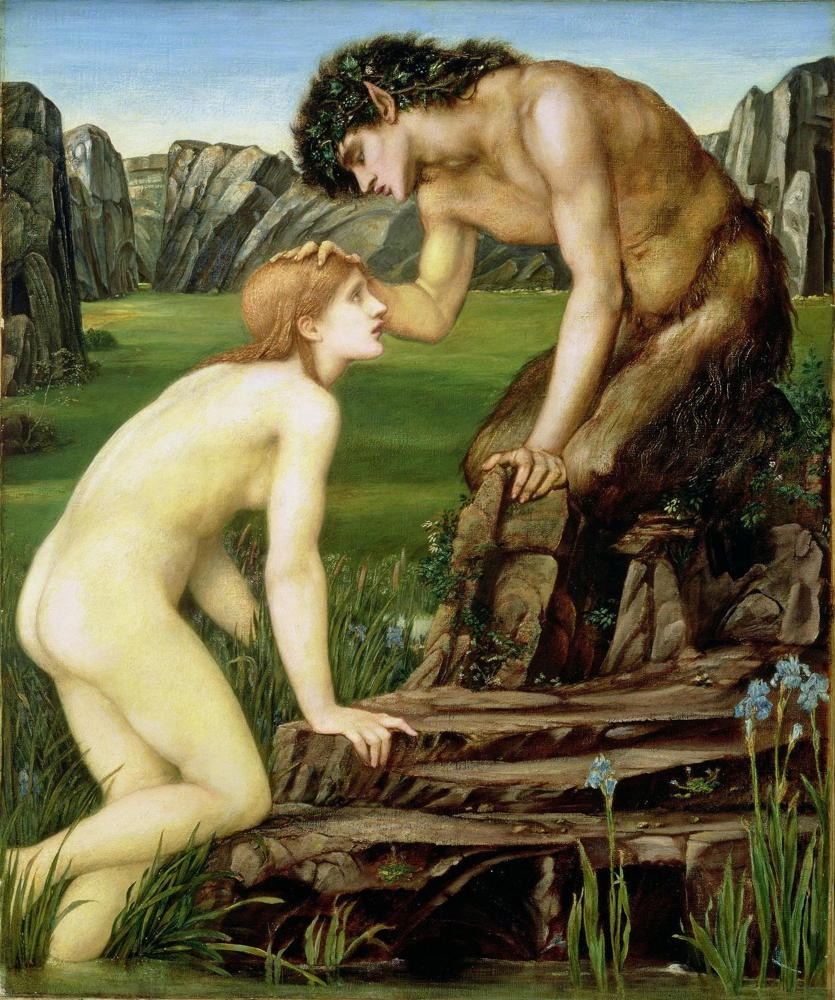
Sir Edward Coley Burne-Jones: Pan and Psyche (c. 1892)
—
Glimpsing
…tall enough to maybe even catch a Glimpse of ourselves standing proud once again.”
This EndDays Story finds me Glimpsing one possible Ending to our present complaints.
The electoral defeat of Viktor Orbán in Budapest lifted my spirit and gave me something I’d been short of: a glimpse of one possible ending to our own complaints. I recalled The Muse’s workshop there a few summers ago — the grand public market, the neighborhood cafes, the living room jazz concert, the bronzed shoes along the Danube shore representing all those the Nazis drowned there. I’d mourned that week once Orbán’s reign turned toxic. This morning, I was reminded of history’s greatest lesson: oppression always proves ultimately unstable, because the young people always eventually refuse to stand by while their lives slip away. We rise, not necessarily as one, but ultimately together, tall enough to maybe even catch a glimpse of ourselves standing proud once again.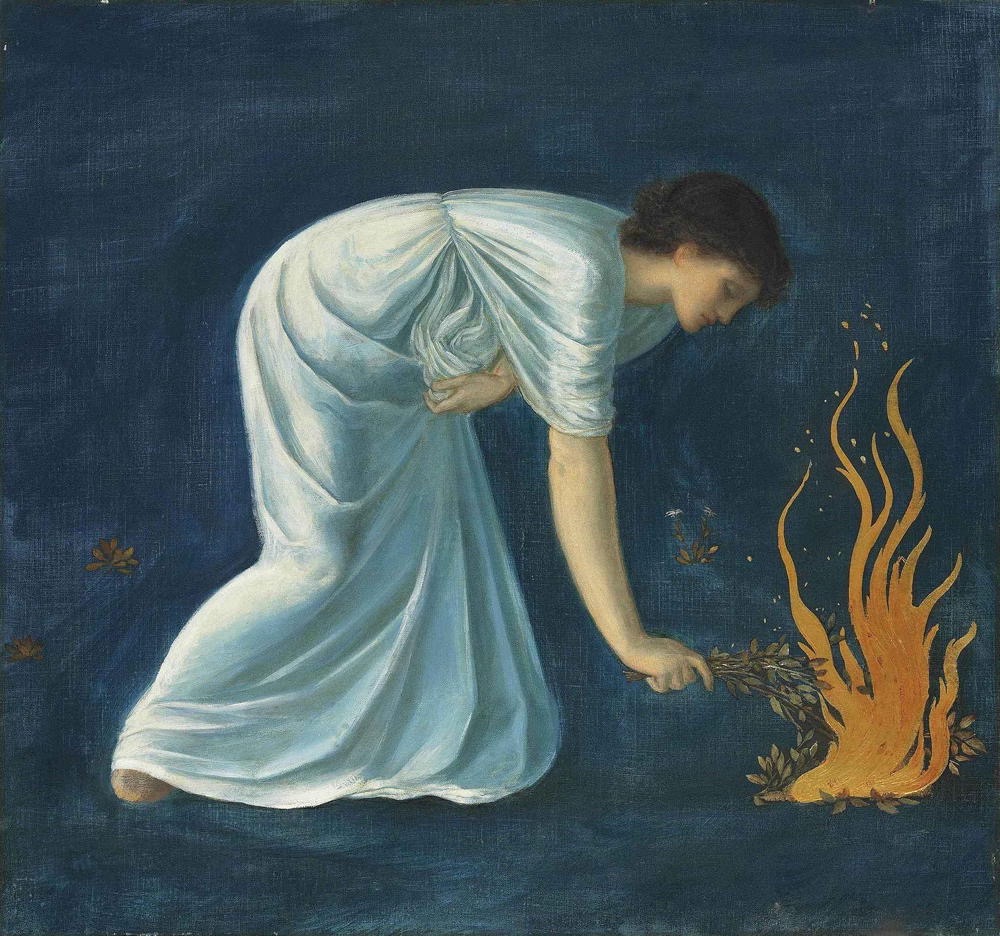
Sir Edward Coley Burne-Jones: Hero lighting the Beacon for Leander (c. 1892)
——
Indulgences
“Better to extend a few mollifying indulgences than mimic the sinner’s self-destruction.”
This EndDays Story equates Trump’s re-election as the American Brexit, and the restrained reaction to his international tyranny as the equivalent of Indulgences bestowed in anticipation of reform not yet deserved or earned.
Trump’s re-election represented the American Brexit — an adolescent act of economic self-separation that our trading partners met not with vengeance but with remarkable forbearance. I called that forbearance Indulgences: conditional forgivenesses extended in anticipation of reform not yet earned. Our allies bet that the insanity would prove temporary, that overreacting would serve no one. It’s a calculated risk, but a wise one. The self-saboteurs always undermine their own initiatives in the end. Better to extend a few mollifying indulgences than mimic the sinner’s self-destruction.
Sir Edward Coley Burne-Jones: Love Among the Ruins (c. 1894)
——
BananaRepuglicans
“…defending our democracy from such villainy going forward forever.”
This EndDays Story pre-celebrates the coming EndDay, when the failing BananaRepuglicans finally lose all respect and relegate themselves to history’s cautionary ashcan.
I pre-celebrated the coming EndDay. The BananaRepuglicans — credit to Jamie Raskin for the coinage BananaRepublicans — have been collapsing under the accumulated weight of their own failures: the Iran War, the joust with the Pope, the AI Jesus imagery debacle, and the evaporation of their base. Day four hundred and fifty-one. With Orbán gone and Putin failing, he’s flailing alone. I know better than to pinpoint the precise moment — commentators have declared dozens of Rubicons since this batch of clowns was elected — but I’ll say it plainly: he’s done. Their reign must thereafter live in infamy only and serve as the foundational cautionary tale defending our democracy from such villainy going forward forever.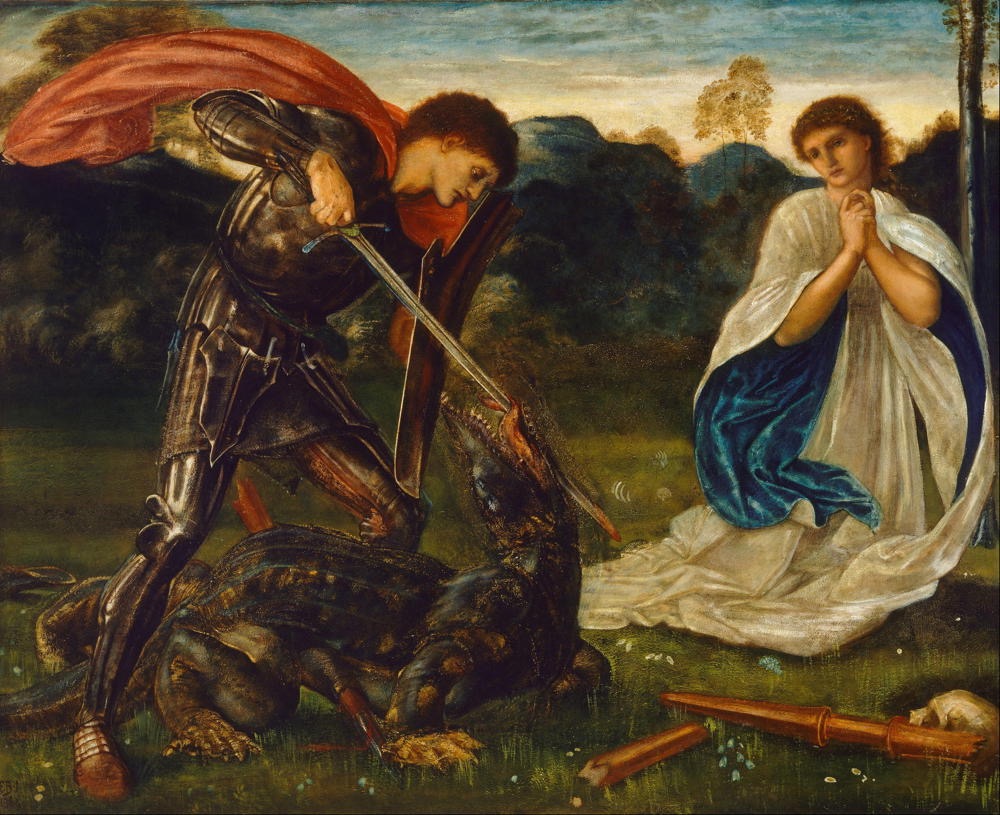
Sir Edward Coley Burne-Jones: The fight: St George kills the dragon VI (c. 1866)
——
DiastolicRelief
“…confident that these EndDays remain well on their way toward ending.”
This EndDays Story finds me seeking DiastolicRelief from an ending that seems to have been taking forever to actually end.
I ended the week shelling peas and a whole pile of fresh fava beans, it being Spring. I hadn’t noticed how exhausted I’d become until the peas arrived to remind me. My dedication to this series had left me hollow — satisfied with what I’d produced, but hopeless about when it might end. The universe created mindless effort to serve as DiastolicRelief. When chronicling world-threatening events proves too onerous, shelling peas draws attention back to something human-scaled that immediately means something meaningful. I sensed creamed peas and potatoes in my immediate future and utterly reset my sense of success. I will have changed back into an innocent again by the following morning, confident that these EndDays remain well on their way toward ending.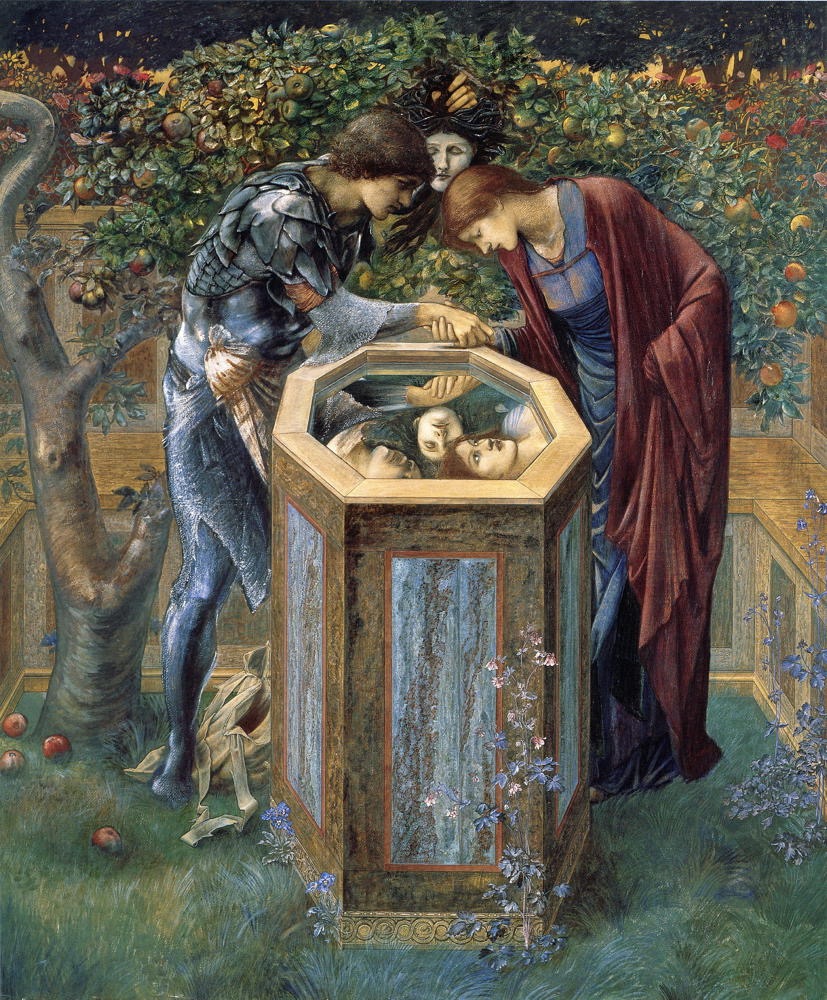
Sir Edward Coley Burne-Jones: The Baleful Head (c. 1885)
——
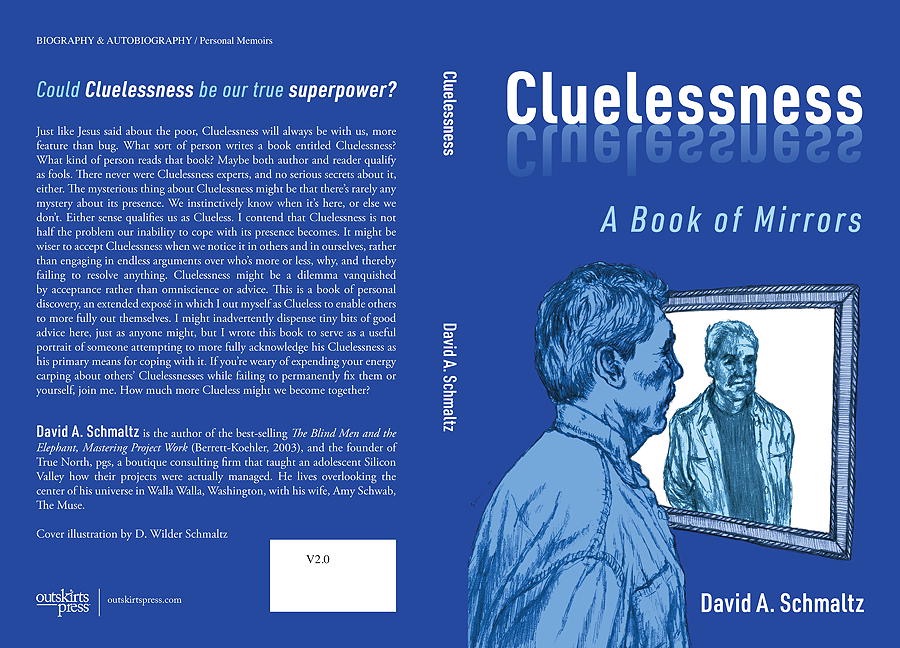
I thought last week that I’d finally cleared the final hurdle for publishing my Cluelessness book, but I hadn’t. Monday morning brought another missive from my Publishing Specialist, this one insisting that I hadn’t specified the cover price or submitted what she called my Annotation, essentially the come-on that will appear in book catalogues and on Amazon’s and Barnes and Noble’s websites. I was exhorted to create something expansive and descriptive, but not to exceed four-hundred-fifty words. I hacked out something, feeling under sudden duress (again), asking Claude® for critique. Let’s say we hacked out the following together. Now I feel as though I’m finally set up as an author.
Cluelessness: A Book of Mirrors by David A. Schmaltz
What kind of person writes a book about Cluelessness? Not someone who has conquered it. Someone still living within it, noticing it daily, and finding that the real difficulty was never the Cluelessness itself but how poorly most of us cope with its inevitable presence.
David Schmaltz has spent decades observing the ways humans navigate a universe far more complex than any of us can fully comprehend. In Cluelessness: A Book of Mirrors, he turns that observation inward, offering ninety short essays that catch the author — and the reader — in the act of not knowing, misreading, over-planning, under-noticing, and stumbling forward anyway.
This is not a self-help book. There are no twelve steps, no prescriptions, no promises of transformation. It offers something rarer: a sustained, wry, warm-hearted investigation into what it actually feels like to be a finite human being embedded in an infinite, indifferent, and occasionally delightful universe. Schmaltz writes about cooking for a crowd without sleeping the night before, about the studied Cluelessness that lets us ignore what we cannot afford to know, about the difference between problems and difficulties, about why driving the speed limit might qualify as a moral act, and about why the most important things we were ever taught arrived without anyone noticing the teaching.
He considers the seductive comfort of StudiedCluelessness, the paradox of KnowingBetter, and the quiet dignity of maintaining one's convictions in a culture that rewards getting away with things. He explores what it means to truly cope with impossibility, why the pursuit of excellence so often guarantees mediocrity, and how the humble public library became the last genuinely decent institution in American civic life. The essays range across daily life — traffic jams, grocery runs, church league softball, learning to cook, reading too many library books — and into larger questions about democracy, competition, truth, liberty, and what it means to make any difference at all. Each story functions as a mirror, angled just so, offering the reader a glimpse of themselves going about their own daily Cluelessness.
Schmaltz writes from the tradition of the great American essayists — observant, self-deprecating, philosophically ambitious without pretension, and genuinely funny without trying too hard. His is a voice readers quickly trust because it never claims to know more than it does. He describes this work as philosophical, autobiographical, historical, and fictional all at once. The label fits. These essays think carefully, emerge from a specific life, document a particular American moment, and hold their facts lightly enough to let deeper truths through.
By the end of Cluelessness, the reader has spent time with someone genuinely attempting to live with integrity, curiosity, and good humor inside conditions no one fully understands. That turns out to be excellent company. The book doesn't solve Cluelessness — it couldn't, and it knows it couldn't — but it offers something more useful: the reassurance that we are all, as Schmaltz puts it, Clueless on this bus, and that coping with that reality a little better might be everything we've got.
For anyone who has ever suspected that the experts don't know much more than the rest of us — and found that suspicion oddly liberating rather than terrifying.
I employed Claude.ai, a commercial AI-powered text editor, using it to perform repetitive copy/pasting work and to create the above story summaries, prompting with: “Please briefly summarize this story in the first person while retaining the original voice.” I manually copy-edited each result.
Thank you for following along!
©2026 by David A. Schmaltz - all rights reserved

Good For A Goose

Decency (90)
Decency Unscrolling (1)
EndDays (92)
Exiled (90)
Fambly (93)
FollowingChapters (93)
Grace (92)
Humor (2)
iAlogue (1)
Letters to the Editor (1)
NextWorld (91)
Personal (18)
Prosperity (42)
Steam Festival (4)
Unscrolling (89)
Vaporized (6)
Work (16)
July 2026
June 2026
May 2026
April 2026
March 2026
February 2026
January 2026
December 2025
November 2025
October 2025
September 2025
August 2025
July 2025
June 2025
May 2025
April 2025
March 2025
February 2025
January 2025
December 2024
November 2024
October 2024
September 2024
August 2024
July 2024
June 2024
May 2024
April 2024
March 2024
November 2006
October 2006
September 2006
August 2006
July 2006
June 2006
May 2006
April 2006
March 2006
February 2006
January 2006