Secrecy
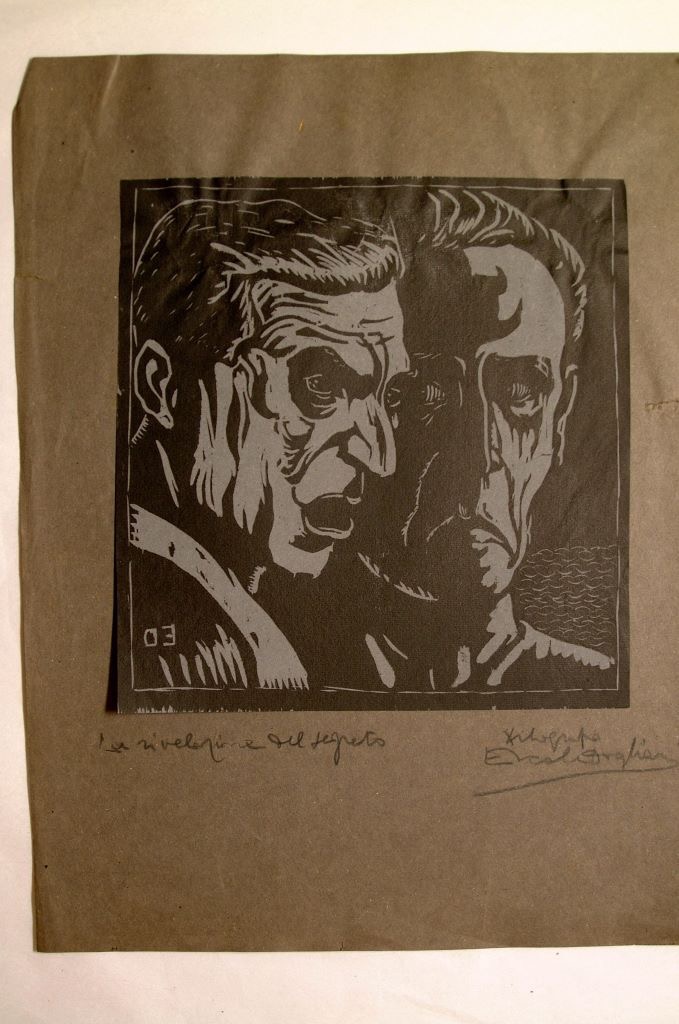
Ercole Dogliani:
The Revelation of the Secret
(1915-1928)
"We feel certain that whatever they're so diligently failing not to disclose will turn out to be either immoral, illegal, unethical, or stupid, with stupid probably ultimately carrying the bulk of the burden."
When I was first learning how to teach, I agreed to deliver the introduction to a five-day workshop. The intro was supposed to greet and orient participants so that they might feel both welcomed and informed. This was not supposed to be a content-rich or in any way subtle performance, just the usual pedestrian presentation we’ve all been subjected to many times. If anything, it should have been forgettable, for whatever content it was intended to deliver should have been so easily assimilated that nobody would even notice that anything interesting or important was transpiring. I was pouring foundation that properly should have been invisible by the time the workshop ended.
I felt nervous, as I always did when presenting. I think it’s a myth that frequent presenters eventually grow comfortable before their crowds. More often, that context sets them on edge, and that edge might translate into useful tension, which might set the performance apart from more casual interaction. I think of those nerves as setting the stage. It took many years of practice before I lost the jitters, and I hadn’t even imagined losing mine at the time I gave this performance. Jittery, I took my place at the front of the group. I was trying hard, probably too hard, to ensure that I didn’t forget to transmit every bit of what I had been charged with sharing. My presence even appeared wooden to me, and I imagined it probably appeared frozen to even the least perceptive audience members. I dedicated myself to keeping my internal state hidden.
I somehow made it to the end of my eternal ten- or fifteen-minute presentation and left the stage. Afterward, my mentor asked me what was going on up there. She had noticed my uncharacteristically wooden presence and just asked. I explained that I was just nervous. She asked why I hadn’t mentioned that to my audience. I explained that I didn’t want them to know how inexperienced I felt. She explained that because I hadn’t explained, my audience had spent most of the time they might have been listening to my orientation, wondering what was going on with their presenter. They were each free to make up whatever story satisfied them in lieu of actually listening to the potentially important information I was so fearfully failing to transmit to them. What might I have done instead? She gave me permission in every future presentation to provide my audience with a peek at my context first. If I was feeling nervous, trying to keep that secret might be the best way to broadcast a mystery to everybody. (I had innocently thought that I was supposed to keep my jitters secret, that disclosing that would earn me demerits, when the opposite was more likely to be the case.)
Secrecy works precisely like this. Something about Secrecy broadcasts that somebody’s ineptly failing to hide something. It attracts more attention than leveling usually does. The paradox of confidentiality involves this heightened awareness; the very attempt to avoid disclosing lights up virtual neon signs highlighting something extremely interesting happening. It draws attention like overripe fruit draws wasps, stingers aching for engagement. Throughout history, the most secretive administrations have been by far the least effective. Those capable of working in more or less full public display have been the most trusted, even with their obvious warts showing. That trust directly translated into greater effectiveness. Those who fought tooth and nail to prevent disclosures, especially those that should have been routine, always failed to prevent disclosures and also undermined their credibility in the process.
There might only be two kinds of Secrecy: that which has already been disclosed and that which has not been disclosed yet. No category of Secrecy successfully avoids eventual disclosure. The Jeffrey Epstein disclosures have attracted greater attention for the machinations our inept incumbent has insisted his minions employ when ultimately failing to prevent disclosures. Each failure amplifies the audience’s prurient interest and expands the size of the interested crowd. This administration, by far the most inept in the history of our Federal administrations, has spent much of its non-refundable tenure mounting unworkable defenses against one or another uncomfortable disclosure. Why they feel moved to engage in efforts that can only be uncomfortably disclosed, if ever, better indicts whatever in the Hell they might be up to. We feel certain that whatever they’re so diligently failing not to disclose will turn out to be either immoral, illegal, unethical, or stupid, with stupid probably ultimately carrying the bulk of the burden. They are busily creating their own Comeuppance.
©2026 by David A. Schmaltz - all rights reserved
Good For A Goose

Comeuppance (62)
Decency (90)
Decency Unscrolling (1)
EndDays (92)
Exiled (90)
Fambly (93)
FollowingChapters (93)
Grace (92)
Humor (2)
iAlogue (1)
Letters to the Editor (1)
NextWorld (91)
Personal (18)
Prosperity (94)
Steam Festival (4)
Unscrolling (89)
Vaporized (6)
Work (16)
October 2026
September 2026
August 2026
July 2026
June 2026
May 2026
April 2026
March 2026
February 2026
January 2026
December 2025
November 2025
October 2025
September 2025
August 2025
July 2025
June 2025
May 2025
April 2025
March 2025
February 2025
January 2025
December 2024
November 2024
October 2024
September 2024
August 2024
July 2024
June 2024
May 2024
April 2024
March 2024
November 2006
October 2006
September 2006
August 2006
July 2006
June 2006
May 2006
April 2006
March 2006
February 2006
January 2006