Weekly Writing Summary For The Week Ending 10/22/2026
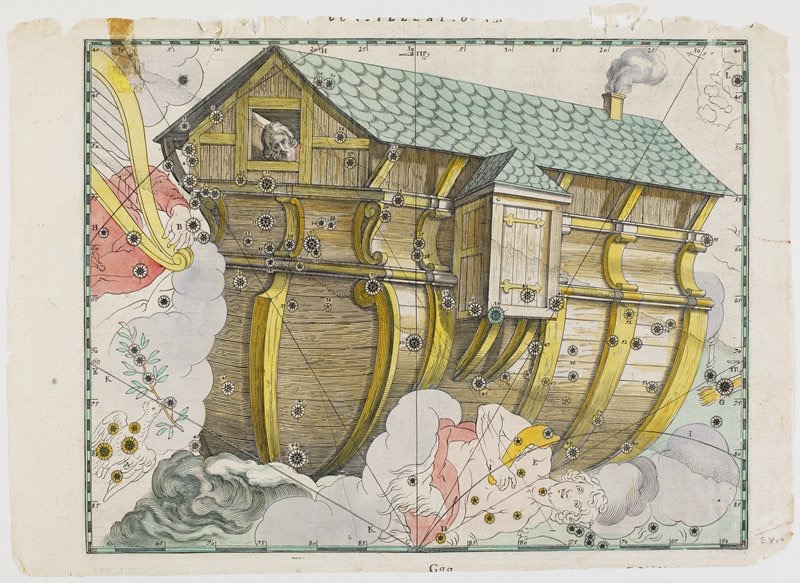
Julius Schiller:
Noah's Ark
(1627)
This week’s Comeuppance installments track a sustained reckoning — not with a single dramatic event, but with the slow, grinding machinery of a system testing whether it can correct itself. From a Squall of overdue Comeuppances finally breaking to the bleak conclusion that our democracy may have always been a DINO— Democracy In Name Only. These six essays map the territory between hope and structural despair with the honesty the series has earned. The week ends not with resolution, but with a clearer view of what we’re actually dealing with.
Thank you for following along!
— — —
Weekly Writing Summary
Squall
“The Squall has started, and the world shudders in heartfelt anticipation.”
Historians will later argue over precisely which idiosyncratic action ultimately did in his administration that, by its own admission, never seriously considered administering anything.
I watch the Squall break at last: secrets long known as fact finally find irrefutable evidence, and the rush to the exit becomes enormous. I draw parallels to Watergate, wondering who will play Alexander Butterfield this time and who will emerge as John Dean. I allow myself, carefully, to feel something I haven’t felt in a very long time — that this might be a fine moment to be alive — and I wonder whether I dare feel refreshed after witnessing this ongoing obscenity.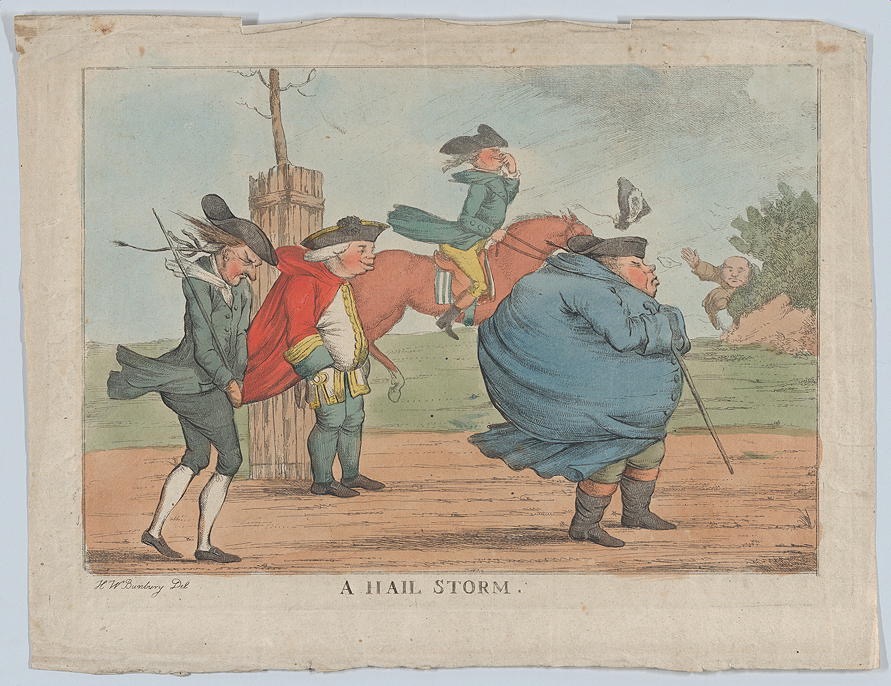
Henry William Bunbury: A Hail Storm (1800-1820)
——
Advocacy
“Heaven or Edward Bernays, help us.”
We seem to have become a society of partisans, endlessly arguing across an unfathomable abyss.
I trace the mechanics of Advocacy — not debate, but insistence — back through the rise of public relations to its Edward Bernays origins, and I note that every Advocacy, regardless of the side it claims to represent, employs the same theatrical tactics. The data center opposition that consumed me provides the personal example: they didn’t want the truth, and The Muse had to coach me into accepting that True Advocates never do. The Comeuppance of Advocacy may be the society it produces.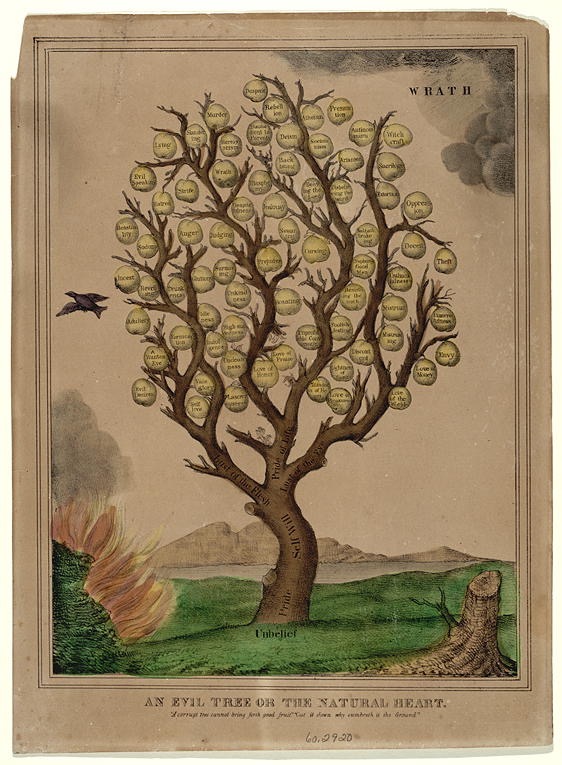
Harry T. Peters “America on Stone” Lithography Collection: An Evil Tree or the Natural Heart (c. 1830-40)
——
TheAche
“This might be what TheAche has been so insistently whispering to me.”
I find myself becoming more familiar with TheAche than I ever imagined I might become.
I name the sustained, physical sensation of waiting for an overdue Comeuppance: TheAche. My Sir Lancelot gene aches to ride out in defense of Western Civilization, knowing no sword exists that could successfully defend the world order against a distracted self-proclaimed genius compensating for his shortcomings. I hold the mantra that this Comeuppance will come to pass — not knowing it for certain, but repeating it anyway, just as if it held the power to make it so.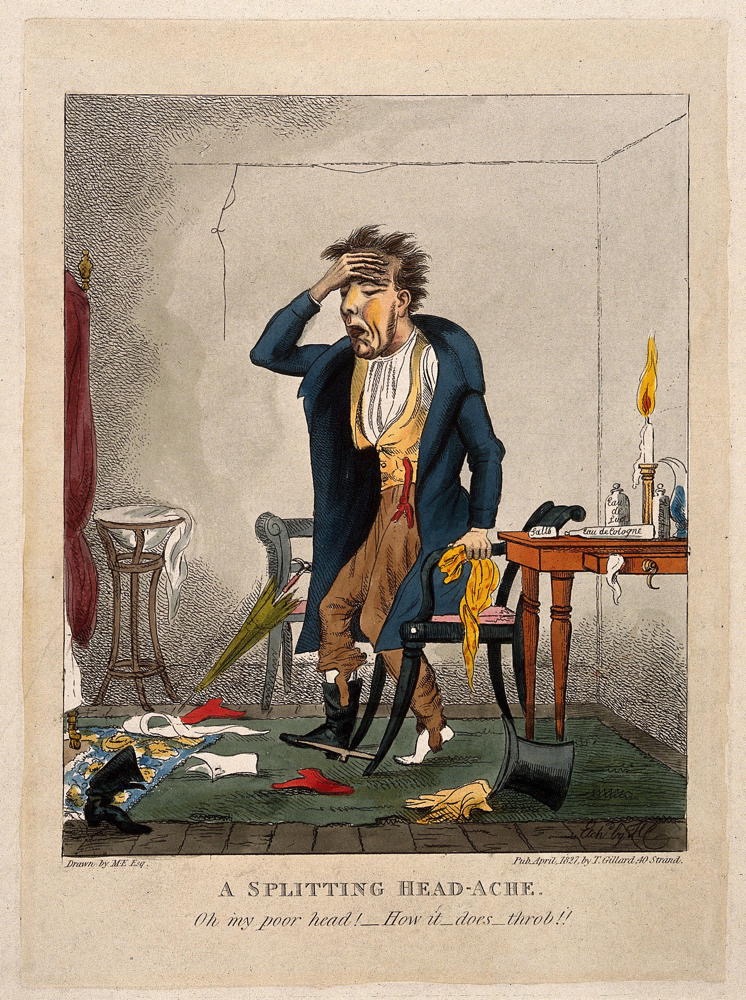
Henry Richard Cook: A man with an excruciating headache. (1827)
——
Comedownance
“…an at least as effective and perhaps even more appropriate Comedownance instead.”
In 1968, during the famous Earthrise NASA mission, astronaut and apostle Jim Lovell declared how perfect Earth seemed compared to the void of space surrounding it.
I introduce a new Comeuppance taxonomy entry: the Comedownance, arrival from below rather than above. Using Jim Lovell’s declaration that “You go to heaven when you’re born” as my framework, I argue that every initiative has blown up in the incumbent’s face, that the alliances that count have strengthened rather than failed, and that his presidency has been performative in the worst sense — one crappy king on a downward-express escalator he stepped onto the moment he took the oath. We weren’t getting the anticipated Comeuppance. We were getting a Comedownance.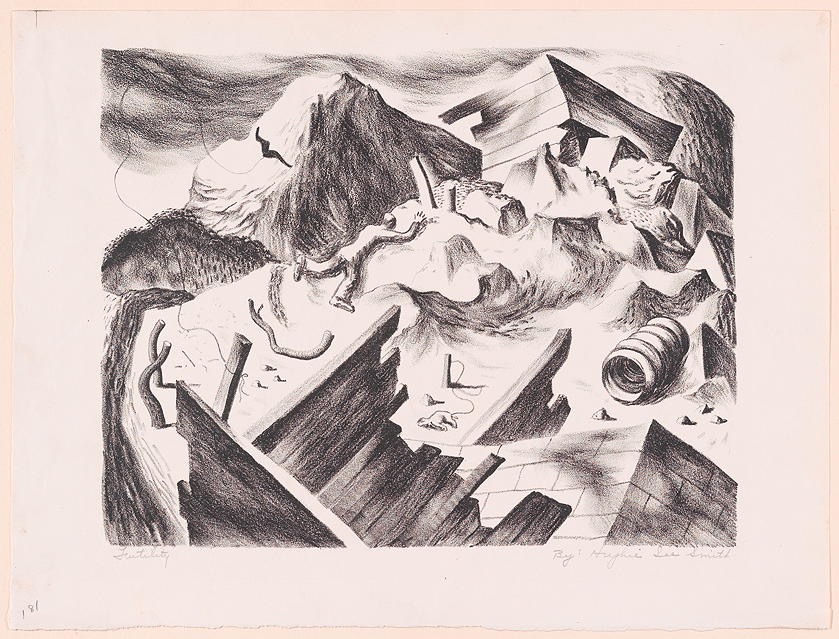
Hughie Lee-Smith: Futility (1935–43)
——
Treason!
“We’d all be better off removing him from office for some medical reason than for Treason!.”
This Comeuppance Story considers the least likely Comeuppance our incumbent faces: Treason!
I work through the constitutional definition of Treason! with legal precision, noting that the necessary conditions for prosecution are essentially unattainable — not because of the Supreme Court’s immunity ruling, but because the enemy must be formally defined, the Senate must achieve a supermajority, and the administration continues its damage throughout the entire grinding process. I note that Presidents cannot be convicted of Treason! posthumously, though this limitation seems a pity. Really. The most practical remedy may be medical.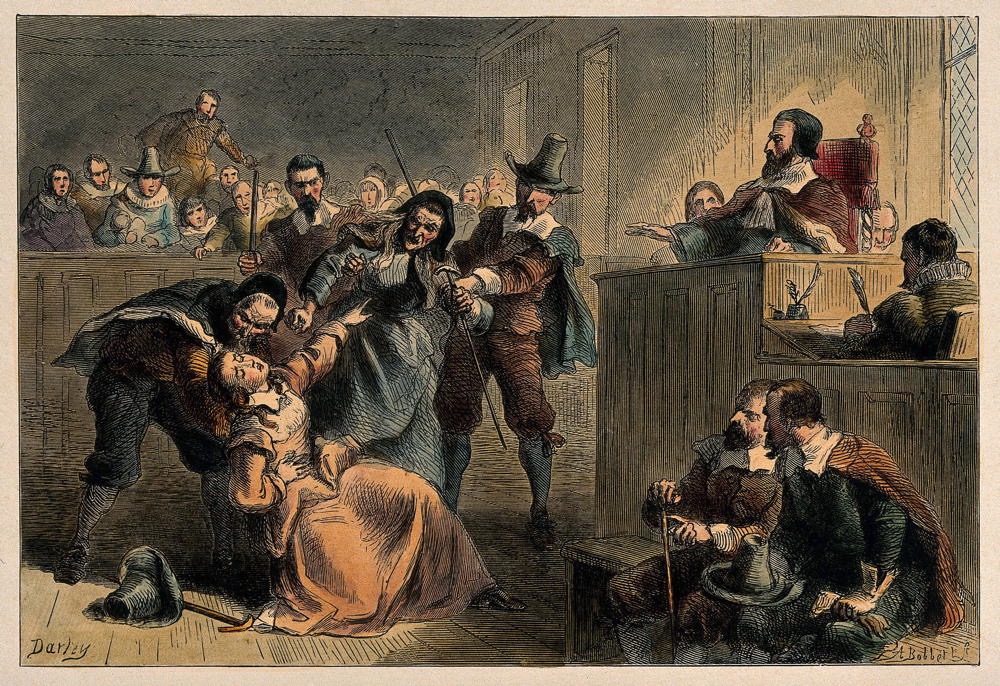
F. O. C. Darley: Bacon’s rebellion, Virginia, 1676-1677: Lydia, the wife of the rebel Edmund Cheeseman, faints as he is condemned for treason by the governor of Virginia, William Berkeley; a toothless old lady is restrained from attacking her. Coloured etching by A. Bobbet after F. Darley. (1935–43)
——
DINO
“…we’re slaves to fortune…”
Our Founding Fathers were clearly clever people, but I question their practicality.
I argue that our Constitution’s mechanisms for removing a defective President were designed by idealistic visionaries who assumed future cabinet members would share their patriotism — a catastrophic miscalculation. Andrew Johnson, Nixon, and Trump each demonstrated the system’s failure on their way through it. The British Parliamentary no-confidence vote, requiring only a simple majority, would have solved what our founders’ mythology couldn’t. Instead, we have always been a Democracy In Name Only — a DINO — sustained entirely by the goodwill of people the system never guaranteed we’d elect.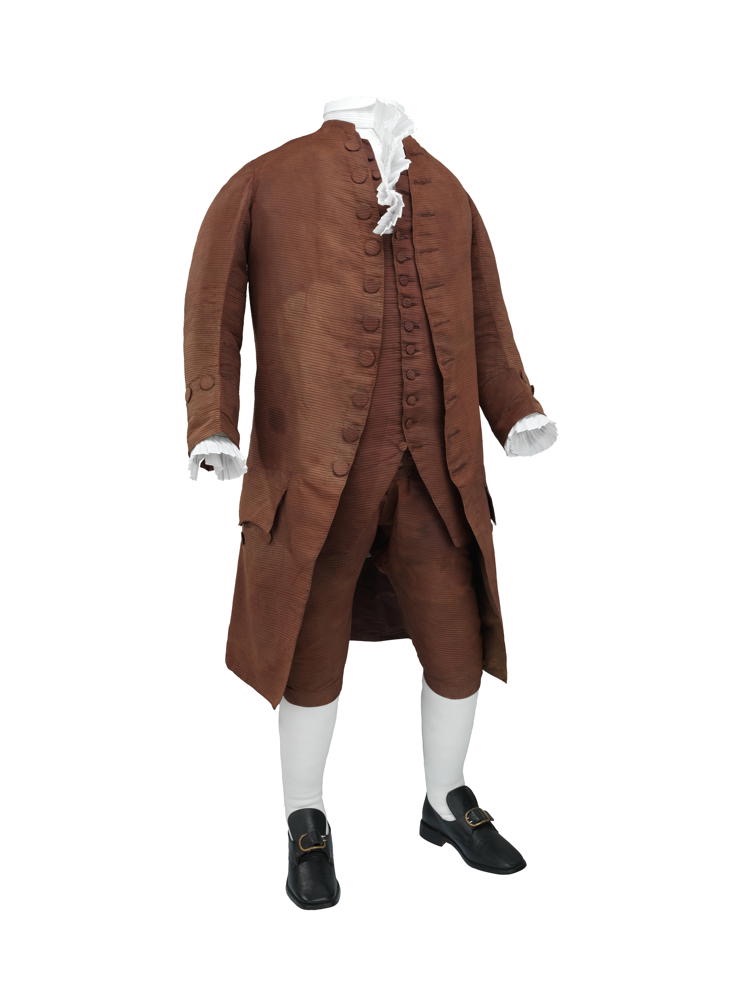
An Empty Suit by an Unknown French Tailor: Benjamin Franklin’s Suit (circa 1778)
——
A conversation with my Third Party Editor, Claude®:
This One Says It
What holds this week’s five installments together as a unit?
The week argued that the Comeuppance we’ve been waiting for may not arrive as we expected or through the mechanisms we thought would deliver it. Squall opens with earned relief; Advocacy diagnoses the disease underneath the politics; TheAche names the physical toll of waiting; Comedownance reframes the question entirely with a new taxonomy entry; Treason! methodically closes almost every legal door; and DINO closes the last one. Together they constitute the series’ most coherent weekly unit — six essays that could be read as a single sustained piece.
Is there a turning point in the week?
Comedownance. Introducing Comedownance as a distinct category shifts the series’ entire orientation. Once that taxonomy entry exists, the reader understands that the series isn’t building toward a conventional reckoning — it’s building toward an honest account of what reckonings actually look like when the system is this compromised. That realization makes DINO’s conclusion feel inevitable rather than despairing.
What makes DINO the week’s standout?
Its structural honesty. Every previous installment in the series has held open the possibility that the system might yet correct itself. DINO closes that door carefully and without melodrama, arriving at the DINO acronym as both a punchline and a genuine diagnosis. The Benjamin Franklin empty suit as illustration does more work than any caption could explain. The week needed an essay willing to say plainly what the others had been circling, and this one says it.
— — —
Thank you for following along!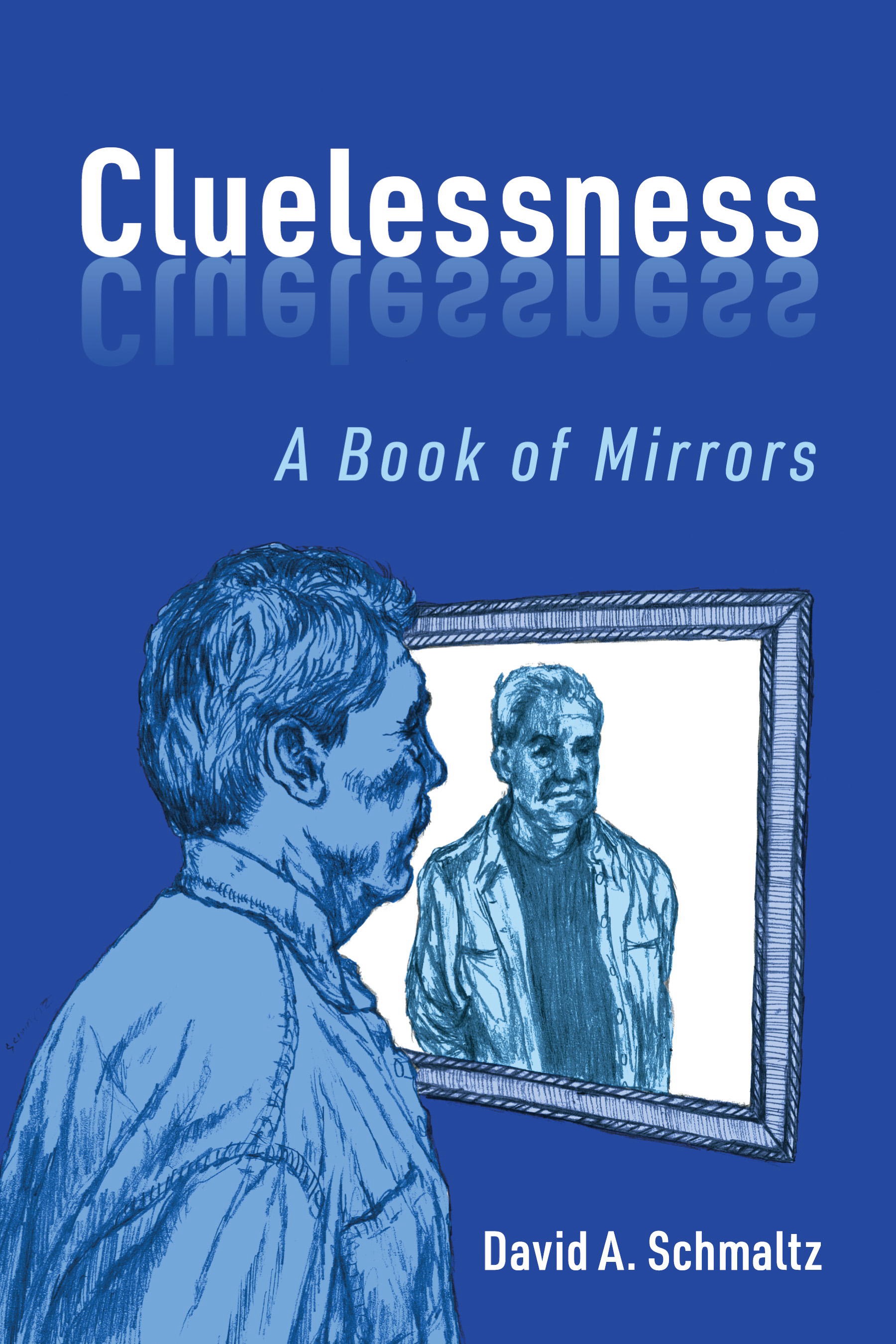 You can order Cluelessness from Bookshop.org, Powell’s Books, or Amazon. Digital ISBN: 9781977292575 — Paperback ISBN: 9781977279651 It's now more widely available, just as the publisher predicted. There's this Kindle link. Link To Publisher's Website Here
I employed Claude.ai, a commercial AI-powered text editor, using it to perform repetitive copy/pasting work and to create the above story summaries, prompting with: “Please briefly summarize this story in the first person while retaining the original voice.” I manually copy-edited each result.
Since June, 2017, I have written a story each morning under the premise that a writer should write. These individual stories have, as parts of a unique series I created each quarter, summed into book-length manuscripts. I began each series with a prompt to focus my writing. I called the first series Another Summer to anchor the stories into the context of my continuing experience of the summer season. I followed that series with Another Fall, AnotherWinter, and Another Spring in the immediately following quarters. Comeuppance will be the 38th series I’ve created over the last 9 1/2 years. Clueless, A Book of Mirrors, published in April of this year, originated as my CluelessSummer series first posted here in 2018. Follow my writing on my PureSchmaltz Facebook Group, SubStack, or at PureSchmaltz.com.
©2026 by David A. Schmaltz - all rights reserved
Good For A Goose

Comeuppance (31)
Decency (90)
Decency Unscrolling (1)
EndDays (92)
Exiled (90)
Fambly (93)
FollowingChapters (93)
Grace (92)
Humor (2)
iAlogue (1)
Letters to the Editor (1)
NextWorld (91)
Personal (18)
Prosperity (94)
Steam Festival (4)
Unscrolling (89)
Vaporized (6)
Work (16)
September 2026
August 2026
July 2026
June 2026
May 2026
April 2026
March 2026
February 2026
January 2026
December 2025
November 2025
October 2025
September 2025
August 2025
July 2025
June 2025
May 2025
April 2025
March 2025
February 2025
January 2025
December 2024
November 2024
October 2024
September 2024
August 2024
July 2024
June 2024
May 2024
April 2024
March 2024
November 2006
October 2006
September 2006
August 2006
July 2006
June 2006
May 2006
April 2006
March 2006
February 2006
January 2006