Trolling
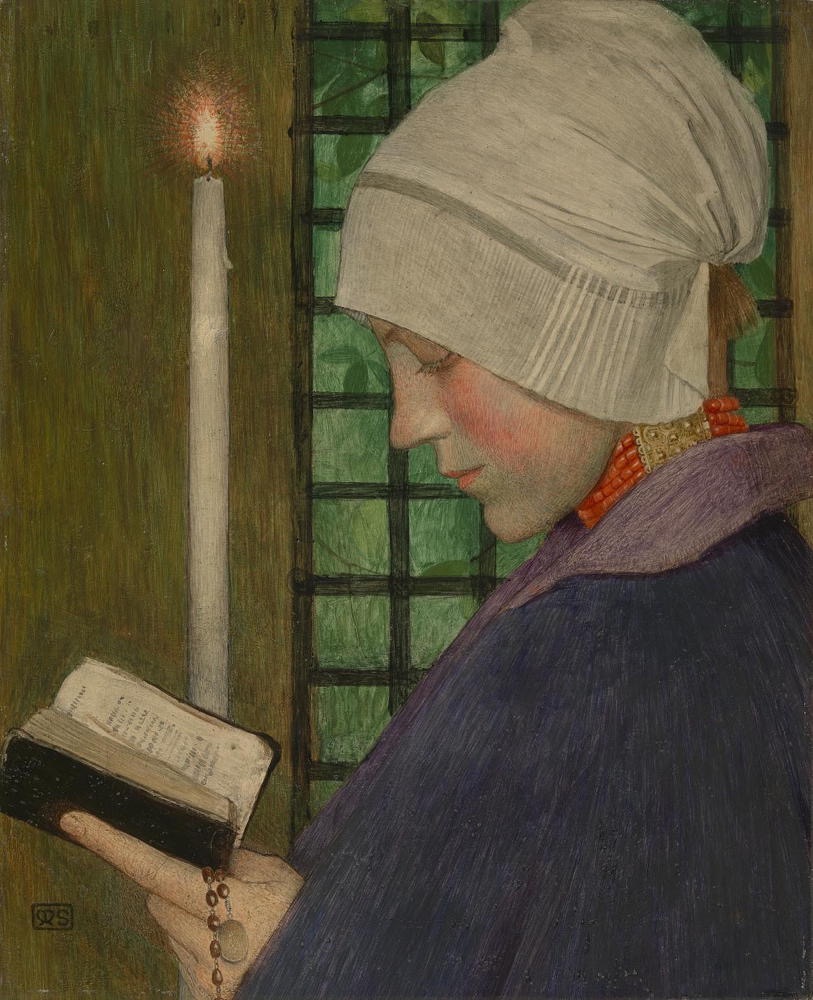
Marianne Stokes: Candlemas Day (1901)
"Her influence seems as eternal now as the Yew, and as paradoxical, too."
Today is the day I’ve been dreading since at least Christmas. For the last four years, I have anticipated this day with deep gloom, recognizing that there would be no way to sidestep the experience. It would come, wreaking havoc, then depart, leaving me worse for the experience. This seemed to be my curse, since this date will forever be the anniversary of my darling daughter Heidi’s suicide. Speaking with an old friend a week ago, I recounted my dreary January experience. He advised that I find some way to celebrate on that day. Celebrate her existence rather than her absence, he advised. February’s full of celebration days: Groundhog Day, Fat Tuesday, Ash Wednesday, and Presidents’ Day. It’s Black American Month, too, and Heidi was always touting how she was a citizen of the world, not merely an American. Now, she’s a citizen of the universe, and her presence continues to stick with me, her family, and her many colleagues. She’s become a force of history.
That she chose February 2 to depart this realm struck me as painfully ironic, for it seems to be the date that celebrates the promise of resurrection. I learned while scrolling, just this morning, that in the Christian tradition, this date has been celebrated since sometime in the fourth century as Candlemas, the date Jesus was first presented in a temple. I had never noticed, but it serves as the date halfway between Christmas and the Spring equinox, and so might be considered the first harbinger of Spring returning. That Groundhog might predict when Spring will arrive, but regardless of that prediction, Spring will come in six weeks. Always has.
Pagans, unsurprisingly, also celebrated this day as Imbolc, which marks the start of spring. In that tradition, seeds start sprouting underground, even though snow might blanket the ground. They tidy clutter and light a small fire and candles. This celebration focuses on cleaning up after Christmas and preparing for the upcoming Spring. In my family, we practiced our annual pagan holiday on Superbowl Sunday. That being a day when the roads were relatively bare because everyone was partying somewhere, we’d toodle down into the Willamette Valley when Heidi was small to look for the surest sign of Spring of them all, newborn lambs. In both Candlemas and Imbolc, lambs featured prominently as symbols of innocence and rebirth.
Our Lamb Looking Sunday tradition remained in our family even unto the year before Heidi’s death, and remains to this day. I remember toodling down 99W past Union Mills and finding one of the grandest expanses of sheep meadow we’d ever found. We pulled into a ditch, then spent the longest time watching in rapt wonder and amazement at the acrobatic antics of that year’s batch of newborn lambs. We left renewed.
Heidi had been suffering from a series of what might be labeled female problems that sparked some unsuccessful exploratory surgeries. These had left her increasingly discouraged and in pain, which, if she took medication to dull, it disabled her ability to do what she did for a living: simultaneous translation. This created a double bind. She grew convinced that she suffered from a condition American doctors don’t recognize, though it’s successfully treated in much of the rest of the world: mini-hernias. In the weeks before she departed, she tracked down a specialist in Los Angeles, who connected her to a specialist at OHSU in Portland, who hesitantly agreed to perform an exploratory surgery, though she didn’t believe in the mini-hernia theory. She performed that operation in December without finding those mini-hernias, and through the following deeply disappointing January, Heidi apparently concluded that she would never move beyond the pain and humiliation her condition induced. Her doctor had started suggesting she should consult with a psychiatrist. She left without telling anyone where she was going.
Heidi carefully researched her demise; that much was obvious. The instrument she chose for the task was the yew plant, a common enough, highly toxic evergreen shrub. Both Druids and Christians view Yew as a sacred plant, symbolizing rejuvenation: eternal life, resurrection, and the soul’s journey, and also paradox. It’s commonly grown in cemeteries. No antidote exists for its toxins. Heidi drove into the Cascade foothills, where she gathered and ingested Yew needles. As she grew woozy, she phoned her mom in a panic, complaining about feeling weird. Her mom immediately dialed 911 and left to get Heidi’s husband, Pablo, and drive to that spot in the foothills. She arrived after the first responders, who had already removed Heidi from her car and were working on her in an adjacent ambulance. They refused both entry. Heidi died while they stood helplessly beside the ambulance in the rain.
I was a million miles away in Colorado, under Covid lockdown, and unable to return for her small funeral. Her survivors still feel abandoned, and we always will. We will still go lamb-looking again this year. I will build a small fire and burn some candles today, and deal with some clutter I’ve been accumulating since before Christmas. This Unscrolling Series is halfway finished today, a day I will deliberately frame as a Trolling Day. Today, I celebrate the product of my early morning scrolling, my Trolling for some reassuring meaning, where I stumbled upon both the previously unknown to me Candlemas ceremonies and also the equally obscure Imbolc traditions, which so comfortably seem to encapsulate my family’s longstanding Lamb Looking practice. Had I not been scrolling … er, Trolling for something this morning, I would not have stumbled upon the clues that might enable me to find some reason to celebrate instead of hopelessly grieve my grievous loss today. I’ll light a fire and roast a leg of lamb, dispatch some clutter, and share some supper with The Muse, grateful that Heidi was born. Her influence seems as eternal now as the Yew, and as paradoxical, too.
©2026 by David A. Schmaltz - all rights reserved
Good For A Goose

Comeuppance (31)
Decency (90)
Decency Unscrolling (1)
EndDays (92)
Exiled (90)
Fambly (93)
FollowingChapters (93)
Grace (92)
Humor (2)
iAlogue (1)
Letters to the Editor (1)
NextWorld (91)
Personal (18)
Prosperity (94)
Steam Festival (4)
Unscrolling (89)
Vaporized (6)
Work (16)
September 2026
August 2026
July 2026
June 2026
May 2026
April 2026
March 2026
February 2026
January 2026
December 2025
November 2025
October 2025
September 2025
August 2025
July 2025
June 2025
May 2025
April 2025
March 2025
February 2025
January 2025
December 2024
November 2024
October 2024
September 2024
August 2024
July 2024
June 2024
May 2024
April 2024
March 2024
November 2006
October 2006
September 2006
August 2006
July 2006
June 2006
May 2006
April 2006
March 2006
February 2006
January 2006