Weekly Writing Summary For The Week Ending 02/12/2026
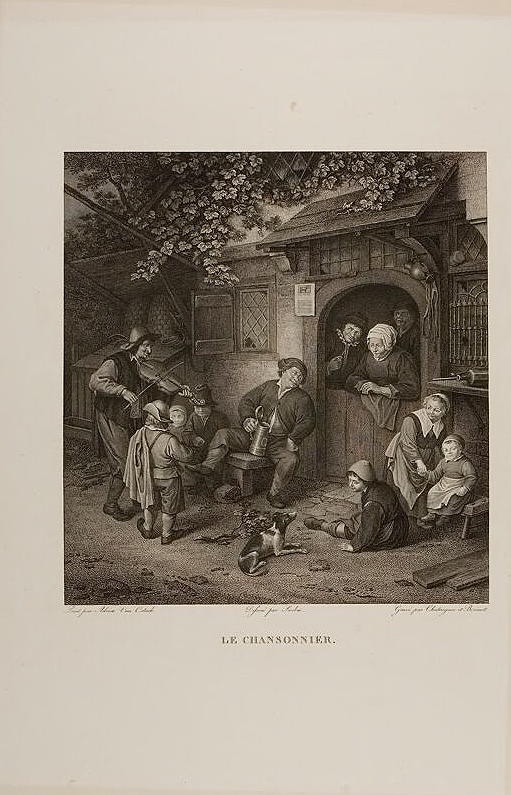
Alexis Chataigner: The Ballad Writer (19th century)
At the start of every writing week, I wonder what might rise to any level of importance that would warrant writing about it. This world has thus far been benevolent in that respect. I daren’t second-guess or stiff-arm whatever might manifest, lest I jinx the whole operation. This writing week turned out no different—a faith-based initiative executed by someone not necessarily infused with faith. I never know until I post, and often not even then, if I’m being true to my intentions and moving this curious ball further afield. I strongly recommend to anyone who might be interested that they consider becoming anything other than a writer, but if they choose writing—or writing chooses them—to befriend that urge. It’s either friend or enemy, neither obviously.
I started this writing week trying to distinguish between real and “Reel” life, not entirely successfully. I then noted that with social media, Checking In often seems indistinguishable from Checking Out. I retreated a bit, confessing that social media, whatever its shortcomings, often delivers something greater than whatever I anticipated. Next, I switched to some real-time events, reporting on Opening Statements at a real-life social media liability trial. I noted the distinction between Content and Context, an essential understanding if anyone hopes to grasp social media’s attraction. I ended this writing week noting that social media has managed to recreate our society in miniature—or expand it, in Predation. Dog-eat-dog doesn’t even dent the experience. Thank you for following along!
`— — —
Weekly Writing Summary
ReelLife
“Maybe all life qualifies as representational, merely so many shadows on those cavern walls.”
This Unscrolling Story acknowledges some differences between real and ReelLife as depicted in social media.
I’ve always been fascinated by how representations—like art, photography, and social media—reflect and distort real life. Even though I know they aren’t quite real, I’m still drawn to them and sometimes even feel guilty about it. Social media, especially, offers quick, compelling versions of life, but I know genuine experience can’t be replaced. Still, as technology advances, it’s harder to separate what’s real from what’s represented, and I wonder if, in the end, life itself is just a collection of such shadows.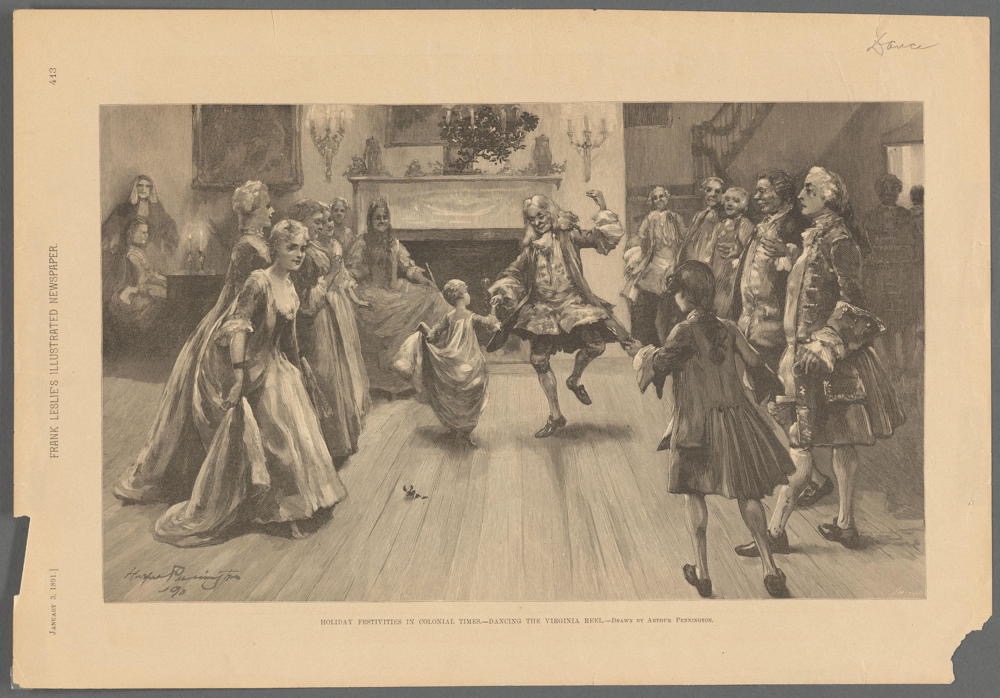
Harper Pennington: Holiday festivities in colonial times; dancing the Virginia reel (1891-01-03) — COLLECTION — Prints depicting dance; Theatrical dancers in groups or more than two but not in a ballet or theatrical dance scene — Josephine Butler collection of dance prints from illustrated periodicals — Jerome Robbins Dance Division, The New York Public Library. “Holiday festivities in colonial times; dancing the Virginia reel” New York Public Library Digital Collections. Accessed February 7, 2026. (https://digitalcollections.nypl.org/items/24c44fb0-f763-013b-db97-0242ac110002)
——
Checkiningin/CheckingOut
“I still feel compelled to check in from time to time and seem to possess no reliable defence against Checking Out before I exit.”
This Unscrolling Story finds me increasingly unable to distinguish between CheckingIn and CheckingOut. The one seems to inevitably result in the other.
Whenever I check social media, I quickly lose myself in a mindless scroll, emerging with useless trivia and a strange emptiness. My sense of what’s valuable blurs, and real connection feels rare. Even though I crave genuine presence, I keep getting pulled back in, unsure whether I’m truly checking in or just checking out.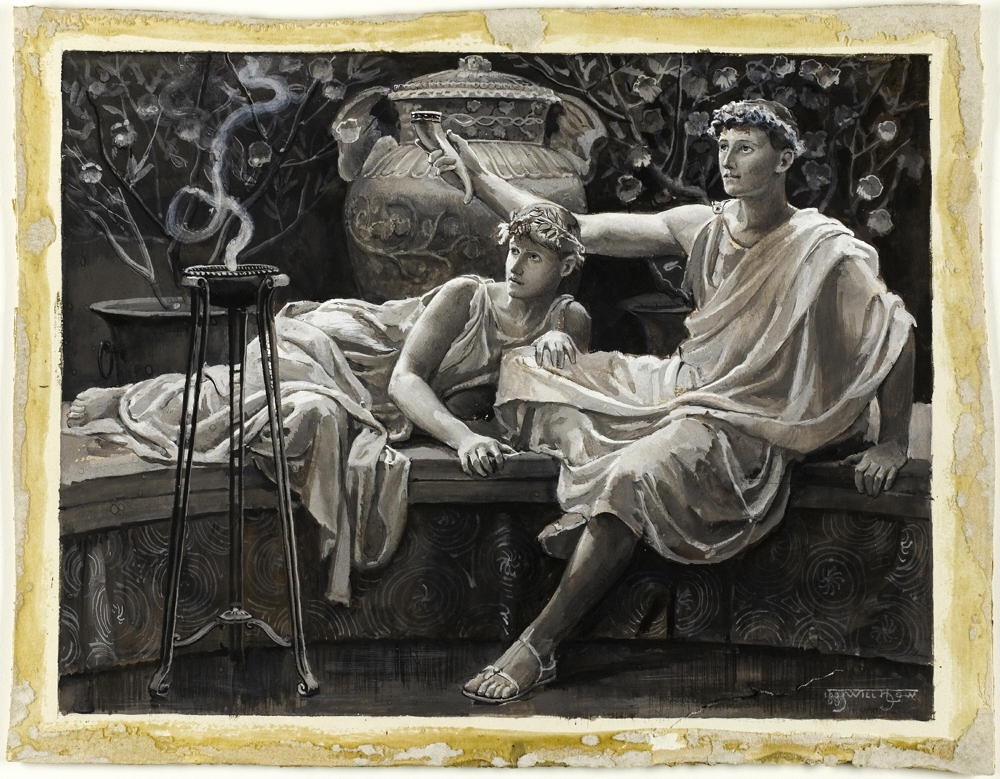
Will Hicok Low: Checking His Love Trance, a Cup He Took Full Brimm’d (1885)
——
GreaterThan
“(They don’t speak the language.)”
This Unscrolling Story speaks of the redemption of even social media.
I realise now I was too quick to judge social media, forgetting how complex and layered it—and we—really are. Even when I get frustrated, I know abandoning it would mean missing out on any hope for redemption or surprise. Today, my feed blew up with news of a miracle: Bad Bunny’s Super Bowl halftime show. Watching it live with my family, I felt moved—even without understanding a word. The ordinary felt extraordinary, and suddenly, everything seemed possible. If I’d sworn off social media, I would have missed this. Now I’m rethinking my cynicism and recognising there’s still hope and potential in these spaces I almost dismissed.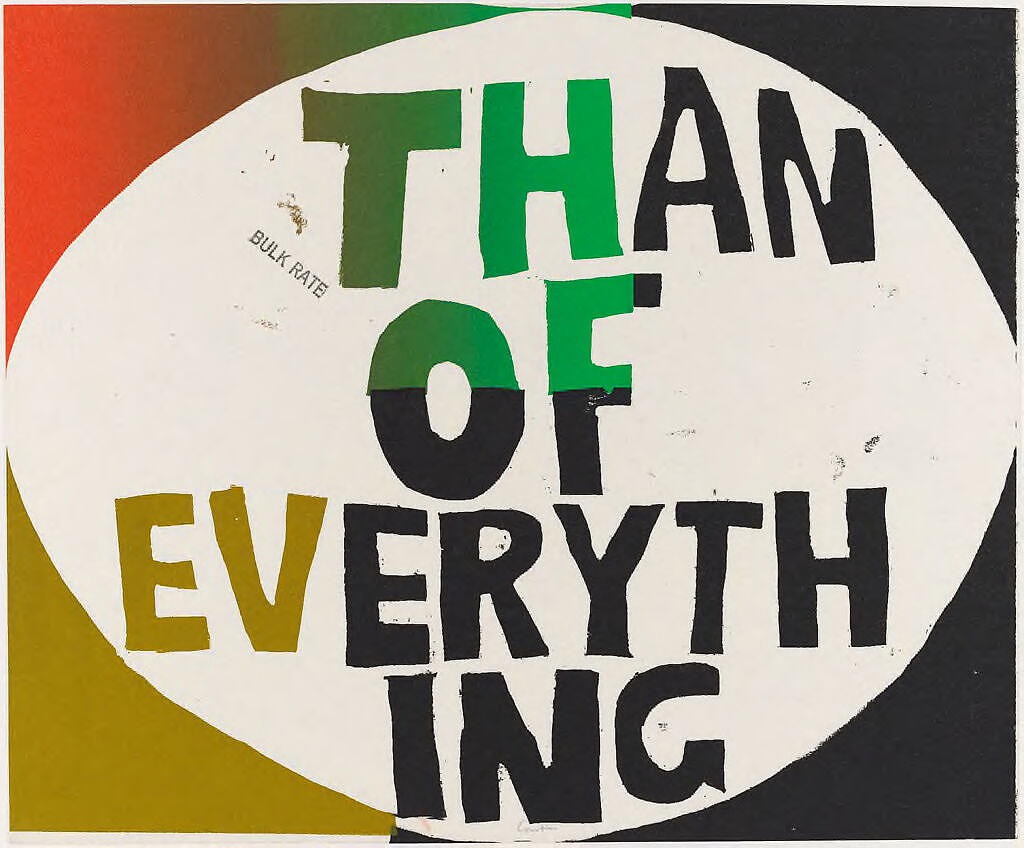
Corita Kent (Sister Mary Corita): than of everything (1967) — Inscriptions and Marks: Signed: l.c.: Corita (not assigned): Printed text reads: THAN OF EVERYTHING BULK RATE [stamped in black ink] © Courtesy of the Corita Art Center, Immaculate Heart Community, Los Angeles / Artists Rights Society (ARS), New York
——
OpeningStatements
“Progress moves more slowly than molasses.”
This UnscrollingStory reports on the OpeningStatement in the first major trial, trying to hold tech giants responsible for hypnotising and addicting our children. It will probably be decades before anybody tries to go after them for addicting the rest of us.
I watched the lawsuit begin against tech giants accused of addicting kids to social media. It reminds me how slow change is—just like with seat belts and cigarettes, regulation takes decades. Advertising has always tried to manipulate us, and now phones and apps have made everyone, especially kids, even more vulnerable. I believe tough regulation is overdue, but real change will be slow, and future generations may look back on our social media habits the way ex-smokers remember cigarettes.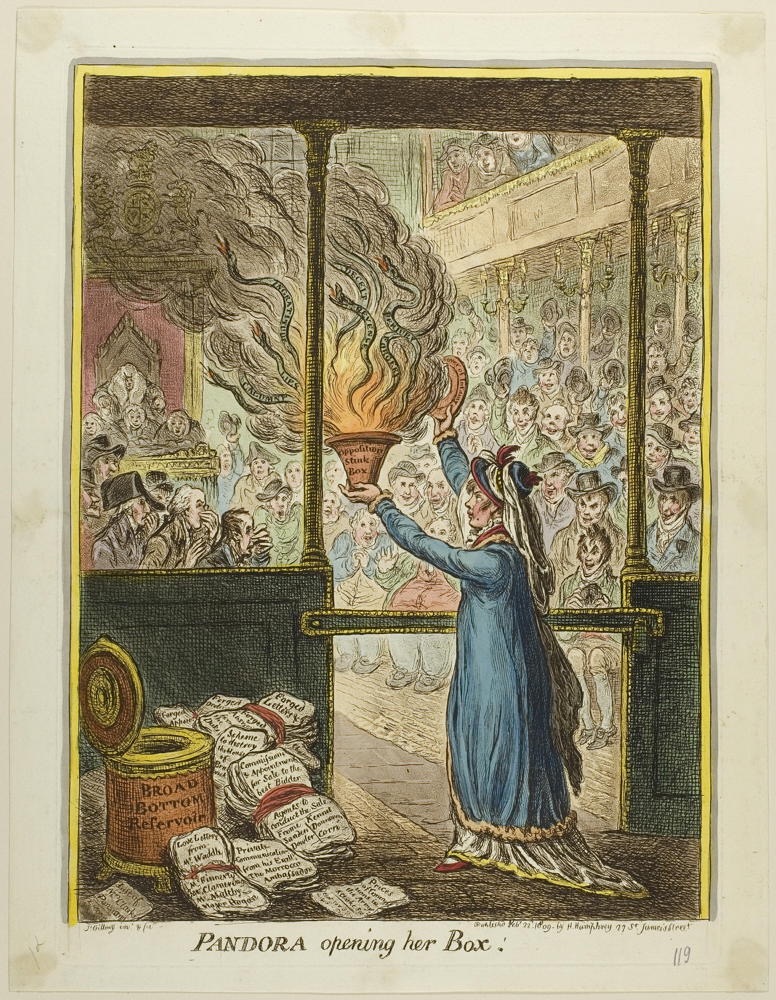
James Gillray: Pandora Opening her Box (published February 22, 1809), Published by Hannah Humphrey
——
Content/Context
“On my better days, I catch reassuring glimpses of it.”
This Unscrolling Story finds me uncynically scrolling, hoping for reassuring glimpses of the social media I’d hoped to find.
I’m following the lawsuit against YouTube and Meta, where the plaintiff is challenging the addictive design of their platforms instead of just the content. This could bypass long-standing legal protections. Thinking back, I realise the confusing, addictive context of social media was always the real hook, keeping us coming back just like in a casino.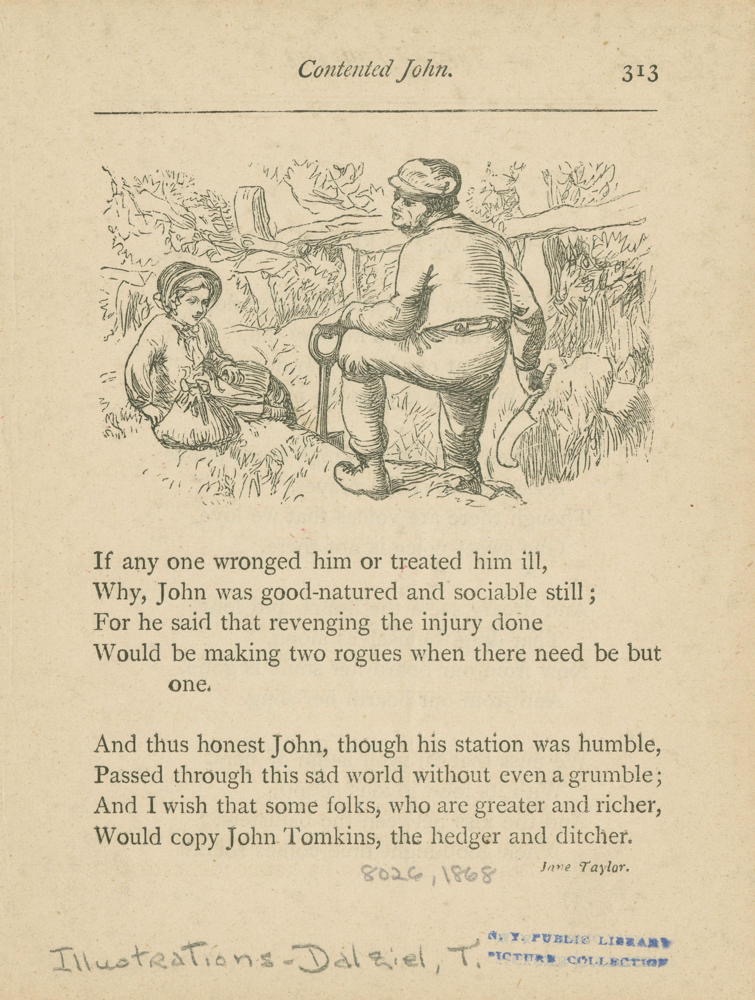
Thomas Bolton Gilchrist Septimus Dalziel, (Artist), Dalziel Brothers (Wood-engraver): Contented John. (1868) Content:Illustration of “Contented John” by poet Jane Taylor. Source Note: The children‘s poetry. Being a selection of narrative poetry for the young, with illustrations by Thomas Dalziel, engraved by the Brothers Dalziel. 1868) Dalziel Brothers, Engraver. Dalziel, Thomas Bolton Gilchrist Septimus (1826-1906), Illustrator. —The Miriam and Ira D. Wallach Division of Art, Prints and Photographs: Picture Collection, The New York Public Library. “Contented John.” New York Public Library Digital Collections. Accessed February 11, 2026. (https://digitalcollections.nypl.org/items/fa2a2ba0-c5bb-012f-990f-58d385a7bc34)
——
Predation
“Our lust for Utopian futures reliably produces their opposite.”
This Unscrolling Story finds me bemoaning the Predation our social media encourages.
We tried to build a better world with social media, but ended up repeating our old predatory patterns, leaving the most vulnerable—especially young girls—exposed to harm. Despite good intentions, innovation outpaced caution, and now we’re scrambling to fix what we overlooked, realising our dreams for progress have once again produced unintended dangers.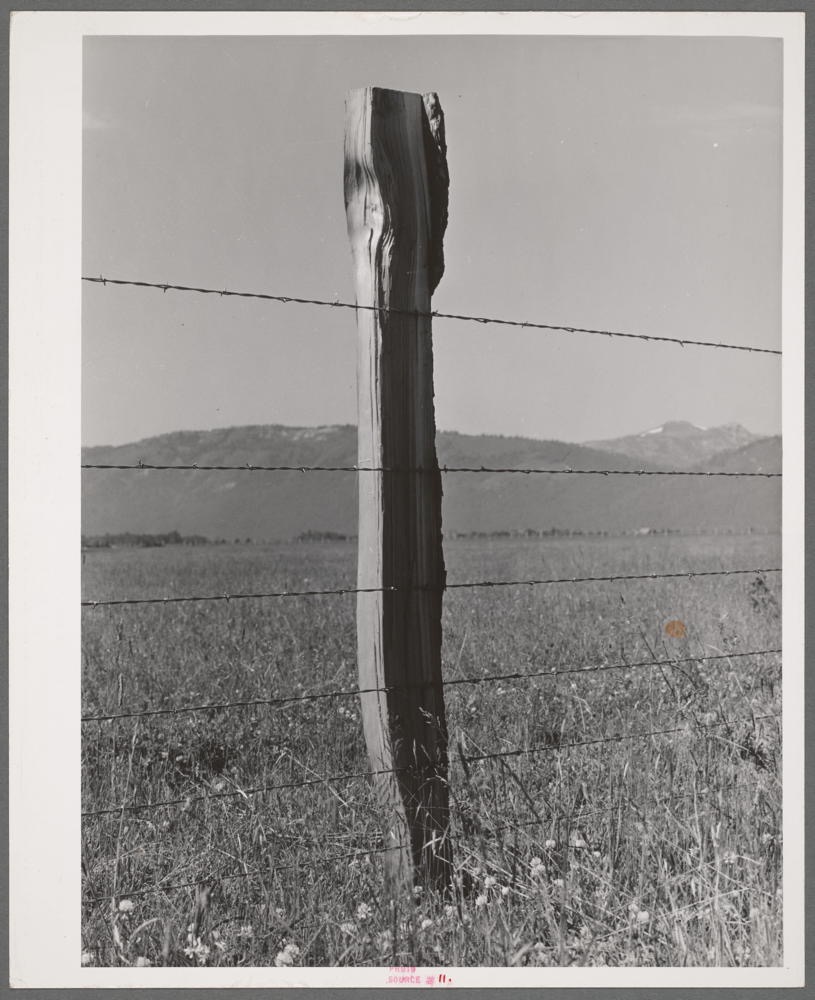
Russell Lee: Fence on Cruzen Ranch. Valley County, Idaho. The AAA (Agricultural Adjustment Administration) has painted out this fence as being an outstanding type for ranch use. It keeps out predators (wolves, etc.), the wire is stapled loosely to allow for expansion (06/1941), United States. Farm Security Administration (Sponsor) — The Miriam and Ira D. Wallach Division of Art, Prints and Photographs: Photography Collection, The New York Public Library. “Fence on Cruzen Ranch. Valley County, Idaho. The AAA (Agricultural Adjustment Administration) has painted out this fence as being an outstanding type for ranch use. It keeps out predators (wolves, etc.), the wire is stapled loosely to allow for expansion, and” New York Public Library Digital Collections. Accessed February 12, 2026. (https://digitalcollections.nypl.org/items/f54aa060-84a2-0137-2a98-29e7943b6d77)
——
That Seems For Sure
It now appears that our valley will host a data center. As proposed, it seems to offer little threat to our natural resources, though prior immature technologies and past unscrupulous operators have made data centers in other locations the very bane of many protestors. The Muse, one of three commissioners charged with making this monumental decision, performed her usual diligence, though few who unconditionally opposed the choice chose to contact her directly. Many Facebook postings carried offhand comments, indicting without evidence, accusing without first asking after underlying facts. Suddenly questioning her formerly trusted judgement. What if the proposed data center wouldn’t raise residential electricity rates, wouldn’t waste obscene volumes of water, or any, and would increase the county’s tax income by nearly 50% without raising taxes for any resident of the county? What then?
Amazon, the company chosen to build and operate this data center, has a stellar environmental track record. It also laid off thirty thousand employees over the prior five months. Its owner, who also owns The once-venerable Washington Post, just slashed their newsroom, too. Hoping for a more benevolent owner to build a data center seems like a hopeless endeavour, if only because there aren’t better. Huge companies, like the kind that can transform a county’s tax base, come in one of two basic flavors: Boobs and Sonsabitches. No other. Whether you get a benevolent boob or a malevolent SOB might matter less than the technology involved. It seems prosperity, once said to follow the plow, follows data center construction now. The future calls.
I’ve sweated this decision every bit as much as The Muse has. We’ve had many painful conversations trying to resolve this fundamental dilemma. It was never a problem resolvable by mere solving. She’d invited some of the more vocal opponents to most new developments over to the house before signing the letter of intent, way back at the start of the process, fifteen months ago. Those people left satisfied that she was performing due diligence. Some of those people now jeer from the sidelines served via some data center or other. Some issues cannot be resolved. Those opposed to data centers because they encourage the proliferation of AI applications stand opposed to an apparent force of nature. Oppose the Western expansion of the railroads if you choose. History will most certainly leave the station without you on board. What can we afford?
Those who believe that I came to a different conclusion than they because I was stupid or ill-informed need a better story, as I do when I complain about those who don’t seem to know the underlying story behind this installation, which seems different, but still strongly oppose it. A poisonous press has emerged to amplify a single side of every issue. It craves controversy and ideological purity and eschews any form of compromise. The real world occasionally requires splitting babies. It demands some risk-taking. It begs for an irresolvable mystery sometimes, and a stronger and more forgiving stomach than anyone really has a stomach for, that seems for sure!
I employed Grammarly, a commercial AI-powered text editor, to create the above story summaries, prompting with: “Please briefly summarize this story in the first person while retaining the original voice.” I manually copy-edited each result.
©2026 by David A. Schmaltz - all rights reserved
Good For A Goose

Comeuppance (31)
Decency (90)
Decency Unscrolling (1)
EndDays (92)
Exiled (90)
Fambly (93)
FollowingChapters (93)
Grace (92)
Humor (2)
iAlogue (1)
Letters to the Editor (1)
NextWorld (91)
Personal (18)
Prosperity (94)
Steam Festival (4)
Unscrolling (89)
Vaporized (6)
Work (16)
September 2026
August 2026
July 2026
June 2026
May 2026
April 2026
March 2026
February 2026
January 2026
December 2025
November 2025
October 2025
September 2025
August 2025
July 2025
June 2025
May 2025
April 2025
March 2025
February 2025
January 2025
December 2024
November 2024
October 2024
September 2024
August 2024
July 2024
June 2024
May 2024
April 2024
March 2024
November 2006
October 2006
September 2006
August 2006
July 2006
June 2006
May 2006
April 2006
March 2006
February 2006
January 2006