Weekly Writing Summary For The Week Ending 12/11/2025
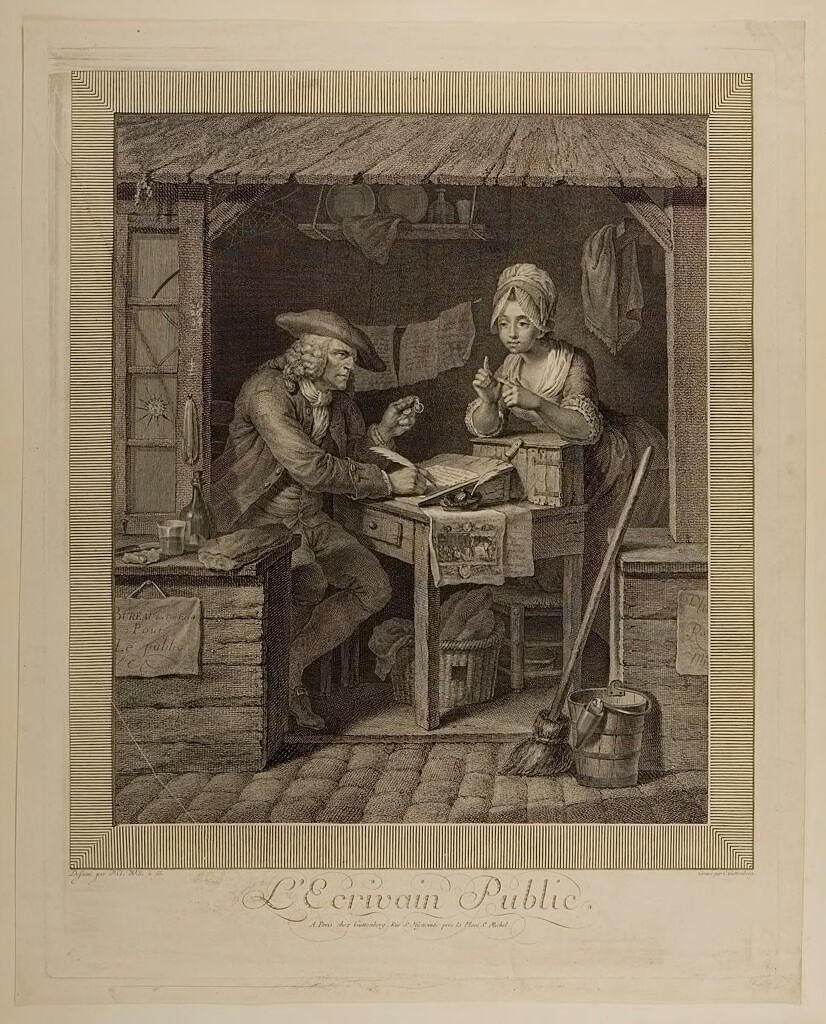
Carl Gottlieb Guttenberg: The Public Scribe [L'ecrivain public] (1783)
This writing week proved to be a relatively quiet roller coaster ride with highs and lows properly attenuated and ultimately, unsurprisingly, unanticipated. Little happened as I’d either hoped or feared, so much for prescience and good fortune. I’m coming close to concluding that we’re not the deciding factor here; we might thrive on synchronicity and luck, whether good or bad, but ultimately beyond our ability to influence. The fact that we feel an innate ability to control only makes this roller coaster ride more entertaining as our expectations repeatedly and ultimately, thankfully, disappoint our expectations. We should be both well used to and warmly accepting of these disappointments that visit us when we don’t immediately realize that our prescience so frequently fails us.
Decency was not as I'd expected it to manifest. (Big surprise!) Does this declaration even qualify as a headline? Decency was ultimately fuzzier than expected to manifest and, if not ultimately disappointing, still curiously surprising. I began this writing week considering the HarshJudgements I'd assigned to far too many people in my life under the auspices of a misguided Decency. I then copped to the self-deception that any firmly held conviction requires SelfDeception. I looked at DecentPeople and wondered where their Decency abided. I suspected that Decency, like everything, might be best considered a step further from enlightenment than anything else, in Endimbenment. I accepted that Decency must ultimately be considered InPractice, and nowhere else. I ended this writing week conceding that I possess the power for CyncismProofing if only I can find and employ it. Decency ultimately ain't all it's trumped up to be. Thank you for following along!
— — — —
Weekly Writing Summary
HarshJudgments
“Let he who is without indecency cast the first criticism.”
This Decency Story wonders whether it can be considered Decent to make HarshJudgments.
This Decency Story explores the nature of Decency, questioning whether it gives one the right to criticize others. I argue that unsolicited criticism remains generally inappropriate and often reflects the critic’s own privilege or need to judge. I portray Decency as a personal, voluntary choice rather than a duty to enforce on others, and I characterize excessive moralizing as counterproductive. I’ve found True Decency in leading by example and practicing humility, without the need to overtly call out others or claim moral superiority.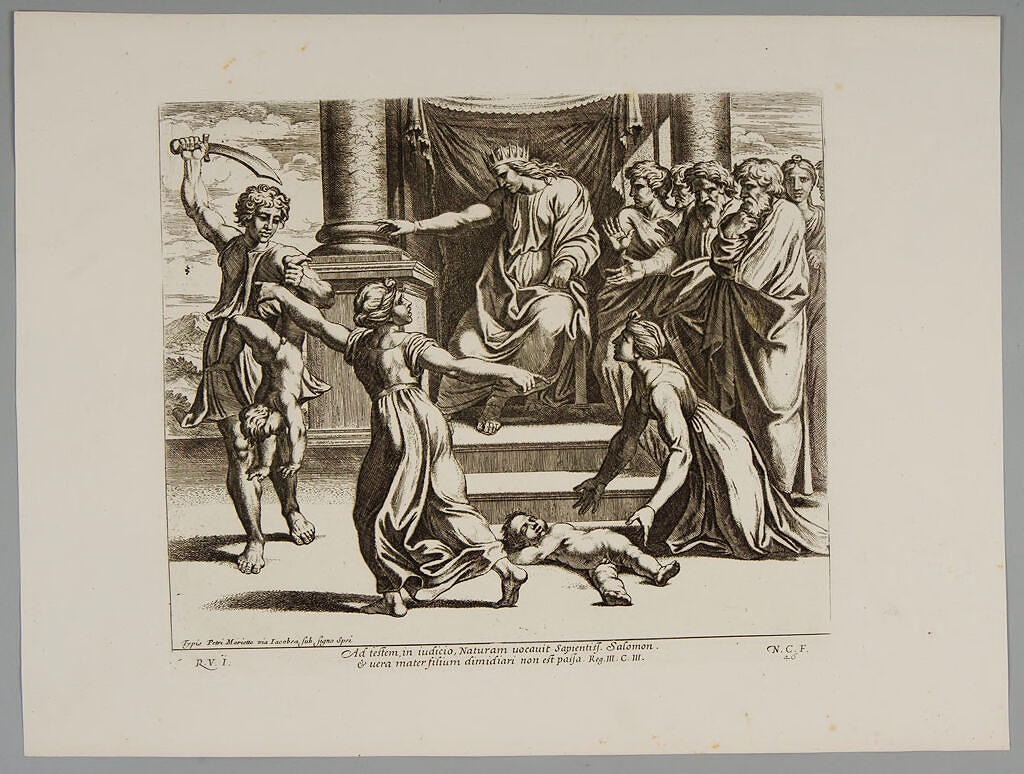
Nicolas Chapron: Judgment of Solomon (17th century)
——
SelfDeception
“The difference between Decencies might not matter as much as the intensity of each audience member’s suspended disbelief, not to mention the actors’.”
This Decency Story explores the importance of SelfDeception in the everyday practice of Decency.
Practicing Decency requires continual self-correction and, at times, self-deception to maintain self-esteem. Because Decency happens in the moment and isn’t always perfect, accepting its imperfections remains pivotal. Over-emphasizing one’s own Decency can backfire, so it’s best handled subtly and without terribly much fanfare. Ultimately, being authentic, even with contradictions, resonates more than striving for flawless performance.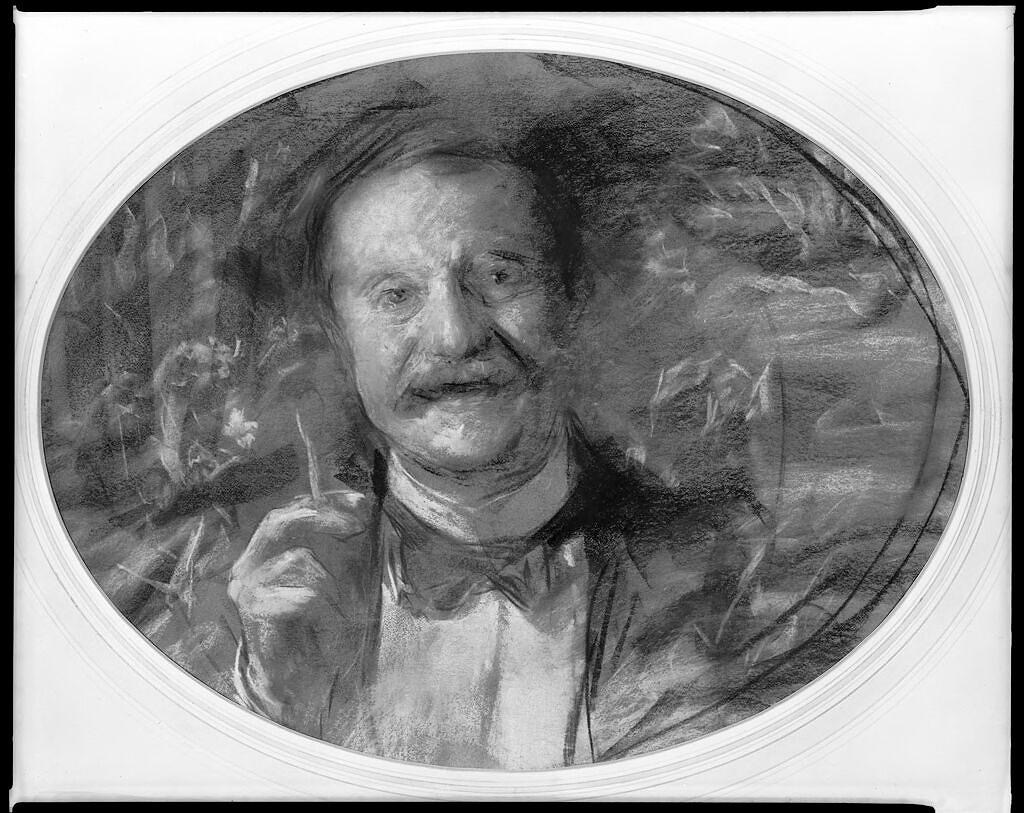
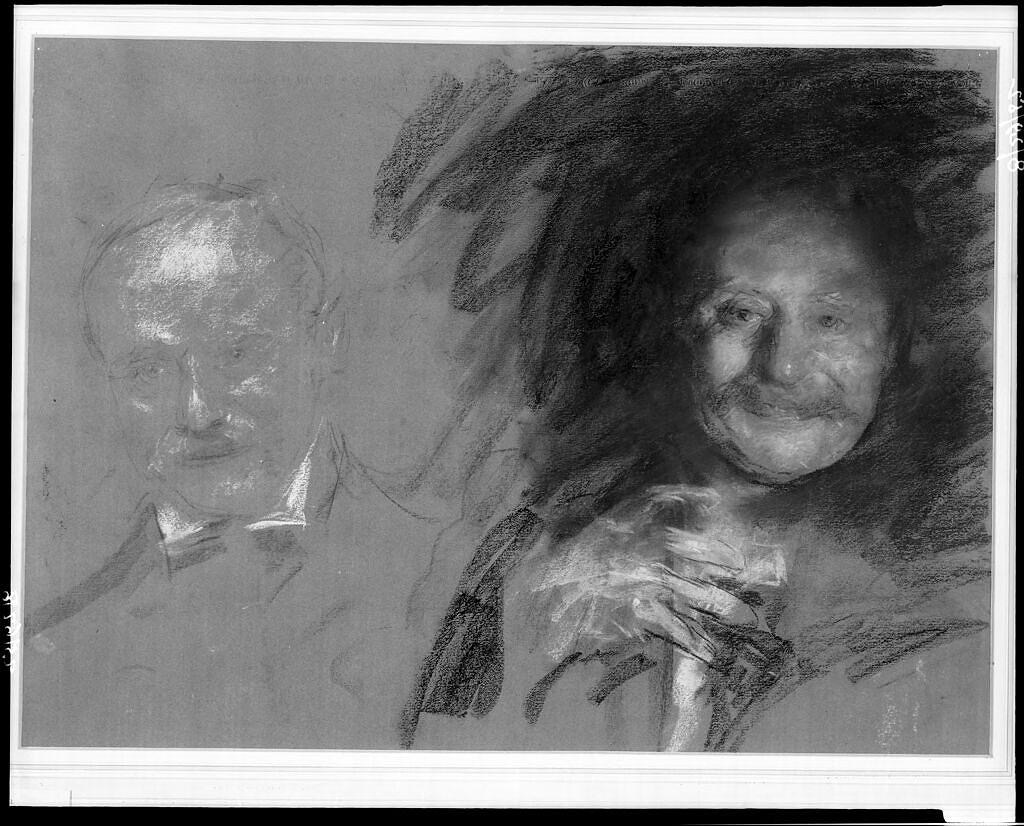
Self Portrait; verso: Two Self Portraits Antonio Mancini: (c. 1900-1902)
——
DecentPeople
“My Decencies seem as fleeting as my days.”
This Decency Story finds me feeling remorseful for passing judgment on indecent as well as DecentPeople.
This Decency Story explores how people seem to have a deep-seated drive to classify others, perhaps to boost self-esteem, which can lead to prejudice and unfair judgments. I cop to labeling individuals as ‘Indecent’ or ‘DecentPeople’, recognizing this as an arbitrary and potentially harmful distinction. I acknowledge that human behavior changes and that forming such categories often reflects more about the perceived past and the person judging than those being considered. I call for more generous definitions of each other and argue against rigid judgments, emphasizing self-reflection and the fleeting nature of Decency and its counterparts.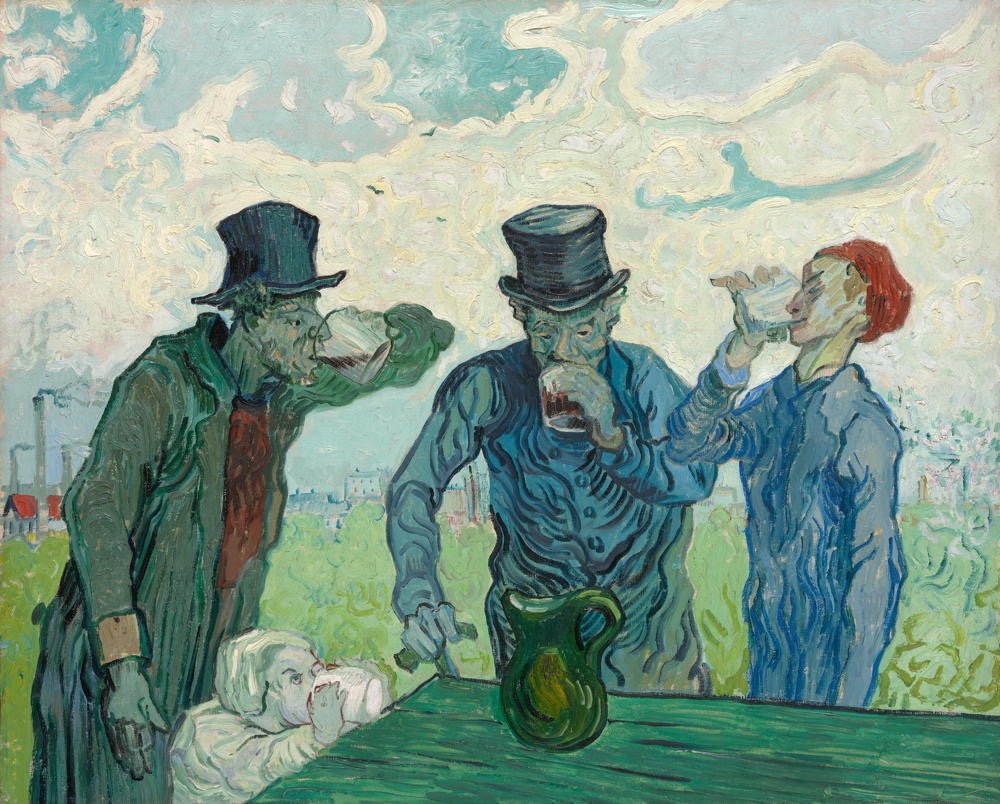
Vincent van Gogh: The Drinkers (1890)
——
Endimbenment
“Certainty must certainly be the surest sign of ignorance.”
This Decency Story discloses what I’ve been learning about Decency through this enquiry.
This Decency Story explores how gaining knowledge and understanding—especially about abstract ideas like Decency—rarely happens as expected. The process seems humbling, complicated, and yields results that appear less clear and less tangible than anticipated. Attempts to define or communicate these insights often fail, leading to more humility rather than the anticipated certainty. Ultimately, I discover that enlightenment doesn’t feel the way anybody expected, and the quest for understanding often leads to realizing how little one truly knows.
Unknown Tibeto-Chinese Artist: Enlightened Protector Mahakala with Six Arms [Shadbhuja] (18th/19th century)
——
InPractice
“I might have initiated this enquiry only to continue it ad infinitum, InPractice.”
This Decency Story finally finds Decency lurking InPractice rather than in theory, in enquiry rather than exposition.
I should not feel so surprised when I stumble upon the discovery that Decency, like every other concept, only manifests InPractice. In theory, it seems to contradict itself. Only InPractice does it exhibit its underlying nature, which proves to be indescribable. The description clearly ain’t the thing. InPractice, Decency seems to exhibit little if any ‘thingness.’ Not natively being either person, place, or thing, it steadfastly sidesteps all attempts at facile description, let alone definition. I suppose its dictionary definition performs as well as any dictionary definition might aspire to, though, as I believe I’ve shown in this series so far, much variation swirls around the concept’s central core. Decency can never manifest contextlessly. In fact, Decency seems unusually dependent upon well-formed context to exhibit much of any meaning at all.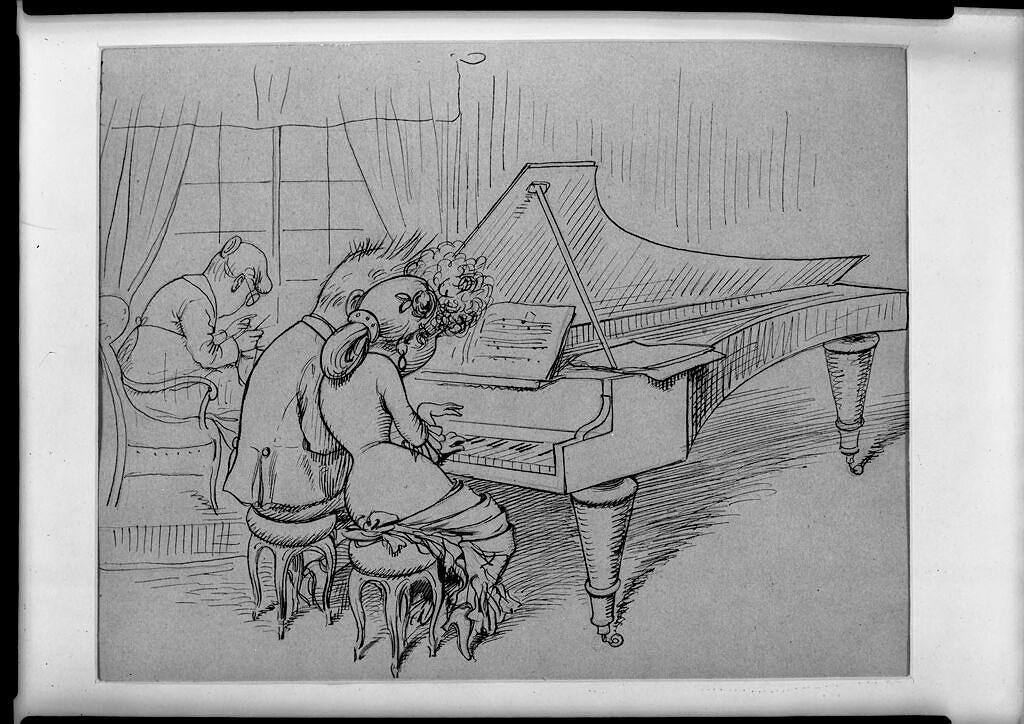
Adolf Oberlaender: The Piano’s Revenge: Practice (1882)
——
CynicismProofing
“I will mount my defence against encroaching seasonal cynicism with some Decent poems.”
This Decency Story finds me battling cynicism with Decency again.
This Decency Story contends that humanity’s central struggle must be against cynicism, which appeals to those tired of life’s predictability and can undermine both individual and societal well-being. I observe this through recent experiences of public incompetence and cynicism in leadership, which have left me personally exhausted. In response, I’ve found escape in Decency: a personal standard that brings meaning, discipline, and value to everyday life. I frame Decency as a mindful approach, especially important during trying times like the holidays, sustaining me through rituals and creative expectations. Despite temptations to fall into cynicism, Decency endures as a vital spiritual defense, quietly resisting despair and anchoring my sense of purpose.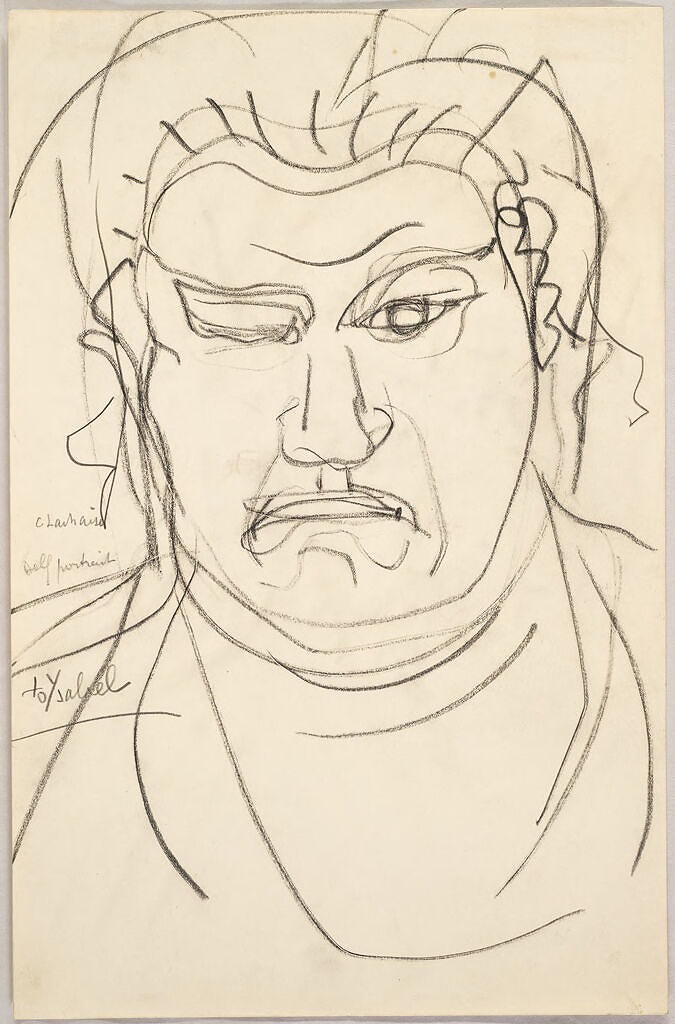
Gaston Lachaise: Self-Portrait (20th century)
——
Learning Not To Sweat Inevitability
Once most of the leaves are down, the Maple tree starts letting its helicopters go. These ultimately invade every surface in this part of the neighborhood and are extremely difficult to clean up. Those that survive until Spring, which, here, comes near the end of February, will try to turn themselves into Maple trees. These sprouts feature the most amazing roots that tenaciously hold regardless of the force brought to bear against them, usually breaking off. Whatever else I’m growing in my gardens, I’m also raising Maple trees. This is a given. Each primary occupation likewise spawns some companion in seeming symbiosis. Despite there being no clear connection, the two seem to depend on each other. I once thought it my responsibility to ensure that no little Maple trees sprouted come Spring. Some did anyway, despite the effort I made to prevent them. I’ve grown more sanguine since adjusting my sense of propriety to fit the conditions better. My yard’s not nearly as tidy as it once was, and I’m learning not to feel that guilty about this glaring shortcoming in my performance. I’m learning not to sweat inevitability.
Thank you for following along!
©2025 by David A. Schmaltz - all rights reserved

Good For A Goose

Comeuppance (31)
Decency (90)
Decency Unscrolling (1)
EndDays (92)
Exiled (90)
Fambly (93)
FollowingChapters (93)
Grace (92)
Humor (2)
iAlogue (1)
Letters to the Editor (1)
NextWorld (91)
Personal (18)
Prosperity (94)
Steam Festival (4)
Unscrolling (89)
Vaporized (6)
Work (16)
September 2026
August 2026
July 2026
June 2026
May 2026
April 2026
March 2026
February 2026
January 2026
December 2025
November 2025
October 2025
September 2025
August 2025
July 2025
June 2025
May 2025
April 2025
March 2025
February 2025
January 2025
December 2024
November 2024
October 2024
September 2024
August 2024
July 2024
June 2024
May 2024
April 2024
March 2024
November 2006
October 2006
September 2006
August 2006
July 2006
June 2006
May 2006
April 2006
March 2006
February 2006
January 2006