Fleeting
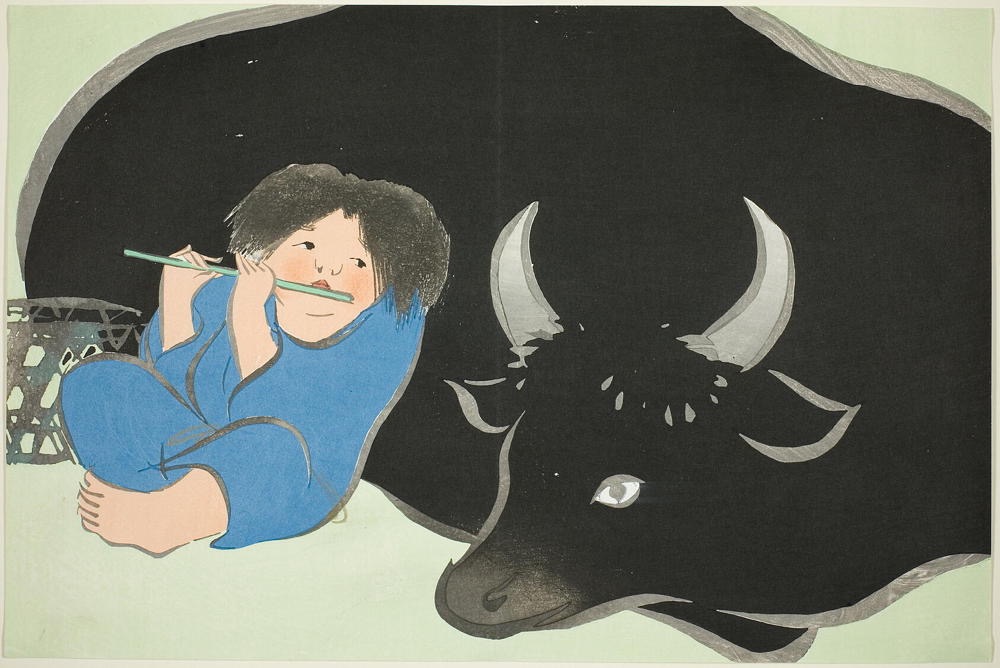
Kamisaka Sekka
Oxherd Flutist,
from the series “Worlds of Things (Momoyogusa)”
(1909/10)
"Prosperity seemed to come so easily then. Now, it seems Fleeting. "
A quick trip over to Portland never fails to remind me just how Fleeting Prosperity can seem. Indeed, all history seems like a mere flash of memory along that more-than-familiar route. We pass places I fondly remember from my own pre-history, forever transformed by what came and went alongside me. It seems that much of my life occurred along that two-hundred-forty-five-mile route: good, bad, and even a little of the ugly, for those, like me, who were raised in the Inland Northwest were never quite able to completely separate ourselves from the sea. We more or less routinely traversed the barren Columbia Plateau to enter the Cascade fairy land and on into country that seemed endlessly green. Everything seemed so clean there, the brown, barren Earth replaced by cooling rains and a soothing rainforest. It seemed downright British over there.
I later lived in Portland, moving there in the year this country turned 200. The city was in deep transition then, leaving the forest products economy that had previously always been its anchor, to move into a few unlikely replacements: sneakers, high technology, which was then barely in its infancy as an industry, and the various and sundry service industries, the ones without smokestacks or blue-collar jobs. I moved into a traditional working-class neighborhood, part of an unwitting gentrification force just trying to raise our families amid fifteen percent inflation, so-called urban pioneers. Prosperity came begrudgingly then, if, indeed, it ever really visited us. That replacement economy didn’t start off with anything like a bang, as the dying one fled to the South to exploit cheaper resources and lower taxes, leaving a decidedly shabby skyline behind. Portland responded by investing in public transportation, a pipe dream that ultimately utterly transformed the place.
Over time, those replacement industries thrived, encouraging much un-Oregon-like suburban sprawl to the South and West, as well as a few impressive new buildings downtown. For a while, it seemed as though Prosperity had finally found a home there again, though by then I was commuting south to Silicon Valley every Monday morning and returning north on Fridays. I became an absentee inhabitant, newly wed to my second spouse, and feeling Prosperous, after a fashion. I found Portland unaffordable after that second divorce, and reverted to apartment living and dreaming for a few years as a replacement. That city at the end of my own personal Oregon Trail became increasingly hostile as Californians did what Californians have always done: inflated home prices and complained about all the newcomers. Urban blight invaded the hopeful, formerly Prosperous places.
The Muse and I fled, back to the edge of the barren Columbia Plateau, trading that green Eden at the end of the trail for one considerably further from the water. Walla Walla was experiencing a resurgence then after two decades of declining fortune. Once the Lower Snake River dams were built, all those Dam Workers fled to wherever the next high-paying public infrastructure jobs hid. Our valley had thrived on those migrant workers who were paid out of Federal coffers. But the wine industry had emerged as if it might be the valley’s next savior in succession. A boom happened. Main Street filled up with cute crappe shoppes, a sure sign of that particular kind of prosperity that attracts visitors to spend money. Such an economy seems fickle, always depending upon a continuing miracle to survive. Should our Cabernet take the grand prize, all would remain right with our world. Should another upstart terroir emerge, we could disappear. Tourists never cared beyond the end of their reservation, and those tasting room attendants never earned enough to ever see Prosperity from where they touted the latest vintage.
I remember the energy as Portland found its Prosperity. Everybody seemed to feel luckier than the next. Saturday mornings, we’d feel blessed, visiting the Saturday Market and reveling in the signature weirdness that had become our brand. It was, indeed, the best of times for a time before inexplicably fading. Now it feels desperate. The once promising has turned shabby, and the formerly Prosperous borders on the utterly preposterous. None of this seems likely to last. Back in our valley, we’re praying for another Hail Mary Pass, like the ones that came to reinstate a Prosperity that never once belonged to us or could ever last. This time, a data center promises respite, though many innocently foment against it. Prosperity always comes in confusing guises, looking unlikely to translate into anything really worthy of our pasts. It’s apparently never more than temporary, though we remain capable of being fooled into believing in permanence, which was never more than an alluring trance. I remember Nike when it was a crazy man with a misused waffle iron and the Trailblazers before they won the Championship in ‘76. Prosperity seemed to come so easily then. Now, it seems Fleeting.
©2026 by David A. Schmaltz - all rights reserved
Good For A Goose

Comeuppance (13)
Decency (90)
Decency Unscrolling (1)
EndDays (92)
Exiled (90)
Fambly (93)
FollowingChapters (93)
Grace (92)
Humor (2)
iAlogue (1)
Letters to the Editor (1)
NextWorld (91)
Personal (18)
Prosperity (94)
Steam Festival (4)
Unscrolling (89)
Vaporized (6)
Work (16)
September 2026
August 2026
July 2026
June 2026
May 2026
April 2026
March 2026
February 2026
January 2026
December 2025
November 2025
October 2025
September 2025
August 2025
July 2025
June 2025
May 2025
April 2025
March 2025
February 2025
January 2025
December 2024
November 2024
October 2024
September 2024
August 2024
July 2024
June 2024
May 2024
April 2024
March 2024
November 2006
October 2006
September 2006
August 2006
July 2006
June 2006
May 2006
April 2006
March 2006
February 2006
January 2006