&Retribution

Sir Edward Coley Burne-Jones:
Laus Veneris
(1873 - 1878)
"Let us, in our future, not go quite so blindly into any upcoming darkness or sunrise."
Who hasn’t spent some days, since this administration that hasn’t quite gotten around to administering anything, assumed office, engaging in revenge fantasies? Mine have, at times, been quite satisfying, as I imagined myself the just judge, wise jury, and even the enthusiastic executioner. I figured that the bastards had at least that coming, probably worse, and, rather than merely curse my fate, I might just as well serve some good old-fashioned just desserts. The judging came easily. The wisdom, a little harder. The enthusiasm surrounding the actual execution, though, undermined my earlier ardor. The prospect of getting blood on my hands, and probably down my shirt front, too, left me questioning the underlying wisdom actual retribution entails. It seems to require that the judge, jury, and executioner agree to engage in what would otherwise be easily seen as criminal behavior in order to properly dispense justice. This process seemed at best paradoxical.
But those were merely revenge fantasies.
Truth&
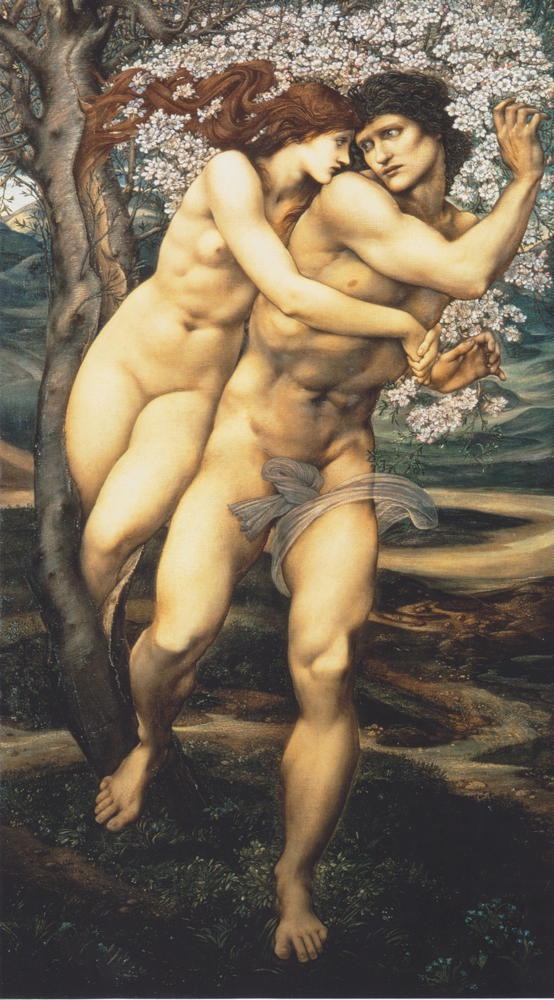
Sir Edward Coley Burne-Jones:
The tree of forgiveness
(1881-1882)
"Let the rest of us seek reconciliation and forgiveness."
After the end of apartheid in South Africa, Nelson Mandela authorized the convening of a court-like restorative justice body to both hear testimony from witnesses identified as apartheid’s victims and perpetrators seeking amnesty from apartheid-era civil and criminal prosecution. This body was called the Truth and Reconciliation Commission (TRC) and was intended to achieve something similar to what the Nuremberg trials after WWII had not. The Nuremberg Trials represented retributive justice, seeking to attribute guilt and impose punishment. The TRC sought something similar to the opposite, to acknowledge the wrongs and to seek forgiveness. This high-minded effort fell short of its aims, yet left a deep impression on both South Africa and the world. It still serves as a model for seeking alternative justice for widespread criminal behavior, beyond the individual and into the social. Canada mustered one as part of its Indian Residential Schools Settlement Agreement to document the systemic harms and history of Canada’s residential school system. Guatemala, Peru, and East Timor also pursued similar reconciliation strategies following self-inflicted human rights tragedies.
As these EndDays stories near the end of their series, my thoughts have increasingly turned toward What’s Next, though I already posted my WhatNext Series back in the autumn of 2020.
Weekly Writing Summary For The Week Ending 05/28/2026

Sir Edward Coley Burne-Jones:
Hero lighting the Beacon for Leander
(1885)
This week’s EndDays dispatches arrived in the aftermath of standing up in a room full of local leaders and saying the thing that needed saying. The writing ranged from the patient fury of Tolerance to the slow slide of Erosion, from the epistemological trap of ReceivedKnowledge to the paradox of ExperTease, from the systematic cruelty of Capriciousity to the civic illiteracy of Gumment. The week also brought a sophisticated publishing fraud using a real editor’s name and a nearly correct domain — and BookBub, which appears to be the genuine article. The series found its full voice this week. Then it was already Thursday again.
Thank you for following along!
Gumment
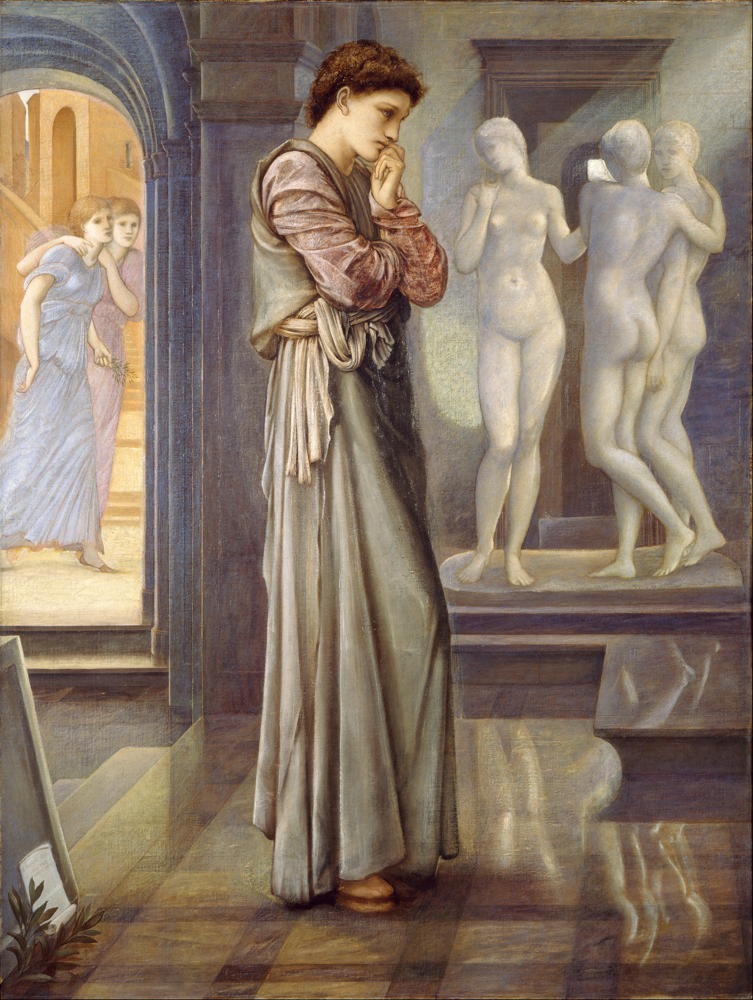
Sir Edward Coley Burne-Jones:
Pygmalion and the Image - The Heart Desires
(1878)
"Nobody will ever properly govern for us; we’re required to be more than merely emotionally involved: of, BY, and for."
I suspect I know much less about how our government works than I suspect. I suppose that I’m not in anything like a unique position concerning this issue. I doubt that it was ever any different, though nostalgia might have affected my remembering. I would prefer to believe that we citizens, those of us for whom our government was originally constituted, the much-vaunted “We, the people,” were well-versed in the workings of our governing institutions, but I fear that we’ve never mastered much more than a Pidgin proficiency in either our government or our history. This condition makes us easy targets for unscrupulous operators who might feel little compunction about materially misrepresenting to us our rights and obligations under the law. Certainly, this current administration, which has never been rightfully accused of properly administering anything, has proven no exception to this caution, for it seems to operate as an exception to every actual rule constituted under our laws.
We haven’t responded with anything like the vehemence these violations have warranted.
Capriciousity
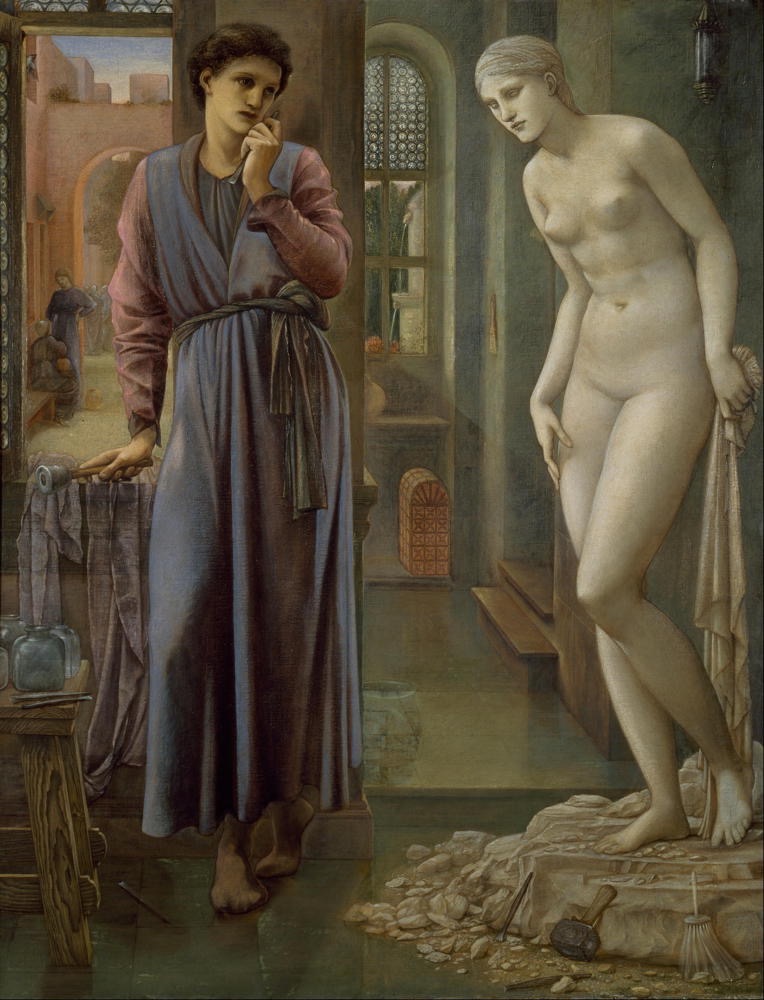
Sir Edward Coley Burne-Jones:
Pygmalion and the Image - The Hand Refrains
(1878)
"Then, perhaps, equal justice under the law might start making sense to even them, though I doubt it."
Equal protection under the law serves as the bedrock principle under which these United States have operated at least since the 14th Amendment was enacted after the Civil War. If enforcement has been anything but consistent, Congress’s intent in proposing it and the majority of the States’ intent in ratifying it seal its presence as something other than inadvertent. This administration still struggling to comprehend the concept of administration, which has been seemingly deliberately failing to abide by this fundamental underlying principle, as it has been consistently inconsistent in how it enforces laws. Clearly, race and national origin, as exhibited most profoundly in their vicious prosecution of so-called illegal aliens, have appeared with obvious intent to overtly violate this most fundamental legal principle. Declaring an alien illegal merely due to their due process being delayed by an overwhelmed judiciary does not render them illegal in any actual legal sense. If anything, they might find themselves temporarily suspended between legal statuses. Pending might better describe their formal status, and, under the principle that no one can be fairly characterized as guilty until found so by a jury of their peers, it cannot be treated as even a preliminary form of guilt. These “illegals” are clearly still innocent, until.
Those who arrive here illegally are also guaranteed due process, for that right is not reserved only for citizens but for any person present in this country, as our Constitution insists.
ExperTease

Sir Edward Coley Burne-Jones:
Green Summer
(1864)
"…adequately stunning to render any controversy about their quality moot."
The one with the most information does not necessarily win any competition, for their competitor cannot compete on the same playing field, and might well default before an actual game can even begin. One might try to more perfectly pair levels of actual ExperTease, lest an encounter dissolve in jest or worse. A contest worth watching tends to be well-balanced, with each contestant nearly equally skilled, lest their play turn into a rout. Routs are notoriously awful to witness. Whomever one roots for tends to lose. When success turns into a foregone conclusion, who should even be bothered to watch? Likewise, no one except a player’s family enjoys a game between two teams without at least some expertise in the game. It’s a tenuous balance.
For The Muse, the potential that a data center presented needed to be carefully calculated.
ReceivedKnowledge
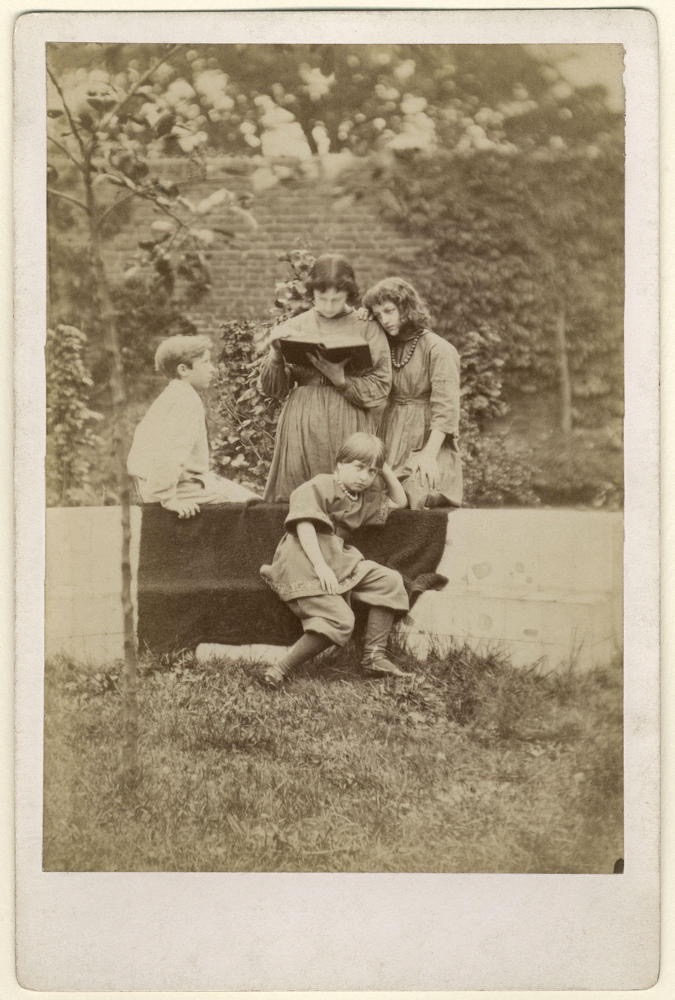
Frederick Hollyer:
The children of Sir Edward Coley Burne-Jones, 1st Bt and William Morris
(1865)
"...as if I had become the genius I should have remembered I never was."
I was reading ‘my’ New Yorker over breakfast, when I encountered another especially glaring example of ReceivedWisdom. I found this instance particularly upsetting because the New Yorker has always been renowned for its scrupulous editing and fact-checking, yet here it passed off a popular prejudice as if it were a commonly understood fact. The article, Fools Rush In, was a lighthearted report from California’s new gold rush. With the price of gold hitting five thousand dollars, many had abandoned whatever their prior profession might have been, or after that profession had abandoned them, to work old abandoned placer mines in the Sierra Nevada. The author, Jennifer Wilson, was presenting a brief history of California’s State legislature’s attempt to regulate certain sorts of mining that dredges up long-buried mercury deposits that poison rivers and fish. She claims, “I wanted to dismiss that posture [miner protests against these regulations] as science denialism tinged with macho bravado. But then I imagined how I’d feel living near Silicon Valley, whose billionaire class shows up clean-shaven and well rested at Davos to pitch toxic, water-draining A.I. data centers.” I executed a full stop!
In the popular literature, A.I. data centers are almost always characterized as toxic and water-draining, as if these were undeniably uniform attributes of all data centers, when they are most certainly not.
Erosion
Sir Edward Coley Burne-Jones:
The Falls from the Narrow Neck near the Eastern Headland of the Outlet
(1865)
We cannot maintain anything like a society of, by, or even for the people, if those people, We The People, are not absolutely committed to pursuing truth together.
EndDays prominently feature Erosion. Whether Erosion causes EndDays or EndDays encourages erosion, I can’t say. Both contribute. This snake eats its own tail. It seems certain that once EndDays appear, Erosion increases, just as if some critical mass had been exceeded and gravity simply proceeded doing what she’d always done, only ever so much more so. Truth might have been the first stalwart to go, for it had always been essential and irreplaceable. Once truth starts slipping, a long, inexorable slide appears. There was never any way back from there. Then the end does more than just seem to be growing nearer.
Cynicism might be the concerted lack of belief in truth’s beneficience.
Tolerance

Sir Edward Coley Burne-Jones:
Study of a Head
(1879)
"There comes a point in the history of a nation when continued Tolerance no longer cuts it."
My fellow Americans and I must be the most tolerant people in history. We’ve been tolerating the ignominy of a capricious incumbent and his equally insulting Cabinet. We’ve tolerated unprecedented abuses of our public and private decency. On any odd Tuesday, the current incumbent outdoes the insults King George III inflicted upon our forebears. Our forebears flinched and fought back, even though it appeared at first that they had no chance of vanquishing their persecutors. They were that furious. I feel curious as to what offense might flip our stoic forbearance and force us to take up something resembling arms in defense against the continuing humiliation. This is still our nation, after all, and a self-destructive renter has been absolutely trashing our old home place.
Any contest between couthness and uncouthness seems foregone from its outset.
Weekly Writing Summary For The Week Ending 05/21/2026

Sir Edward Coley Burne-Jones:
Design for an Athenian Villa
(unknown)
This week’s EndDays dispatches arrived while I was partly in alien territory, writing from the lobby of Skamania Lodge as The Muse attended a Washington State Port Commissioners gathering. The Columbia River predawn fog held steady outside while the week’s writing ranged from the physics of Backwards progress to the theology of Religionism, from the terror of public acknowledgment to the discomfiting blindness of PipeDreaming. I stood up in a room full of local leaders and said the thing that needed saying out loud. I felt, for the first time in a long while, unmistakably like a writer. It was just Thursday.
Thank you for following along!
PipeDreaming
Sir Edward Coley Burne-Jones:
St Frideswide - Design for Stained Glass Window, Christchurch Oxford
(1859)
"I didn't see him again for the rest of that evening."
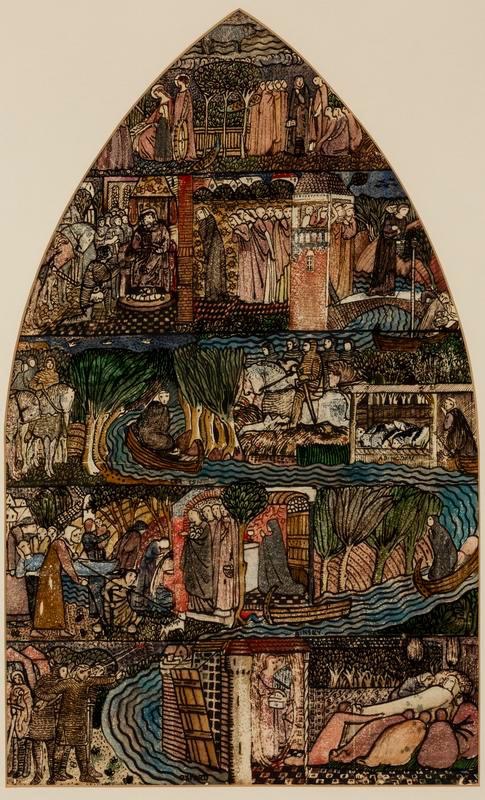
I might best characterize EndDays as those in which PipeDreaming subsumes otherwise ordinary planning and processing. The Old Status Quo’s natural force seems to defend against acknowledging any more current state of affairs, and those charged with foreseeing expend their increasingly limited energy looking backward, basking in beliefs and perspectives already rendered moot. They do not see the easily foreseeable upcoming, but continue insisting that everything remains essentially fine. Sure, some minor concern might seem prudent, but Our President would not lead us into anything like overwhelming temptation. To them, we seem to be in no real danger, other than the usual business cycle. Sure, they insist, prices might have risen a bit, but the market seems wise enough to compensate before anything crashes. If everything isn’t precisely fine, it sure seems to be trending positive.
The campaign promises were received by some as iron-clad prognostications, learnéd predictions about future performance.
Backwards
Sir Edward Coley Burne-Jones:
The Perseus Series: The Finding of Medusa
(1882)
"…going Backwards inevitably proves impossible and ultimately self-defeating."
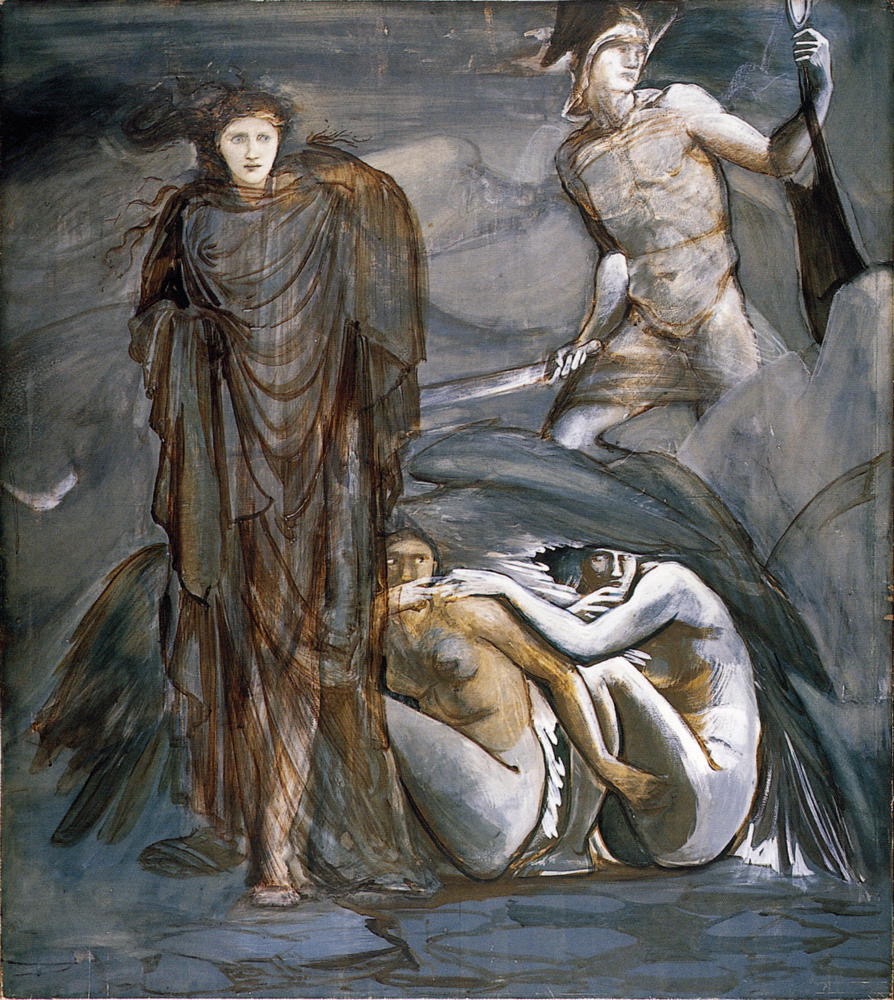
Electing a corrupted individual into a public office sets the whole enterprise reeling Backwards. Whatever formerly passed for human progress abruptly ceases. Utter irrelevances replace significances, and the purpose of the resulting administration, besides their utter inability to actually administer anything, becomes corruption. We should have long ago passed a law, a prominent amendment to our revered Constitution, declaring that no convicted felon could be qualified to hold the highest office. It had never happened before, though this first time clearly shows the wisdom of just such a provision. Now, the corruption extends to pretty nearly everyone still left in this administration incapable of administration, and not only because only the most incompetent remain; all of the honest ones were successfully chased off by their refusal, steadfast and quick, to compromise their ethical standards. Those remaining apparently never had such compunctions. Many gleefully agreed to assist in engineering a delusional Backwards shift.
Generations of actual progress toward creating a genuinely more perfect union were discarded in an initial blizzard of misrepresentations.
Terrorized
Sir Edward Coley Burne-Jones:
The Feast of Peleus
(between 1872 and 1881)
"Such small incremental improvements, even if only in acknowledgements, often produce great differences."
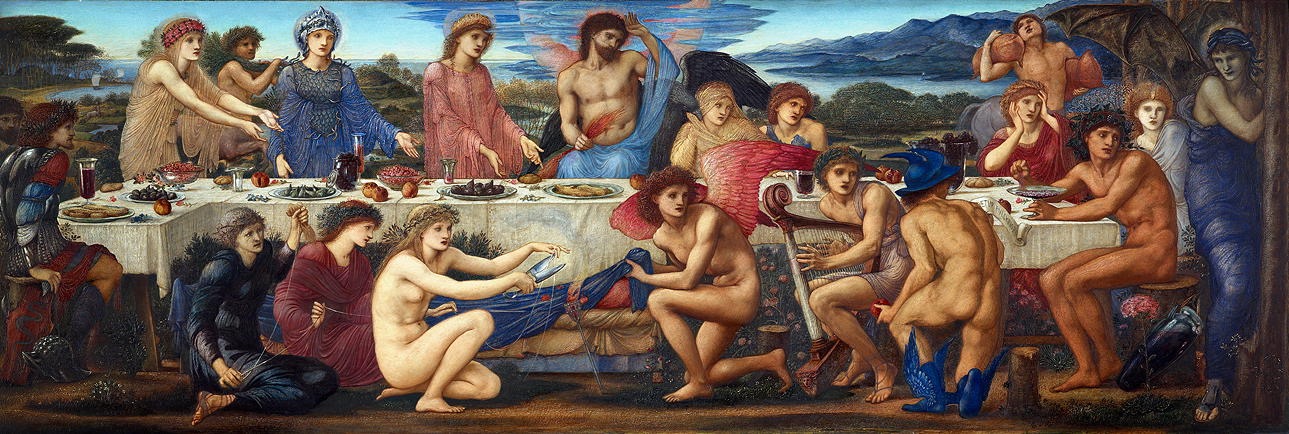
The Muse and I were invited earlier this Spring to participate in a group focused on trying to compensate for the terrorism our incumbent had been inflicting upon innocent immigrants. This effort would have been unnecessary, just as it had been under every previous administration, but this administration, which never really dedicated itself to competently administering anything, had taken a different tack. It had decided to attempt to send brown people back to what the administration undedicated to actually administering anything imagined might be their family’s country of origin, or, in lieu of that, even some country the brown person had maybe never even heard of before. Their policy had been to rid the country of immigrants, whether or not their legal status suggested they had a legal right to be here. Oh, this administration that couldn’t quite imagine itself administering anything denied those immigrants the due process guaranteed to everyone, even non-citizens, by our foundational Constitution.
Such was the context within which that first meeting, and three subsequent ones since, had taken place, yet that context had never been explicitly mentioned.
Religionism
Sir Edward Coley Burne-Jones:
The Baleful Head
(1890)
"Why, in all that's actually holy, would we ever decide
to downgrade ourselves into being merely a Christian nation?"
One sure and certain sign of EndDays arriving lies in sustained religious zealotry. Any time might spark a temporary blip in religious fervor, but a sense that EndDays are upon us curses many with a sincere sense that they might be in desperate need of immediate salvation. People will agree to the strangest things when they believe their eternity looms. Charlatans proliferate then, as preachers and politicians, each purporting to hold special dispensations, as if they’d previously died and even gone on to heaven, only to return to council any late arrivers. Scripture starts being used for the strangest purposes. A prince of peace might be introduced as some latter-day god of war. Soldiers might be exhorted to behave like Christians, that kind of Christian who acted more like a Roman soldier. The lyrics, “Onward Christian Soldiers, marching as to war,” lose their allegorical nature in favor of a more literal interpretation. The Ten Commandments get amended to allow a few of the usually more egregious infractions into the lexicon as exceptions, like the prohibition that used to insist Thou Shalt Not Kill no longer applying to upstanding Christian personnel.
The very concept of godly gets turned on its ear, and one wonders where we think we’re going, other than nowhere or Hell.
ChangingWorlds
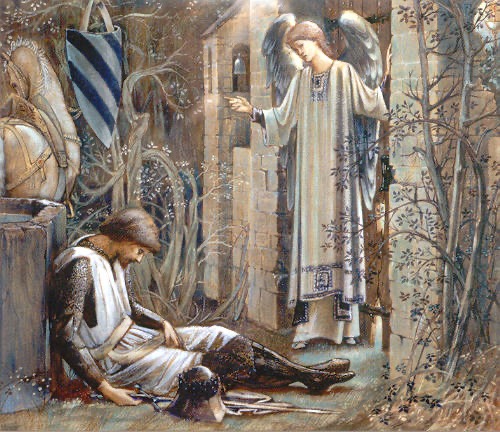
Sir Edward Coley Burne-Jones:
The Earthly Paradise (Sir Lancelot at the Chapel of the Holy Grail)
(1890)
"I once feared and felt cowed by their delusions. No more."
EndDays seem decidedly different than most of the days that came before. They seem crueler and less rewarding. We have a performative idiot spouting unsettling koans we cannot understand any more than we seem capable of ignoring, even though they most likely signify nothing. I feel astounded at how easily I surrendered my sacred serenity, seemingly setting my own hair on fire in defiance. We see ever clearer evidence that this era might signify nothing more than the vanity of a few of the wealthier fools, nothing this world hasn’t seen plenty of times before. I’ve felt especially cursed when I might have been little more than perfectly normally cursed instead. Nothing particularly special. Oh, I wear my hair shirt and suffer right along and right next to everyone else, but I suppose EndDays might be supposed to seem that way. Are they really? Must they necessarily seem that way?
I realized this week that our incumbent has already passed the threshold beyond which no former president ever accomplished anything new.
Gravlity
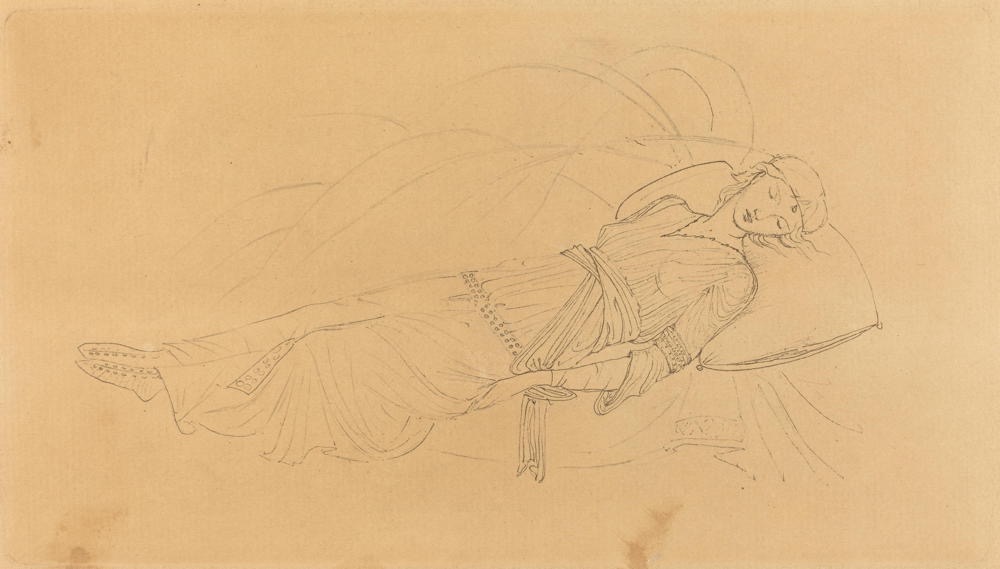
Sir Edward Coley Burne-Jones:
La Belle au bois dormant-[Sleeping Beauty]
(1890)
"…the physics of making this country great again
seem to reliably result in rendering it worse."
Aristotle posited that two forces governed the positioning of the four fundamental elements: Earth, Water, Fire, and Air. Gravity ruled over Earth and Water by encouraging them to sink to what he referred to as “their proper level,” which sat beneath air and fire. An opposite force, he labeled levity, ruled Air and Fire’s behavior, which, according to their nature, levitated above both Earth and Water. Though his notions would later be shown to be incorrect, they successfully explained the observed behavior of these fundamental elements for two millennia. Earth does indeed tend to sink below the water, and bubbles rise through the water, occupying the space above. Fire produces smoke that naturally rises through air, though the elevating force Aristotle insisted upon calling levity turned out not to exist as he’d envisioned. Still, he described what we might easily accept as our a priori world, the one we all inhabit until actual scientific knowledge supplants our original innocence.
My intuition still expects my universe to sort itself out on Aristotelian terms, and I feel deeply disoriented whenever it doesn’t.
Weekly Writing Summary For The Week Ending 05/14/2026
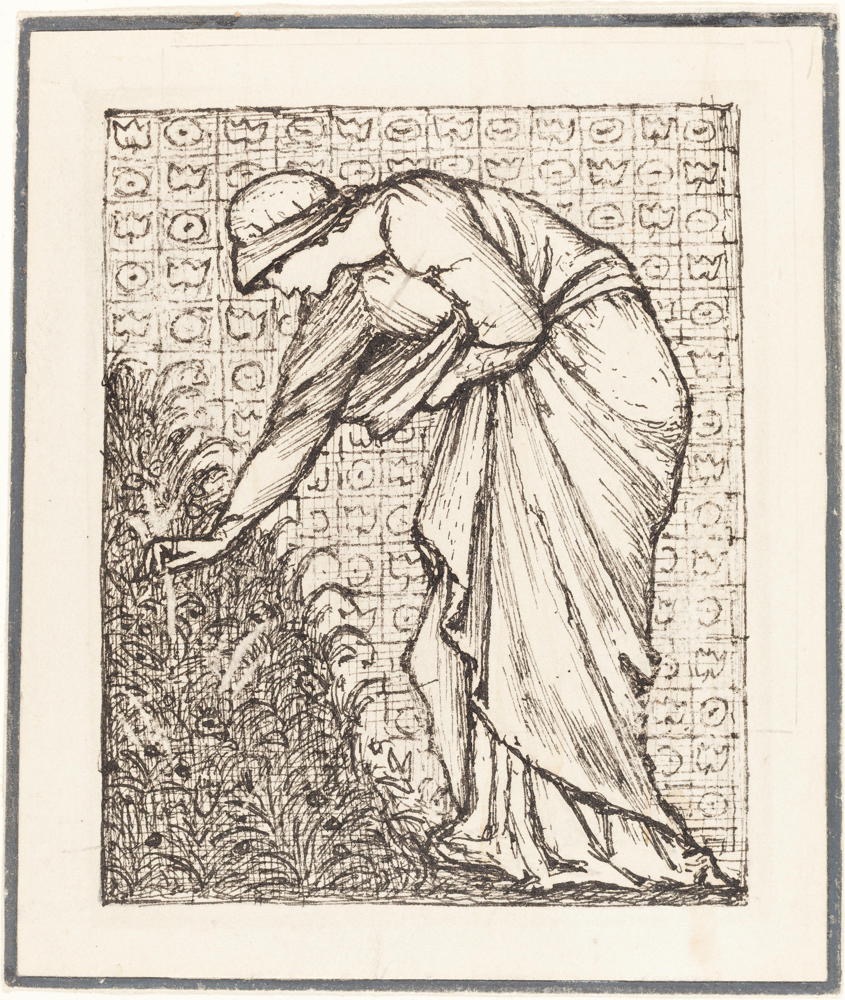
Sir Edward Coley Burne-Jones:
Lady Picking Flowers
(1890)
This week’s EndDays dispatches moved between the political and the personal with unusual ease. A presidential DeathWatch stretched into another exhausting anticipatory week. The King’sHorses of our incumbent’s second administration proved no more capable of saving him from himself than the nursery rhyme predicted. I turned from political catalogues to ask myself the only question that matters — WhatDidYouDo? — and answered it honestly, if not flatteringly. A Madman held court. Commerce frustrated me into near total abstention. And a parade of publishing AgentScenes reminded me that my aspirations for Cluelessness remain cheerfully unimaginable to those who profit from the Published Author Myths. A good week’s work, all things considered.
Thank you for following along!
AgentScenes
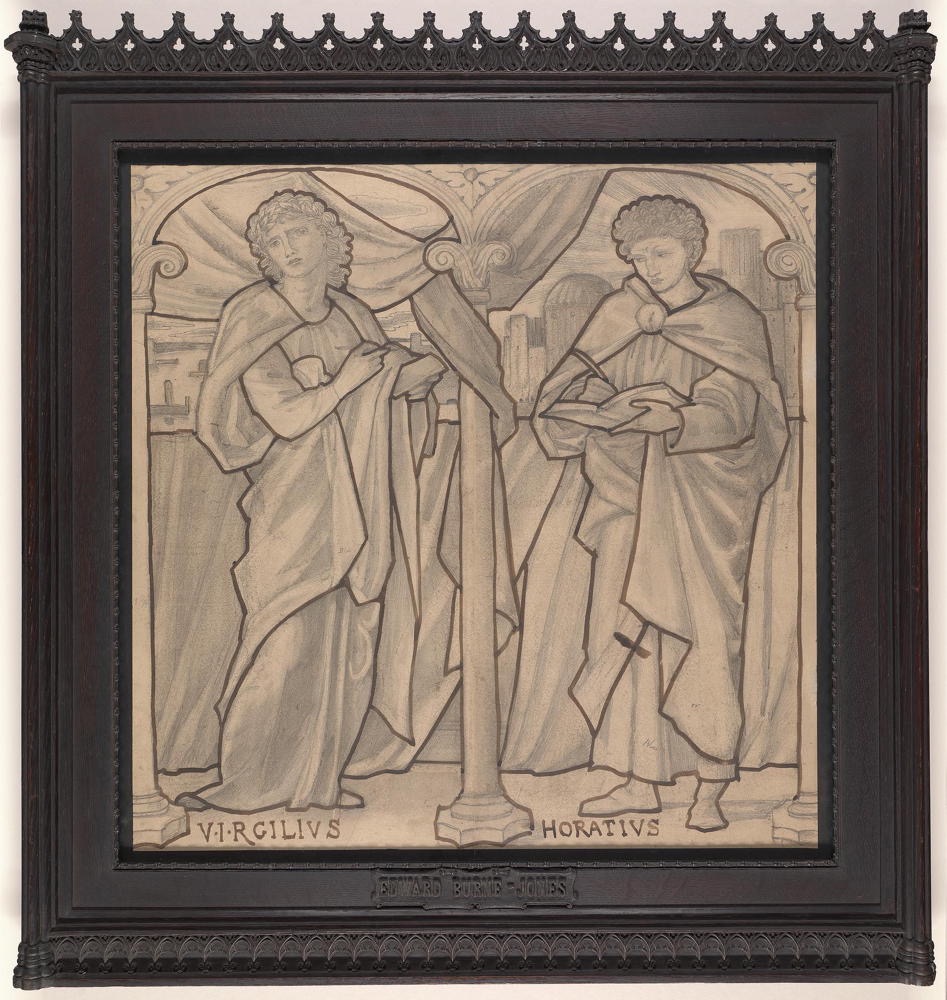
Sir Edward Coley Burne-Jones:
Preparatory Design for a Stained Glass Window, Virgil and Horace
(Undated)
"If I emphatically whisper, I believe the right readers will hear."
Since I published my book, Cluelessness, three weeks ago, I have received several calls from various “agents” seeking to assist me in turning the book into the bestseller they presume I intend it to become. Each has a scheme that they claim could transform my work from an unassuming self-published into something notorious. One dealt with connecting authors with agents who purchase subsidiary rights, such as audiobook production, foreign-language, and serialization rights. She had assembled a list of “over 600” active purchasers of such rights. She offered to sell access to this email list for three thousand dollars and to throw in some free advice on the “come-on letter” that should accompany each cold-call contact. I sat through an hour-long self-promotional video in which I was introduced to someone with superhuman self-regard and invited to “invest” in my book. She was not interested in investing in my book, though she seemed more than willing, downright anxious, to profit off it nonetheless. I declined her invitation.
There might not be any end to those who feel moved to offer me some scheme to further invest in my dream, though my dream for the book doesn’t quite match the dream they aspire for me to have for the work.
Commerce
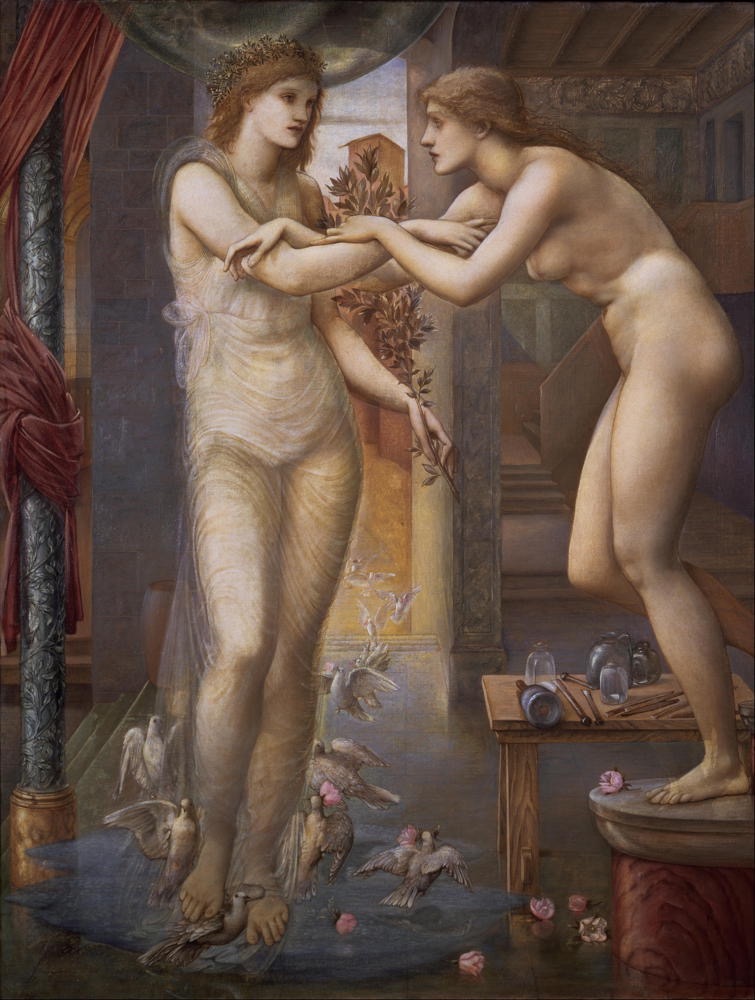
Sir Edward Coley Burne-Jones:
Pygmalion and the Image - The Godhead Fires
(1878)
"…Commerce there will likely be no better."
It has never been more difficult for me to simply buy something. I blame convenience for the terrible state of Commerce; few things remain accessible except online. More than anyone could ever desire remains available online, though the price of purchasing anything there might convince a shopper that it’s not really worth the accompanying hassle. Convenience brings hassles all its own, completely different than the more familiar yesteryear in-person shopping hassles. Finding a product has been simplified to the point that it’s essentially impossible to find a single instance of any item. Trying to find something invariably yields an overwhelming variety of that product, leaving the shopper confronted with the Paradox of Choice. Comparing two ot three alternatives can seem fairly easy for most, but winnowing down two or three dozen choices produces less a choice than a dilemma, one that seems to damn this shopper whatever I choose. I often decide that I didn’t sufficiently want that item when faced with this dilemma, so I quietly delete it from my shopping list, lest my choice somehow damn me. I tend to be better for whatever I never chose to purchase. That’s the essence of EndDays Commerce.
On those rare occasions where I decide to choose something, unseen externalities conspire to gang up on me.
Madman
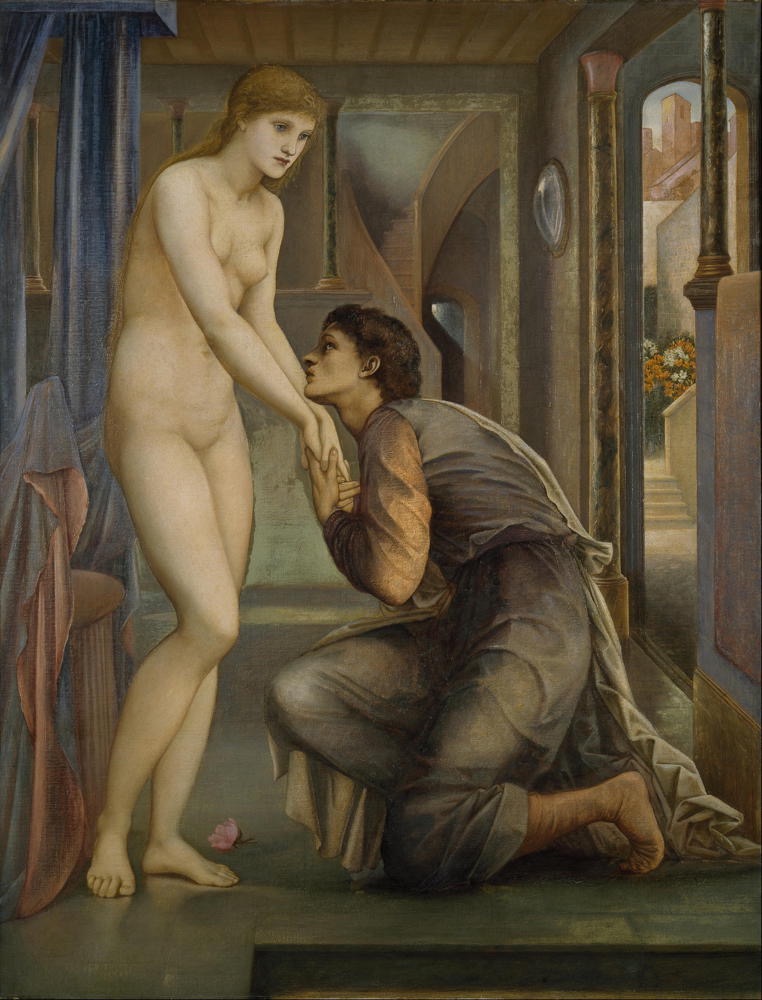
Sir Edward Coley Burne-Jones:
Pygmalion and the Image - The Soul Attains
(1878)
"Pray for the retinue."
He rambles when he speaks, just as if he cannot help himself. He doesn’t seem capable of sticking to any topic, though he does tend to swerve back to some chief irrelevance, depending upon what he might be obsessing about at that particular moment that week. Very little of whatever he says seems terribly focused. He calls a press conference as if only to berate the dutifully assembled press, sometimes insisting that all reporters leave the room before he begins, to punish them for some imagined infraction, I guess. He often appears to doze, though, admittedly, that might just be some sort of negotiating ploy, if only he had been negotiating anything in those instances. He wasn’t. He moves like a drunk through the world, coming very close to bouncing off things he passes, bullshit wending through a china shop. He pretends a lot, though it might be that he believes everything he says. If so, he’s a Madman. Of this, little doubt remains.
He will not be talked out of his irrational convictions.
WhatDidYouDo?

Sir Edward Coley Burne-Jones:
Perseus Cycle 7: The Doom Fulfilled
(1882 )
“…it matters how we answer when we ask ourselves this one absolutely essential question…”
WhatDidYouDo when the world was going to Hell? Did you doomscroll in resignation or defiantly curse your obviously undeserved fate? Did you take to the streets to protest the unfair outcome? Did you write a haughty letter to the editor insisting upon what should have been done, what still might be done to avoid the worst-case scenario? Did you just tend your garden as if tending garden might be the best anyone could contribute, given the unfortunate circumstances, nurturing a few more hours in heaven before finally submitting to the apparently inevitable? Did you encourage the fall, believing in the transformative potential of some well-deserved time spent, even if it’s spent in God’s penalty box? Did you rail against the unfairness or quietly submit? Did you purchase an AR-15 class weapon to defend your Second Amendment rights? Did you hoard or sacrifice? Were you generous or stingy under the pressure? Did you cheer the political cowardice that led us all there or demonstrate genuine political courage, whatever that might entail?
This world has been headed for Hell since before it was born, depending upon whose stories one depends upon.
King'sHorses

Sir Edward Coley Burne-Jones:
The Perseus Series: The Death of Medusa I
(1882 )
“All the King’sHorses and all the King’s men seem unlikely to save our incumbent from himself again. Thank Heavens!”
The administrators and cabinet heads in our incumbent’s first administration were fringe characters, but several seemed to retain enough of their native senses that they eventually acted to prevent a few of his more disgusting abuses of power. These interventions ultimately frustrated and angered our malignant narcissist, and he leveraged these experiences to ensure that no sane person would get a chance to serve in his second administration, the one he clearly intended to remain steadfastly indifferent to administering very much of anything, especially our federal government. And so it came to pass that he nominated not merely the bottom of the barrel, public servant-wise, but generally, creatures who had never quite managed to matriculate to inhabiting the inside of any barrel, but those who hailed from somewhere beneath one. Carefully coached and in collusion with some of the worst legislators in the history of legislating, most of those horrible nominees managed to gain approval. These became what are generally referred to as The King’sMen, even though a significant number of them purported to be women, though none of them in any way traditional or as DEI hires, except, of course, in the caricature, cartoonish way.
Anyway, we ended up with an epic crew.
DeathWatch
Sir Edward Coley Burne-Jones:
Laus Veneris
(Between 1873 and 1878)
"…once the sour spoilage this incumbent leaves behind as legacy, finally fully decomposes, thank Heavens."
Rarely has an anticipation received such an enthusiastic public reception. News of the impending event has become an obligatory element of every edition of every paper and news program across the spectrum, from amateur podcasts to stately professionally-produced broadcasts: video, audio, and print. Each morning first carries news of astonishment that our beleaguered and clearly ailing incumbent has somehow managed to survive another night intact, though he reportedly gleefully appears worse than when last reported. More makeup has invariably been ineptly smeared over some fresh rotting part of his body, typically the other hand. His ankles continue to swell, defying geometry as well as gravity. He’s clearly cognitively not quite what he used to be yesterday, and certainly worse than he was the day before. His demise always seems inexorable.
He enjoys an unusually asymptotic relationship with his demise, though people often depart by way of seemingly infinite increments.
Weekly Writing Summary For The Week Ending 05/07/2026

Sir Edward Coley Burne-Jones:
Studies of an Arm and Hands
(Not Dated)
This week’s EndDays dispatches arrived in the same week as Cluelessness itself — the physical copies of the long-awaited book finally landing on the porch in their plain brown box. The week held that particular tension between the personal and the political that EndDays has been delivering simultaneously. I read myself whole for the first time. I chased phantom typos through predawn light. I watched our incumbent’s Craziness spread through Congress like a communicable disease while his MakeUp spread across his face like a communicable disease. MakingBelieve turned out to describe both a despotism’s operating model and the condition of anyone credulous enough to volunteer to inhabit one. Apparently, Vacuity got elected president again. I came out the other side of this week feeling remarkably different for having read that thing I wrote.
MakeUp

Sir Edward Coley Burne-Jones:
The Council Chamber
(1892)
"Thank the Lord or somebody for such small blessings."
Scripture predicted that many strange things would appear during EndDays, but if these are, indeed, EndDays, even stranger things have manifested. I suspect that no self-respecting prophet could or would have unashamedly predicted what we see emanating from our Administration Still Remarkably Uninterested In Administering Anything. That label alone would have challenged even an experienced Ezekiel to announce. “And, verily, The EndDays will bring an Administration Still Remarkably Uninterested In Administering Anything.” Even the more devout and penitent would welcome such news with a heartfelt, “Pull the other one, it’s got bells on.” Our actual experience, given that these might be those long-anticipated EndDays, surprises us all, however Nostradamus-hardened we had become. This life, as usual, wouldn’t really qualify to be believable fiction. That’s probably the primary way we can determine for certain that these times are not, in fact, fictional. We’re not delusional, merely present and attentive. Nobody could credibly MakeUp this stuff.
Perhaps at the top of what would have previously qualified as unbelievable stands the now common practice, broadly engaged in by self-proclaimed conservatives, of males wearing MakeUp.
SelfReference

Sir Edward Coley Burne-Jones:
The Mirror of Venus
(1875)
"…I lay down for a well-earned nap I might never quite wake up from."
Who does he think he’s writing to? For? Who did he intend to enlist to perform in the role of his reader? The book seems to have more premise than plot. He titled it Cluelessness, then cast himself as the protagonist, as almost the only focus. Should he be classified as a Narcissist? A Maschochist? If I weren’t the author, I wouldn’t be able to answer. Even as the author, I question whether I could be capable of coherently responding. As the author, my answers might be even more troubling than those posed by any reader. I cannot be certain. I suddenly can’t be certain about anything. I might be experiencing SelfReference poisoning. Have I disclosed too much? Have I revealed fundamental shortcomings? Have I gone and spoken what no one should ever say out loud? Does this publication mark the start or end of whatever might have been left of my reputation?
In the first sentence, I explain that the book is a work of philosophy, autobiography, history, and fiction, simultaneously, all at the same time.
Craziness

Sir Edward Coley Burne-Jones:
The Madness of Sir Tristram
(1892)
"I feel reasonably confident that there's no pill for that."
Modern governments have struggled to respond to their leader’s incapacity. When King George III went mad the first time, Parliament moved to reassign his authority to his son, the Prince of Wales, but the king recovered before the vote was taken. Later, when he went mad again, his authority was formally reassigned to his son, though George retained his title until his death ten years later. Here, repeated calls for our current incumbent to be removed from his office under the Twenty-fifth Amendment have resulted in no action from either Congress or the Cabinet, the only two bodies holding authority to act. As his madness progresses, it seems unlikely that anybody will act. This seems to be a feature of madness and power. Everyone might agree that someone should act, but nobody seems to see themselves cast in that role. The political cost of admitting to any madness in one’s party seems too goddamn onerous for anyone to act, so they descend into the same madness they witness in sympathetic response.
We pride ourselves on being a country of laws, though our laws seem to be divided into two broad classes: Laws we intend to enforce and those we don’t.
Erring

Sir Edward Coley Burne-Jones:
Phyllis and Demophoon
(1870)
"Was any of his ever any different?"
The first copies of my newly published book, Cluelessness, arrived yesterday. I opened the box to find five fresh copies, covers still sticky with whatever they use to cover new paperbacks at the factory. This qualified as an out-of-body experience, akin to witnessing the birth of a child, though significantly less messy. It was emotionally complicated, for such moments reintroduce the age-old tussle between me and my imposter syndrome, for in most ways, I remain a pretend author. I write in the very early mornings when no witnesses can catch me. I publish to a fairly select list, not tens of thousands of social media fans. Heck, I don’t even earn anything other than experience for my efforts. If I were a real writer, my bestseller would have rendered me rich and famous. If I were the real McCoy, publishers would be storming my door seeking additional material. As it is, I write for my own edification, mostly, and for a small and extraordinarily generous community around The Muse and me.
My life immediately went on hold.
Vacuity

Sir Edward Coley Burne-Jones:
Studies of a Suit of Armor
(1875)
"…that's what always happens when Vacuity LLC,
gets himself elected President of a country."
If every particle possesses an opposite, then, I suppose, every polity must also carry an opposing polarity. During our own American Revolution, fewer than half of the colonists supported the patriots’ position: 40–45% were Patriots, 15–20% were Loyalists, and roughly 35–40% remained neutral or “fence-sitters”. (USHistory.org) Nearly as many were apparently indifferent to that world-changing opportunity, and many were opposed. Once won, the resulting freedoms were not universally embraced. Several of my forebears felt oppressed by the emerging Federals and fled into territory not yet governed by anybody but natives, preferring their own chances for liberty over those offered by any more newly-formed polity. Some were religious zealots who firmly believed that The Lord, in his infinite wisdom, had predetermined history so it couldn’t possibly make a lick of difference what anyone resolved to achieve, and that went at least double for any earthly government or slave.
Those anti-polity sentiments followed us through the two and a half centuries since independence.
MakingBelieve

Sir Edward Coley Burne-Jones:
The Adoration of the Magi
(1904)
"That age-old truth never once stops stalking."
Despotisms utterly depend on fictions. No reality can properly sustain them. They begin with a lie, then inevitably end with some age-old truth piercing whatever’s left of their heart. In between a despotism’s birth and its inevitable death lies a world at least circumscribed by lies, fervently held. Its tenure becomes an extended game of MakingBelieve, with peek-a-boo pieces to retain the true believers’ beliefs, which, in one of the cruelest twists of fate ever to befall them, base their existence on lies. If this seems like a tenuous basis upon which to root any existence, political or otherwise, you probably haven’t yet succumbed to the continually reinforcing messaging intended to reassure and secure your unquestioning support. Those who are not constantly MakingBelieve cannot comprehend what believers gain from engaging in such fictions.
It might be that everybody eventually becomes practiced at MakingBelieve, for accepting reality seems to require plenty of accepting a fair number of unresolvable mysteries.
Good For A Goose

Comeuppance (20)
Decency (90)
Decency Unscrolling (1)
EndDays (92)
Exiled (90)
Fambly (93)
FollowingChapters (93)
Grace (92)
Humor (2)
iAlogue (1)
Letters to the Editor (1)
NextWorld (91)
Personal (18)
Prosperity (94)
Steam Festival (4)
Unscrolling (89)
Vaporized (6)
Work (16)
September 2026
August 2026
July 2026
June 2026
May 2026
April 2026
March 2026
February 2026
January 2026
December 2025
November 2025
October 2025
September 2025
August 2025
July 2025
June 2025
May 2025
April 2025
March 2025
February 2025
January 2025
December 2024
November 2024
October 2024
September 2024
August 2024
July 2024
June 2024
May 2024
April 2024
March 2024
November 2006
October 2006
September 2006
August 2006
July 2006
June 2006
May 2006
April 2006
March 2006
February 2006
January 2006