Profligacy
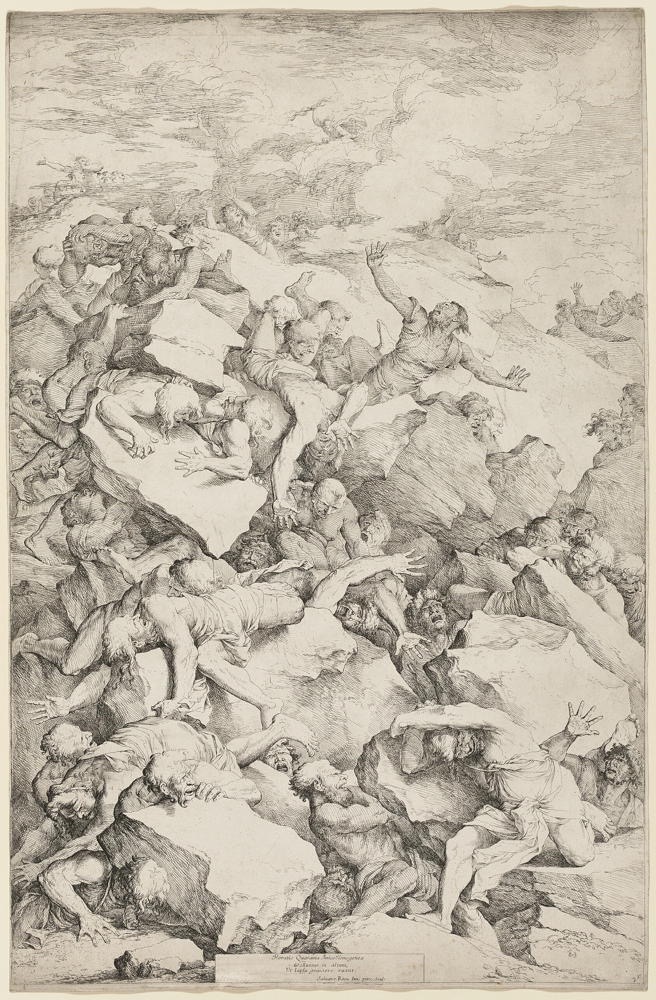
Salvator Rosa:
The Fall of the Giants
(1663)
"His adolescent attitude could ruin more than himself this time."
Something about Prosperity despises Profligacy. Prosperity seems curiously thrifty, even though it contains plenty. Of course, plenty remains a relative term. Some seem to thrive on a penny while others require vast sums to ever feel adequately supported. The apparent paradox that a thrifty Prosperity carries says much. Some self-discipline seems a necessary element if any Prosperity is to be achieved, let alone maintained. Those who would mortgage the farm on a whim either never gain Prosperity, or “mysteriously” lose it when they least expect it. A similar paradox accompanies every freedom, for none can be practiced as if absolute without somehow ruining its spirit. Each freedom seems to require a thrifty attitude in practice lest a resulting latitude overwhelm through unregulated practice. Brandy was meant for sipping, not chugging.
It seems common that the road to Profligacy usually appears as an opportunity.
Posterity

Robert Dighton:
The Paintress of Maccaroni's
(1770)
"May we choose to choose more wisely this time."
Prosperity cannot be accurately measured in any present sense. Current conditions can only hint at prospects. Because Prosperity must be relational, it cannot be possessed by a person or a time period, though history often misleadingly associates it with specific people and times. A prosperous person possesses a promising future, not merely a temporarily rewarding present. They might accumulate wealth, but not only for themself. They interpret freedom and liberty as associated with family, community, and nation, rather than merely governing an individual’s unbounded choices and personal portfolio. Prosperity might be ninety percent aspiration. It provides the motivation to continue creating, for reaching across space and time, beyond mere space and time. Prosperity manifests in opportunity. Not born-with-a-silver-spoon advantage, but the ability to take reasonable chances, investment rather than raw speculation.
I came of economic age during the infamous Reagan Devolution, where our country’s Prosperity was mortgaged for considerably less than a handful of magic beans.
Mythed
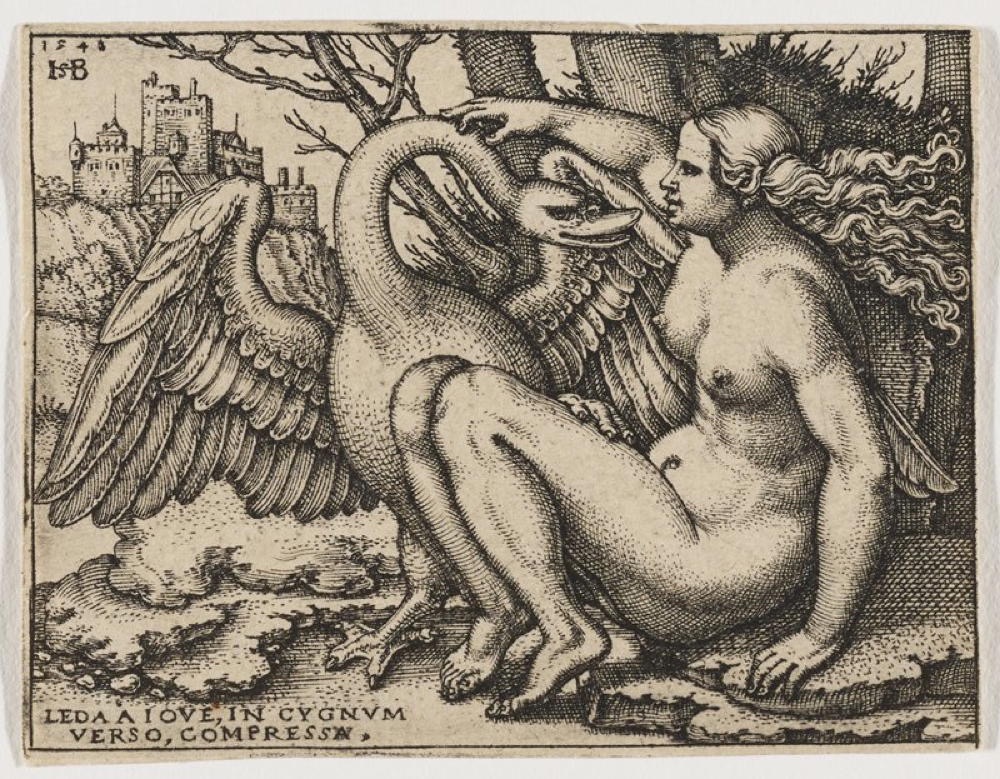
Sebald Beham:
Haman Recognizes his Fate
(1548)
"…constrained by law to consider facts rather than myths."
As a Port Commissioner, The Muse has been charged with promoting economic development in this county. Her elected position pays a modest stipend, something well South of the most modest minimum wage, plus expenses, for which she works seven days each week. She’s often up after midnight, studying some opportunity. Fortunately, she’s an information and data magnet, never happier than when she’s researching some issue. She’s especially skilled at separating opportunities from the myths often accompanying them. She insists upon more than merely due diligence, and she knows the tricks that reliably separate facts from popular fictions. Her constituents aren’t always so demanding, for they sometimes fall prey to the many myths surrounding essentially every economic development opportunity.
Probably nothing has been more damaging to Prosperity than the mythology surrounding industrial property development.
Real_Work
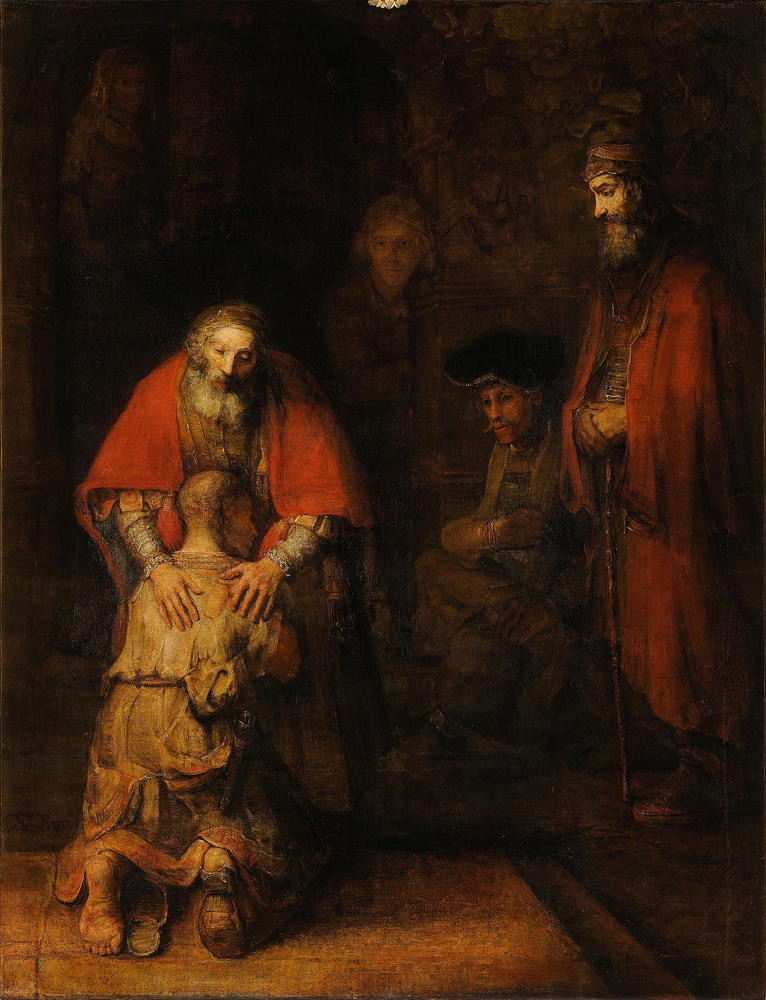
Rembrandt Harmenszoon van Rijn:
The Return of the Prodigal Son
(1668)
"…regardless of what any economist insists."
Most people in this country no longer engage in what our forebears would readily recognize as Real_Work. Real_Work once involved physical labor and was amenable to unambiguous measurement. An hour of labor created a certain indisputable volume of finished product. That product sold at a discernible price, enabling a clear assessment of the contribution a given laborer’s actions added to the ultimate value. High-value commodities reliably produced Prosperity, all other calculations being relatively simple. Almost nobody engages in this sort of labor/Prosperity trading anymore. We mostly work in teams today, sharing tasks and contributing rather than owning our own effort. Determining the value added requires layers of assumptions, none of which involves a finitely observable action. Time-and-motion studies long ago became meaningless measures of efficiency or effectiveness. Productivity has become an imaginary entity; Prosperity, an elusive objective.
Further, we seem to have grown some prejudices about what constitutes Real_Work.
Weekly Writing Summary For The Week Ending 06/25/2026
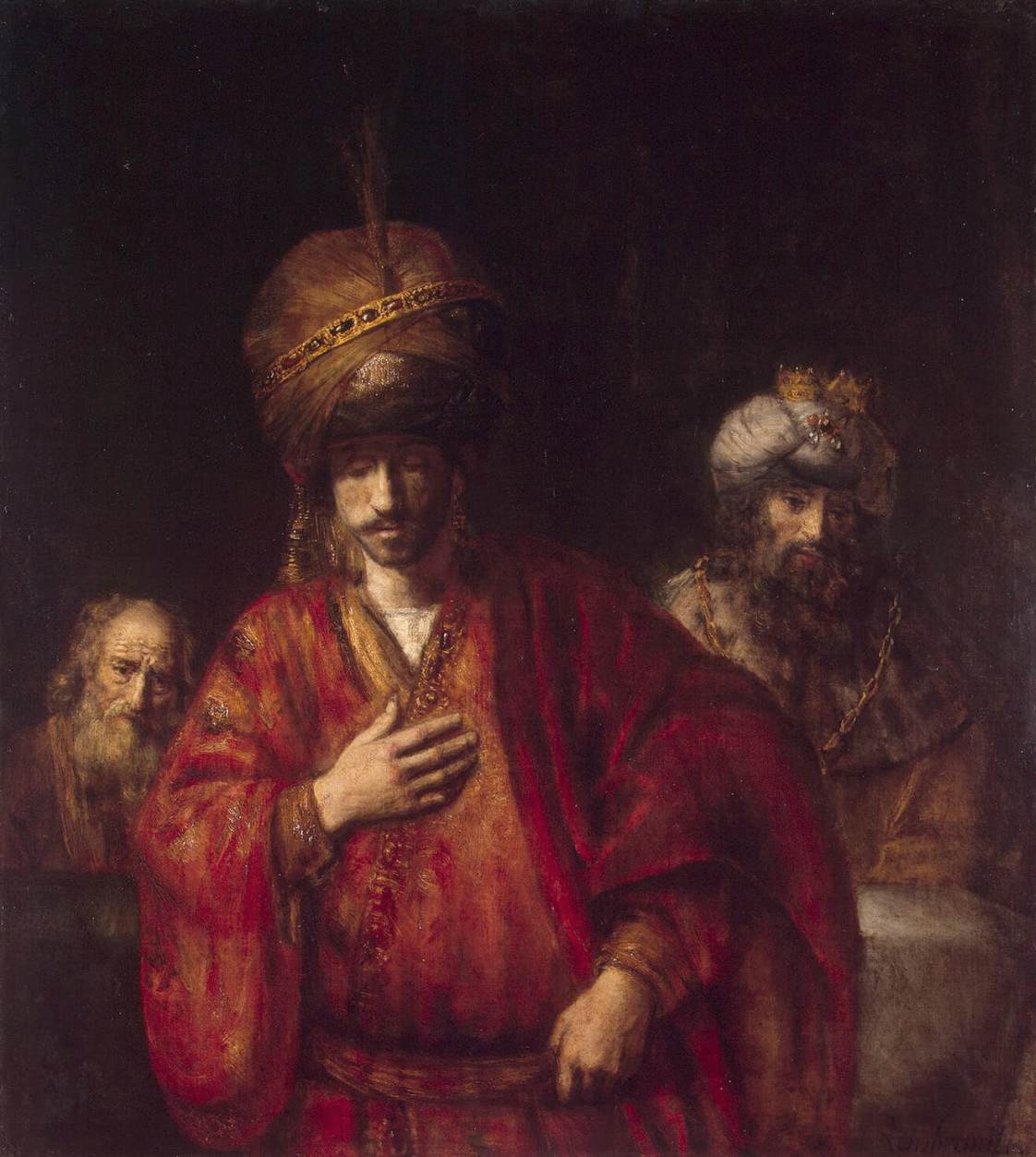
Workshop of Rembrandt Harmenszoon van Rijn:
Haman Recognizes his Fate
(1648-1665
This week’s writing marked a transition. The EndDays series concluded with its Preface, appropriately written last, after I had confirmed that the butler did it again. Then, on Sunday morning, the Prosperity series began. Five installments in, Prosperity already has its question, its necessary preconditions, its defining choice, and its primary obstacle. The writing ranged from the statistical indictment of MostProsperous to the personal philosophy of Plenty, from the Veblen-inflected Conspicuous Consumption argument of Waste to the unavoidable Responsibilities Prosperity imposes, and finally to the future-phobia of Anxiety that keeps Prosperity perpetually just out of reach. EndDays ended. Prosperity began. The practice continues.
Thank you for following along!
Anxiety
Rembrandt Harmenszoon van Rijn:
The Denial of Peter
(1660)
"They gladly flee backward into cowboy times when only a few pesky Comanche stood between them and promised Prosperity."
We fear more than we revere Prosperity. Oh, we’re all for decency when it proves convenient, but we have grown to distrust and deep-down fear our future, whatever it once was. We have seen more than enough Faster, Better, Cheaper® promotions to understand that they always propose much more than they ever deliver. Not one of us has ever experienced an upgrade that didn’t perform worse than all its predecessors combined. So, we have become future-phobic, anxious about our prospects. We might be nostalgia addicts, aching for some fantasy Good Old Days. Whatever new days might promise, we ain’t buying, or if forced to buy, we ain’t believin’ for a minute. I swear that every billionaire made his money with some new and improved bait-and-switch tactic. We expect to be cheated, and we even get even by cheating ourselves whenever given less than half a chance. Our Anxiety has come to define us and our age.
Given a decent opportunity, we’ll set about making up excuses why we can’t possibly agree to Prosperity’s terms and conditions.
Responsibilities
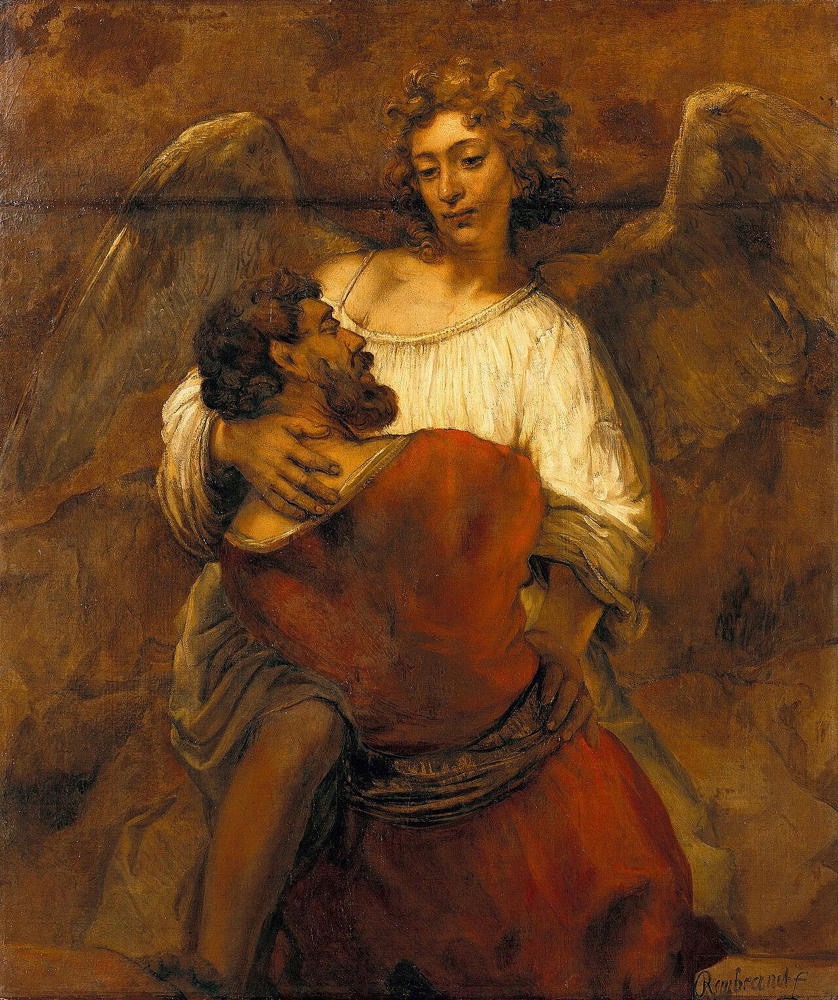
Rembrandt Harmenszoon van Rijn:
Jacob Wrestling with the Angel
(1659)
"I'm still not all that careful."
My mother often warned me to be careful what I wished for. She never extrapolated her warning into specifics, but I still caught her gist. She was saying that there’s just no escaping some uncertain load of externalities, whatever the activity. Youthful boredom could easily drive me into some activity that might cost me more than I’d ever bargained for. In the face of that boredom, I might agree to anything without thinking very far into even the more likely outcomes. I could end up with more work than I’d imagined possible as a result of trying to escape some work I knew for certain that I found disagreeable. Her admonishment usually reminded me that there’s no such thing as a free lunch, and even breakfast is likely to cost me more than I might have imagined.
Even Prosperity, that emerald city at the end of every rainbow, exacts taxes.
Waste
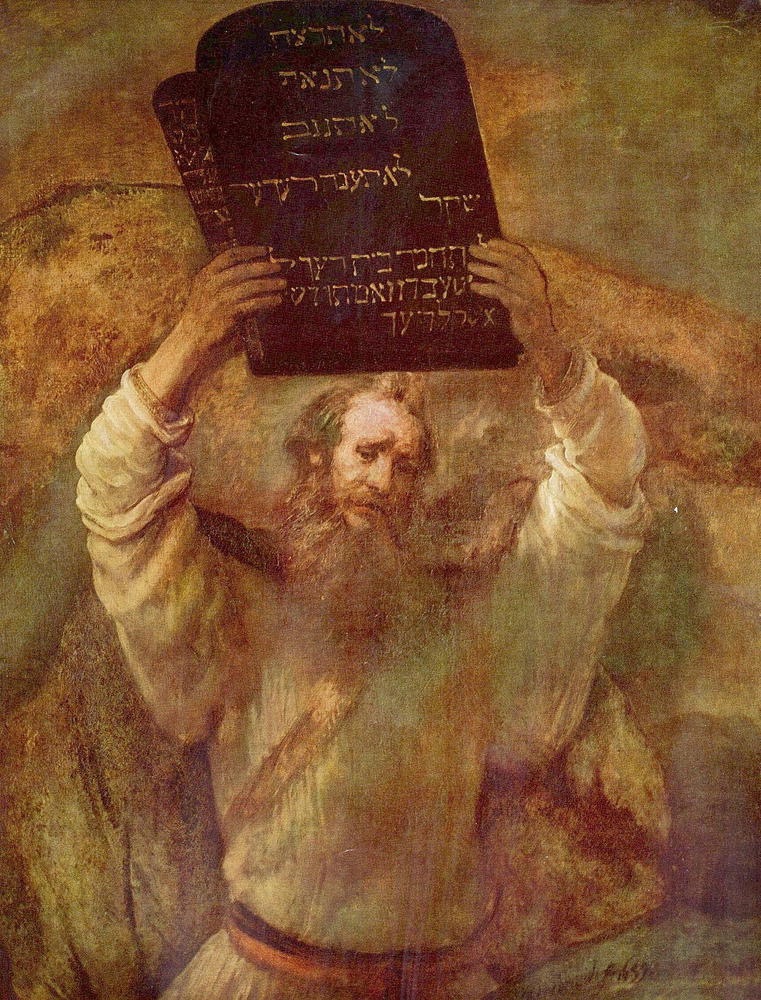
Rembrandt Harmenszoon van Rijn:
Moses Breaking the Tables of the Law
(1659)
"…what might have been Waste was, in fact, future Prosperity."
If Prosperity relies upon the presence of Plenty, its presence also seems to encourage some uncertain volume of Waste. Before Prosperity, a subsistence existence exists. People somehow survive, perhaps just barely getting by. After Prosperity emerges, some excess enters the survival equation, resources can no longer be characterized as wanting, and the resulting excess might prove defining. If nature abhors vacuums, it seems to despise excesses even more. An excess might be considered wealth, retained earnings, or leftover resources unneeded for present survival. It might also be considered Waste, worthless, since it proved itself unnecessary for sustaining survival. What a person or a society does with their excess determines the quality of their Prosperity, perhaps whether it exists at all.
Thorstein Veblen, a renegade economist who was widely shunned near the end of the nineteenth century, coined a term that best exemplifies the defining character of what I might consider Perverse Prosperity: Conspicuous Consumption.
Plenty

Rembrandt Harmenszoon van Rijn:
Portrait of a Young Bachelor
(1634)
"…if Prosperity isn't destined to continually evade one's grasp."
Prosperity must be a relative state, one that depends on many factors to be properly gauged. Some find satisfaction with much less than others, while others’ desires seem essentially insatiable. However measured, Prosperity seems to embody an underlying sense of Plenty, however one might choose (or feel compelled) to define it. When I was twenty, I could fit my worldly possessions in the backseat of a classic Volkswagen Beetle, and I sometimes felt burdened by them. Later in life, I’d need a large moving van to fit my stuff, but I’d still feel as if I might not have quite enough. I have been in active deacquisition mode for several years now, figuring I do not need half the stuff I have acquired, so I feel hesitant to add to my already overburdening collection. This results in some absurd situations, like when I wear threadbare clothes because I cannot quite bear to buy better. If I already feel that I have more than Plenty, I don’t feel moved to pursue any more.
Acceptance seems to accompany Plenty.
MostProsperous

Rembrandt Harmenszoon van Rijn:
Retrato de mujer joven (Portrait of young woman)
(1634)
"Are we smart enough to share?"
The United States is not the most prosperous nation in the world, not by a long, long shot! Depending on the referenced index, the US ranks between 15th and 40th, despite its clearly enormous economic scale. It falls far short when it comes to equity. I might characterize Prosperity as a society’s capacity to transform income into social benefit. Our United States clearly wastes much of our income on the social equivalent of candy and gum. We seem to do this for all of the usual, truly terribly good reasons. We say we want to avoid socialism while forking over fortunes to industries that should have long ago become self-sufficient, like our poverty-stricken petroleum industry. Indeed, Texas would be another Mississippi were it not for Federal transfer payments made to industries there that could be profitably making their own ways. We purchase our penury at a personal premium. We each more or less contribute. Those most capable of contributing, by longstanding tradition, contribute a much lower percentage of their income and wealth than do the rest of us. This is not by any means Prosperity in action.
In practice, Prosperity might have little to do with wealth.
EndDaysPreface
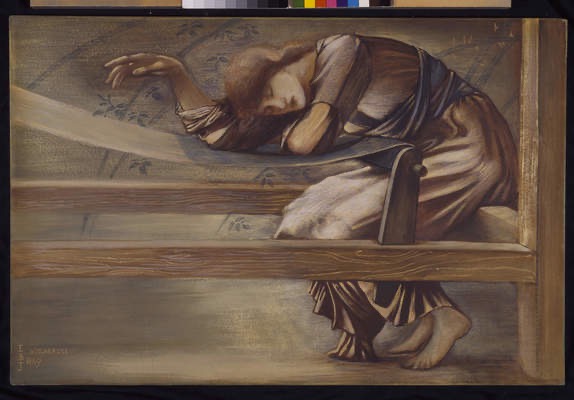
Sir Edward Coley Burne-Jones:
The Briar Rose Series
(1889)
"May your EndDays experience be enhanced by the foolhardiness I have laid down on the following pages."
A Preface should properly prepare a reader for whatever comes next, but I suspect that in this instance, it should at least attempt to accomplish something else, for should this Preface succeed in properly preparing you for whatever comes next, it might erase any need you might now possess to read the damned thing. As the author, I’d much rather you retain your interest at least until you can learn for yourself whether or not you should agree to finish reading this. This means you’ll have to start reading in order to achieve this end, but then that’s my objective. What’s yours?
What moved you to pick up this book?
Weekly Writing Summary For The Week Ending 06/18/2026

Sir Edward Coley Burne-Jones:
Frieze of Eight Women Gathering Apples
(1876)
This final week’s EndDays dispatches arrived from the road — from Condon, Oregon, where I was born on a kitchen table nearly seventy-five years ago, through a pioneer cemetery in Linn County where great-great-grandparents waited to be visited, and finally to the Oregon Coast, where The Muse and I drove to the edge of our experience and found the series’ so-called ending. The writing ranged from the weaponized justice of ImaginaryCivility to my Rimrock Country origins of Buttermilk, from the pioneer cemetery revelation of SumOfMyPast to the necessary pruning of Friendlies, from the historical perspective of Silliness to the final installment, LongTail, written at dawn on the Oregon Coast near the first day of summer. The EndDays series has concluded. The rumors of its demise were, as always, preliminary.
Thank you for following along!
LongTail
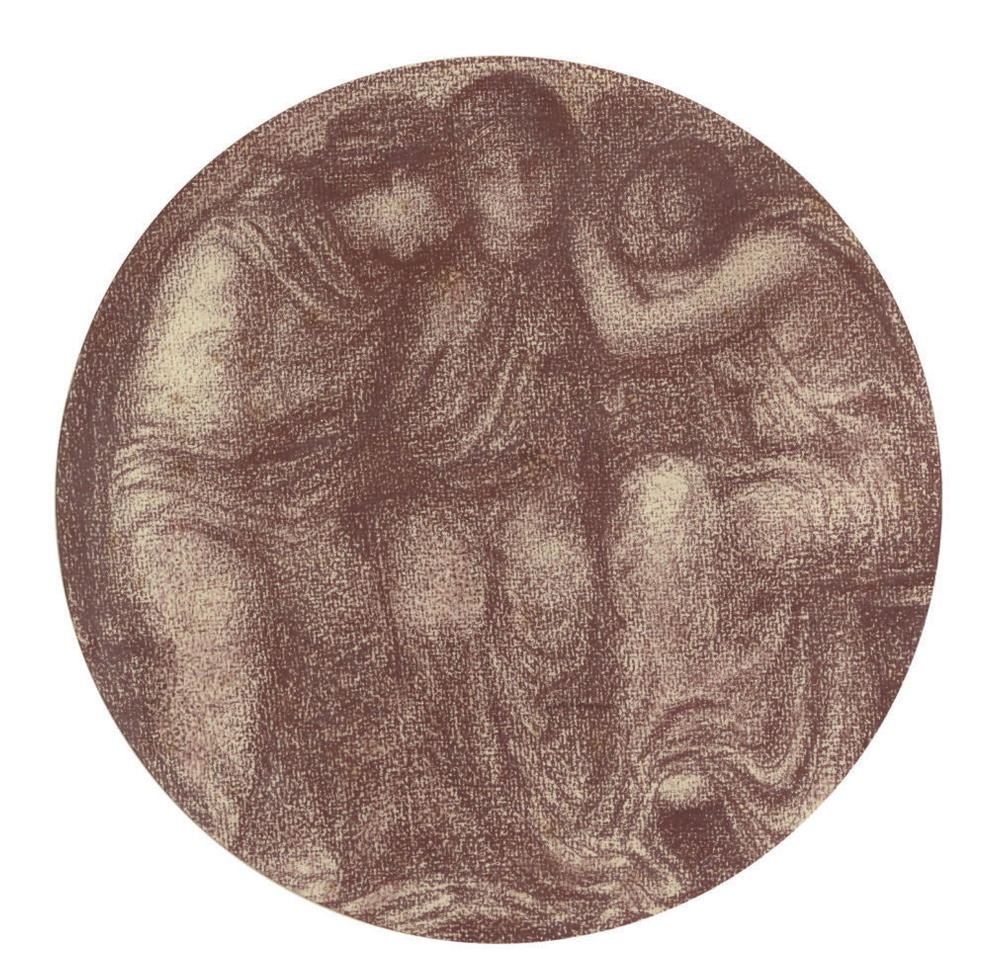
Sir Edward Coley Burne-Jones:
The Three Fates
(1865)
"…I would have never bothered to create them in the first place."
As the EndDays drew closer to their end day, The Muse and I drove to the edge of our experience, the Oregon Coast. Neither of us had ever held any desire to go out on the salt. I learned that while The Muse has always been unfazed by height, depths terrify her. I do not know if I’m prone to seasickness, but I have never felt terribly moved to discover whether I might be. We cling to the edge, me finding a beach read, though the town we chose no longer holds a single bookstore, new or used. The world we’d known had been throwing off hints that it was disappearing. This missing bookstore experience seemed like just another bit of evidence. We were not precisely helpless, but more acknowledging that we were increasingly floatsom, no longer the center of anyone’s attention; hardly even our own anymore.
Anyone seeking to witness an ending pursues one of the greater paradoxes, for this world was never contained in such definitive boxes.
Silliness

Sir Edward Coley Burne-Jones:
The Madness of Sir Tristram
(1862)
"…maybe we can't help but become terminally distracted."
It must be our blessing or our curse that what we experience as tragedy, our grandchildren will consider simple Silliness. For my grandfather, who enlisted during WWI to “fight the Hun,” that conflict seemed like serious business because it was, to his experience. The event leading up to it, though, the assassination of an obscure crown prince in an even more obscure Eastern European capital, seems trivial when compared to the eventual slaughter of twenty million otherwise innocent people. Any catastrophe of sufficient magnitude seems indistinguishable from a parody of tragedy. Such scales pale in any reasonable comparison. It becomes unimaginable and therefore essentially fictional, as if it couldn’t have possibly happened simply because it seems beyond reason, just as if reason could serve as any sort of reasonable arbiter of even itself.
Our current drama certainly seems more like soap opera.
Friendlies
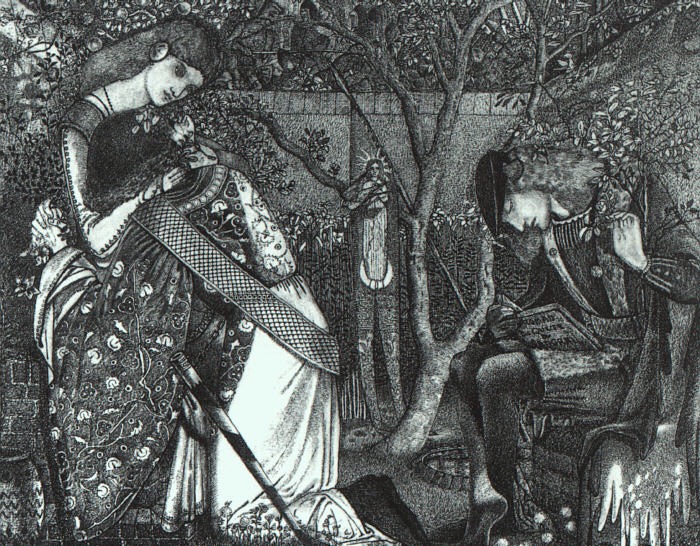
Sir Edward Coley Burne-Jones:
The Knight's Farewell
(1858)
"My relief far exceeds whatever guilt I feel."
I maintain a select few followers on my social media accounts. The numbers have changed little over the decades, with newbies roughly equalling retirees, regardless of my recruitment efforts. Some content producers seem to effortlessly attract tens of thousands of followers. I have attracted low hundreds of them, though I remind myself that they are the right few hundred people. Others might produce for volume, while some focus exclusively on other qualities like … quality … or perhaps authenticity. I remind myself that not everyone prefers authenticity in their breakfast every morning, and that my content might be seen as rather rarified material unsuitable for any mass market. It probably uses too many adjectives for injestion among more polite company. Consequently, I have traditionally been possessive about retaining my Friendlies. Hesitant about shrinking my audience numbers, I have been forgiving when I’ve noticed transgressions. I have prided myself on my tolerance and even faked some ignorance in my time. I find that I’m less tolerant now that our idiotic incumbent has publicly demonstrated the price of tolerating an ever- lowering bar.
I suddenly feel the strong need to stand up and actually be counted.
SumOfMyPast
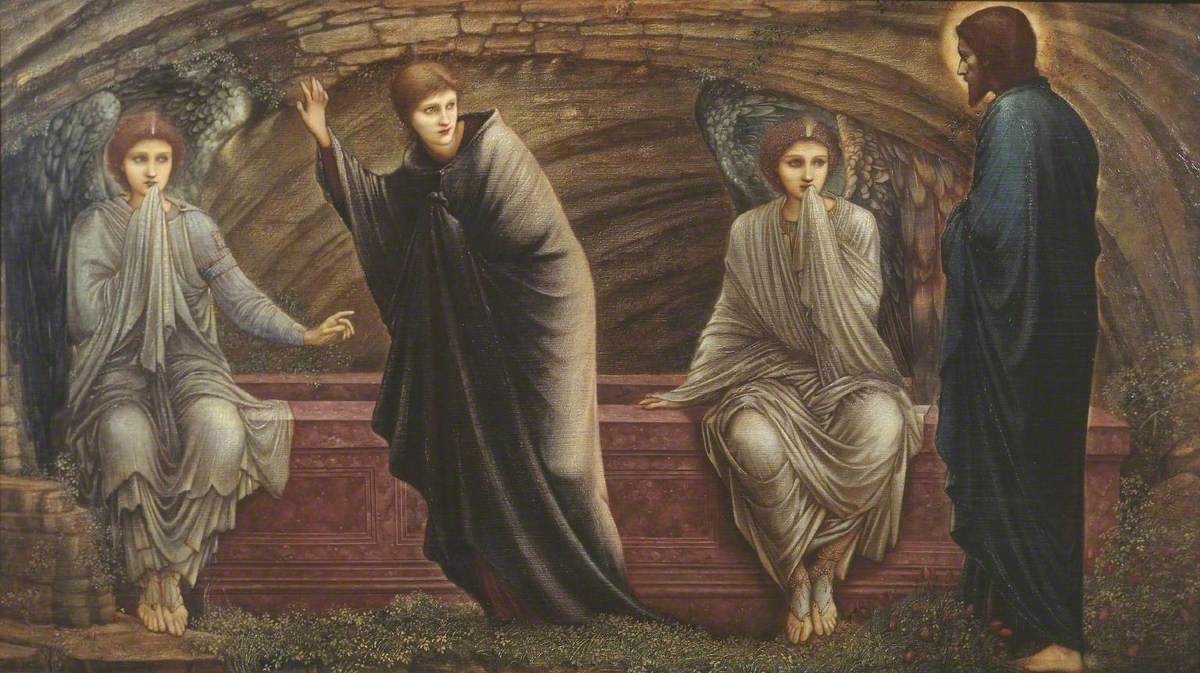
Sir Edward Coley Burne-Jones:
The Morning of the Resurrection
(1886)
"I might even be the sum of all things, just like you."
I am more than merely the SumOfMyPast, for I might also include the sum of all my potential futures and more. That said, I am most certainly the SumOfMyPast, but that just starts the inquiry into my identity. That said, I remain most certainly the SumOfMyPast, but not merely my own personal past. I sense that I also must include at least the partial sums of many others’ pasts, my forebears at least. Who knows who else?
When The Muse and I travel, as we are now traveling, leaving home and heading anywhere else, we often chase ancestors along the way.
Buttermilk
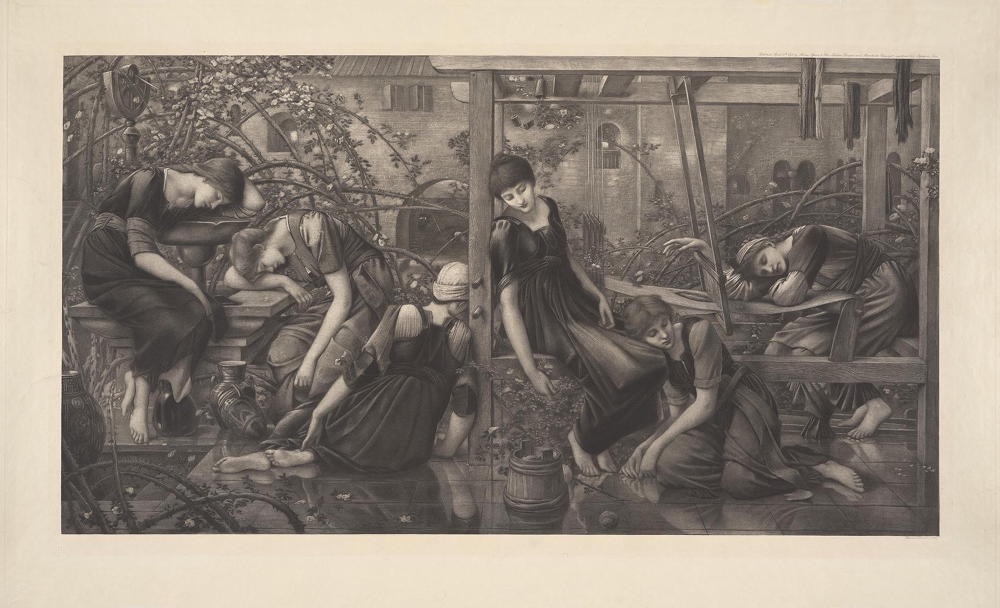
Sir Edward Coley Burne-Jones:
The Garden Court
(1892)
"The rumors of EndDays might have been preliminary."
The Muse and I had been at each other’s throats forever, probably because it seemed to us that The World had been slavering at our throats for even longer. Eventually, too much turns into too much, and something must give. The usual give-and-take that enables any relationship sometimes falls out of balance. This situation isn’t usually anybody’s direct fault; it’s just one of those things that tend to happen regardless. Perhaps we become a little too much of this world rather than simply within it. I lose patience and seek escape. The data center controversy had gotten the better of me before it seemed to get The Muse. She was deliberately making herself into a public target, daring to say what few would have had the temerity or ability to voice. I couldn’t keep my big yap shut, either, at least not in the face of taunting social media. My center-of-the-universe place, where gravity reliably worked right, felt threatened. Neither of us had been sleeping that well.
The Muse had a Port Commissioner conference on the Oregon Coast.
ImaginaryCivility
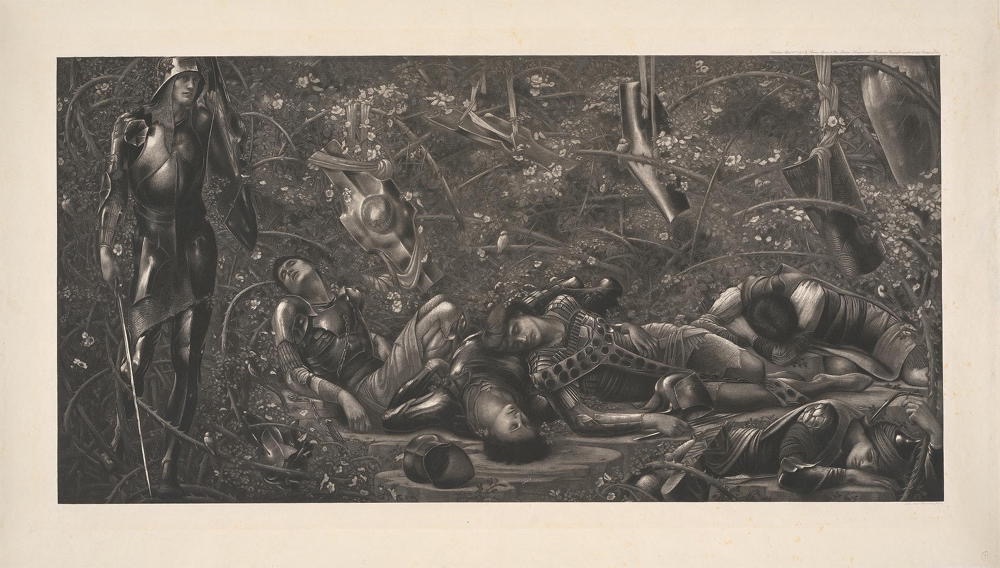
Sir Edward Coley Burne-Jones:
The Briar Wood
(1892)
"Dictators only ever come in hapless colors."
Our imbecilic incumbent remodeled our Justice Department first thing. He fired those he feared were not loyalists, replacing them with lapdog equivalents, many of whom held high positions without any benefit of anything even remotely resembling a legal education. They brought conviction with them into office, the conviction that the world had largely wronged their benefactor as only a paper billionaire can ever hope to be wronged, and that it would be their duty under their interpretation of the law they didn’t understand to, in their words, “unweaponize” our governance. Of course, our governance had never actually been weaponized against anyone, other than in the noticeably addled imaginations of those opposing partisans. True to usual fashion for fascists, they set about actually weaponizing a government that had never actually been weaponized before. That was the beginning of what we might understand to be ImaginaryCivility, where the laws of this land would get rudely interpreted so as to deliberately place the administration’s heavily weighted thumb on Justice’s traditionally impartial scales.
The pattern had existed since the earliest mentions of our idiot incumbent’s so-called MAGA Movement, his self-proclaimed attempt to, and I begrudgingly quote him here, “Make America Great Again,” with special emphasis on the “again” part of that proclamation.
Weekly Writing Summary For The Week Ending 06/11/2026
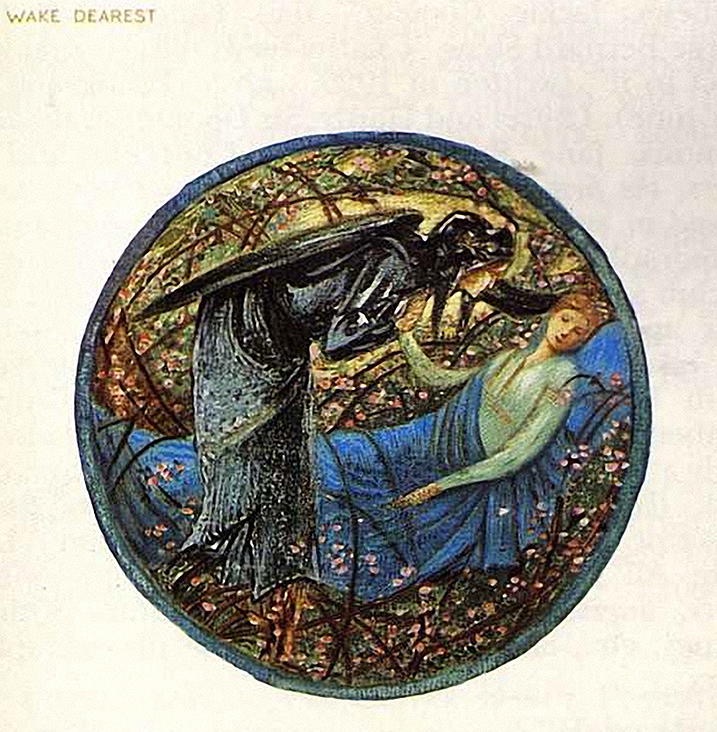
Sir Edward Coley Burne-Jones:
"Wake Dearest" a reproduction of a watercolor published posthumously (1905) by his wife
in "The Book of Flowers" one of 38 images in the book.
(1905)
This week’s EndDays dispatches arrived in the company of a deep tiredness, RattleFatigue, named outright by week’s end. The writing ranged from the Tibetan Buddhist speculation of InBardo to the frozen-in-place sardonicism of InLimbo, from the Scopes Trial parallel of MonkeyTrials to the contagious cynicism of Beleafing, from The Muse’s standing-room presentation in Opting to the rattly jalopy of RattleFatigue itself. The Muse presented “Why I Voted For The Data Center” to a packed Democratic Central Committee meeting and received thundering applause for calling out the ad hominem attacks she’s endured. The Villa Vatta Schmaltz will sit empty for a few days. We're heading to Newport (Oregon, of course), then home to mow lawn and freeze cherries, then Spokane for a Washington State Democratic Convention. The series will continue regardless of backdrop.
Thank you for following along!
RattleFatigue
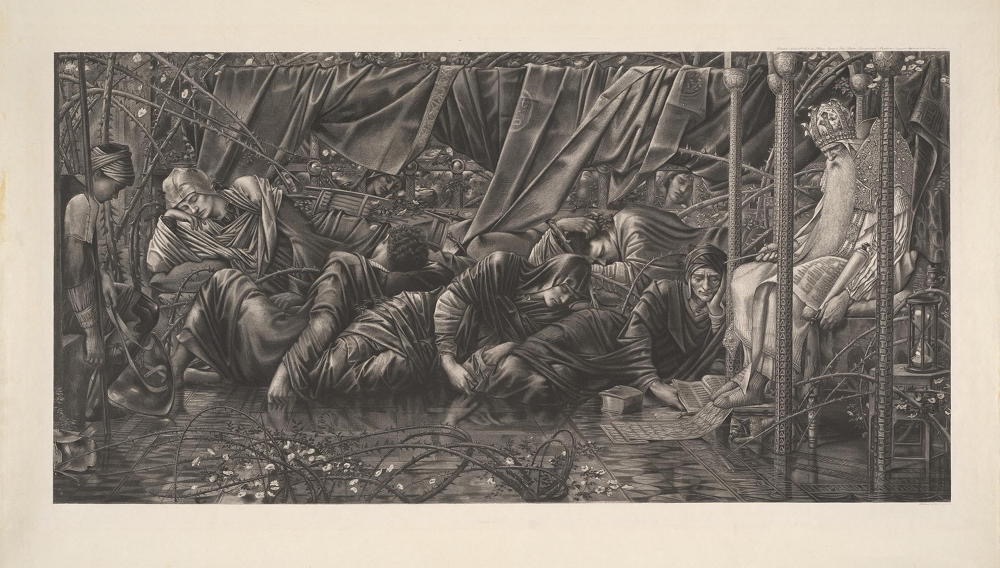
Sir Edward Coley Burne-Jones:
The Council Chamber
(1892)
"…wake me up, please, however exhausted I might seem."
I have often felt as though I was riding in a rattly old jalopy through these EndDays. So much annoying noise. Windows dusty and obscuring. Engine, largely unmuffled. Seats, supremely uncomfortable. The irrelevance alone rendered the drive disquieting, even though I have learned plenty about myself during the journey. I can’t honestly claim that my time has been in any way wasted, just because I found my time spent exhausting. I feel as though I might have been forever deafened and, perhaps, even rendered somewhat more stupid for the experience. I gained hopefully useless-for-reuse skills. With good fortune, or just only slightly more than positive fortune coming, I might never need to resort to the sorts of learning I was forced to absorb, if only by the sorry context. Our orange one will be gone, and whatever follows his dog act of a performance couldn’t possibly be worse. Even if the next conveyance comes without windows or doors, it won’t be able to help but serve as a giant step up. I find myself suffering from RattleFatigue.
What I wouldn’t give for a single serious press conference.
Opting

Sir Edward Coley Burne-Jones:
Beatrice: Io vidi donne co' la donna mia
(1870)
"We can't help but own our deliberate decision forever going forward."
The challenge for me comes from a continuing feeling that I can only observe, that a fool’s driving, and I have no control. If this feeling proves to be true, I’m left with few options. I can like it or lump it, and there’s absolutely nothing for me to like about those choices. Yes, a madman’s in charge, but I might usefully wonder what that madman might actually be in charge of. Yes, he formally controls our government, but he’s proven beyond even unreasonable doubts that he seems to be incapable of controlling himself, let alone anything as complicated as a government. So, essentially nobody’s in charge, other than a few uncoordinated, clueless actors. It’s as if randomness has taken over, with entropy playing the part of our guiding light. Corruption seems to have become the common denominator, that, and cruelty, the two horsemen of an inevitably most inept form of governance. Yes, they’re collectively stupid. Yes, some of their more short-sighted interventions do trickle down and into my shoes, but mostly their actions resolve into nothing more than just so many distant machinations, distractions, and odd attempts that resolve into nothingness.
Besides, I have options. I firmly believe, by which I mean, without the benefit of definitive proof, that I always have options. I might be utterly incapable of influencing the madman who fancies himself driving, but I can always influence my response to the madness. I can, for the most part, choose who I engage with, and where, and on what terms. I can largely still choose my adversaries and my friends. I retain the power to refuse to engage when I find the offered terms unworkable, though I feel continually goaded into argument and confrontation. Both the loyal and disloyal opposition hold some influence over my decisions, but I largely get to choose when, where, and whether I rise to their invitations. I remain capable of feeling offended, even enraged, but usually retain the ability to decline losing invitations. I said “usually” because, though I know I should be able to choose otherwise, I sometimes feel compelled. I can always (eventually) tell when I’ve felt compelled because I then forfeit most of my options. I rush in as fools have always rushed, and usually leave further humbled.
Last night, a data center opponent asked me where I’d parked my Corvette. I knew what he meant. He can’t seem to believe that The Muse and I didn’t take bribes for The Muse to vote, in her public role as a Port Commissioner, in favor of selling property to Amazon to build a data center on. The opponents have been increasingly vocal as the project moves into permitting and eventual approval. Last night, The Muse convened a presentation titled “Why I Voted For The Data Center” as part of the local Democratic Central Committee meeting. The room was almost standing-room-only, with many dialing in online. In a half hour, she laid out the reasoning behind her decision. Her logic seemed inescapable: a county economy slowly fading after peak wine, with alarming declines in jobs and tax revenues. A data center proposal from a reputable operator, one responsible for a third of the world’s data centers rather than a fly-by-night speculator looking to flip. An enviable environmental record across multiple similar projects, with independently verifiable results. I don’t believe she convinced anyone who attended already convinced the data center was a terrible idea, but her presentation represented a disarmingly honest appraisal of the personal process she followed to reach her public decision.
On Friday night, opponents of our data center will assemble to further organize their actions and recruit new followers. The Muse plans to attend, since it has been advertised as an open and public meeting. She informed the organizer that she planned to be there. I will feel compelled to accompany her. The Muse is playing the wide-open, honest card. She has invited every opponent she’s met to sit down and have a conversation about her decision, about her reasoning, which she’s convinced has been beyond reproach. Not that it hasn’t received more than its share of reproach, though the complaints seem unlikely to disrupt the well-defined, regulated process by which such industrial developments are approved in our state. No one’s permitted, for instance, to disrupt the permitting process without citing a reason with cause. Bad feelings about the developer won’t pass muster as cause. Opponents’ most common response has been, “I don’t believe that,” when The Muse provides some disquieting statement of verifiable fact. The absence of trust in the process might not seem like a choice so much as an imperative from an opponent who knows they hold no substantive complaint.
It seems certain that the data center will be approved. It will be decades before some of The Muse’s assertions about it will be verifiable. She assumes technology will continually improve, enabling Amazon to ultimately achieve its net-zero water-use goal. They’ve been making steady progress on other projects. The economic benefits will predictably trickle in before becoming inexorable, since it will require a decade just to build out the damned thing. By the time it comes fully online, The Muse and I will have become footnotes in the history of this valley. The projected economic salvation will either happen or it won’t. I pray that the social fraying will, over time, start healing itself, though it might not. We stand (or cower) along a leading edge, uncertain of our influence on anybody’s future, including our own. The Muse is Opting to stay open and reveal the details of her reasoning, believing it might help accelerate the healing. She might have rendered herself unelectable by Opting to attempt to make our economy less fragile and more sustainable. Her choice. Only the future will tell whether she succeeded, just as all futures and presents do. Those who can’t imagine us not taking bribes will forever wonder where we parked our utterly imaginary Corvettes. We encountered a fork in the road and took it together, actively Opting rather than becoming victims of a madman’s aimlessness. We can’t help but own our deliberate decision forever going forward.
©2026 by David A. Schmaltz - all rights reserved
Beleafing

Sir Edward Coley Burne-Jones:
"White Garden" a reproduction of a watercolor by Edward Burne-Jones (d. 1898) published posthumously (1905) by his wife in "The Book of Flowers" one of 38 images in the book.
(1905)
"Forgive me, for I seem to have intruded to satisfy myself and failed."
Cynicism must be one of the most contagious infections. Once present, it rapidly spreads, affecting even those strongly opposed to its presence. One cynic in a crowd can quickly poison several others before an exponential explosion of cynicism occurs. Then, suddenly, what once seemed fairly well-defined edges begin resonating with a self-same vibration. Those who were strongly opposed start vibrating with precisely the same tone they once found so put-offish. Then, the whole population descends into self-inflicted limitations. Possibilities smother beneath blankets of what I can only describe as disbelief, a tenacious and largely unnoticed mass inability to actually believe anymore. They want, they insist that they need truth beyond even the most otherwise reasonable doubt. They suddenly require evidence of purity that no test could ever even imagine delivering. What was once plenty good enough starts reliably falling short, and people start mumbling about how things used to be back before somebody screwed everything up, unaware that they, themselves, were the cynical ones who screwed everything up for themselves.
Cynicism seems to be the favored response of the wounded optimist.
MonkeyTrials
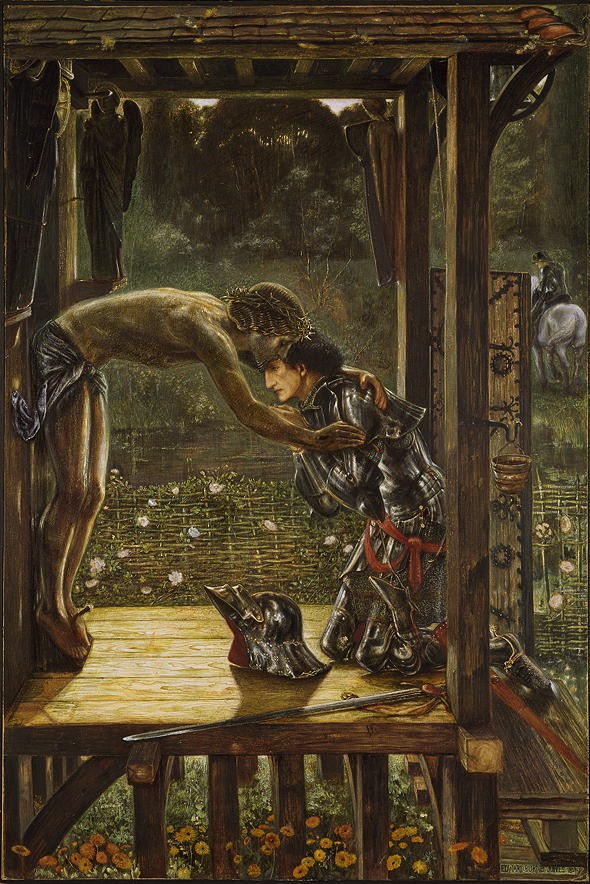
Sir Edward Coley Burne-Jones:
The Merciful Knight
(1863)
"I am surrounded by legions of church ladies pursing their lips at modernity and reason."
One of the more reliable indicators that we’re experiencing EndDays comes from the seemingly sudden presence of MonkeyTrials. I’ll coin this term, referring back to that famous trial a hundred years ago, in which the State of Tennessee charged a schoolteacher with violating their Butler Act, which forbade teaching about human evolution in public schools. The resulting trial brought together two of the most famous lawyers of the time, Clarence Darrow, who appeared for the defense, sponsored by the American Civil Liberties Union, and William Jennings Bryan, a three-time populist Presidential candidate, arguing for both the church and the state. The trial became a classic fundamentalist-modernist controversy. It attracted plenty of attention both locally and in the national press. The courtroom was packed with people who appeared solely to demonstrate their support for the Bible, believing that teaching human evolution was somehow unholy. Most of the observers of the trial would have been perfectly satisfied if the judge had found old Scopes guilty at the outset, since few seemed to believe that any defense could render him innocent. He’d admitted his guilt so he could become the show defendant at trial. He did not disappoint.
Today, our justice department, under our present incumbent, has taken to acting as if it were presenting before Kangaroo Courts.
InLimbo
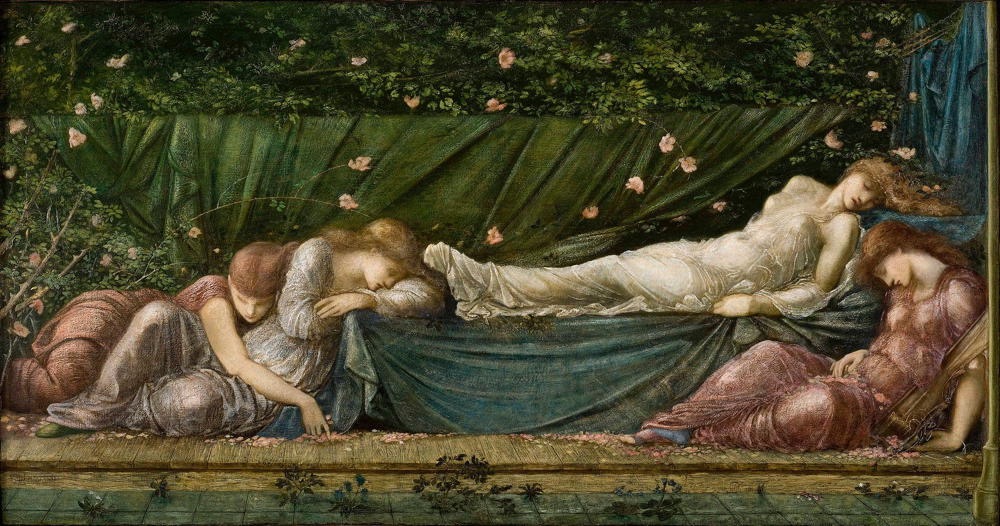
Sir Edward Coley Burne-Jones:
The Sleeping Beauty from the small Briar Rose series
(circa 1872 )
"…just imagine what will happen after the midterms render them lame geese."
One other end state for our present administration that has gratefully seemed absent without leave since being installed, occurs to me, one that probably works as effectively as any actual ending. A stymied administration that was always incapable of administering anyway, probably accomplishes nothing destined to survive its tenure. Our incumbent seems contorted, as if attempting to wriggle his way beneath a very narrow, flimsy barricade. He’s very likely too fat to succeed. His ill-crafted policies sit InLimbo, neutralized by courts, trading partners, and what he might label fickle public opinion. His policies, such as they were, which he apparently borrowed from seriously unserious people with little notion of how governance actually works outside of the Old Testament, have universally failed. Each advertised transformation has gone bust in turn, leaving divots rather than the promised holes-in-ones. He cheats himself at golf, too. With midterms expected to further humiliate ‘his magesty’, he’s seemingly frozen in place, as useful as he could ever possibly be.
He still continually foments chaos, though even this seems to have an increasingly lessening effect.
InBardo

Sir Edward Coley Burne-Jones:
The Golden Stairs
(1880)
"…greater respect than his soul's former vessel ever once managed to."
Today’s thought experiment takes us into a netherworld, one that some believe exists between states, during periods of transition. Tibetan Buddhist belief labels this no-place Bardo. It holds that Bardos exists between death and rebirth and also between birth and death, that both life and death themselves amount to periods of transition. Existence might be transitions all the way down. A Bardo offers opportunities to experience insight and achieve enlightenment. One might perceive perspectives there that they never before imagined. The naturally self-reflective might experience a satisfying lightness there, while the normally reactive, more superficial actors might experience great distress and discomfort, to the point of believing they’ve landed themselves in Hell. The shock that must occur when a malignant narcissist first experiences what it had been like for everyone else who had ever found themselves in his presence should properly shock any cockiness right out of the least of us.
I have been considering the various scenarios under which our malignant narcissist might leave office, but I would be remiss if I missed considering the transitions, both for himself and his minions, for his disappearance will throw the MAGA Movement into a social Bardo all its own.
Weekly Writing Summary For The Week Ending 06/04/2026
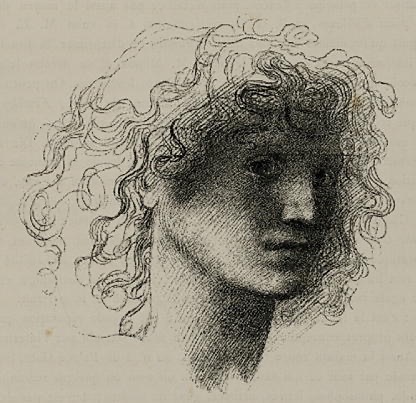
Sir Edward Coley Burne-Jones:
Tête d'étude
(1870)
This week’s EndDays dispatches arrived as the series rounded a philosophical corner it had been approaching for seventy installments. Truth preceded justice and justice preceded reconciliation, and the week traced all three: from the TRC model of Truth& to the paradox of &Retribution, from the structural inadequacy of Impeachable to the bicycle that won’t float in TheMidasPoint, from the bleak arithmetic of Retirement to the quiet accumulation of limits in Resigning. The series found its destination this week; then, suddenly, it was, in the best possible sense, already Thursday again.
Thank you for following along!
— — —
Weekly Writing Summary
Truth&
“Let the rest of us seek reconciliation and forgiveness.”
This EndDays Story turns the series’ corner toward what comes after EndDays, beginning with Truth as the necessary precondition for anything resembling justice or reconciliation.
In this EndDays Story, I considered what form our necessary reconciliation for the crimes committed by this administration might take. South Africa’s Truth and Reconciliation Commission, convened after apartheid’s end, sought something akin to the opposite of Nuremberg’s retributive justice: to acknowledge the wrongs and seek forgiveness. This high-minded effort fell short of its aims, yet still serves as a model for seeking alternative justice beyond the individual and into the social. As much as I might feel attracted to the concept of a bloodletting impeachment, I acknowledge we might need more realignment than retribution. Nobody could ever live long enough to atone for these sins. We must reclaim our identity if we are to continue as the nation we believe we deserve. Free speech does not even imply any right to engage in loose talk. Reconciliation demands not just Truth, but the courage to honestly seek it, and, perhaps, the foolhardiness to stand up and declare it. Let the rest of us seek reconciliation and forgiveness.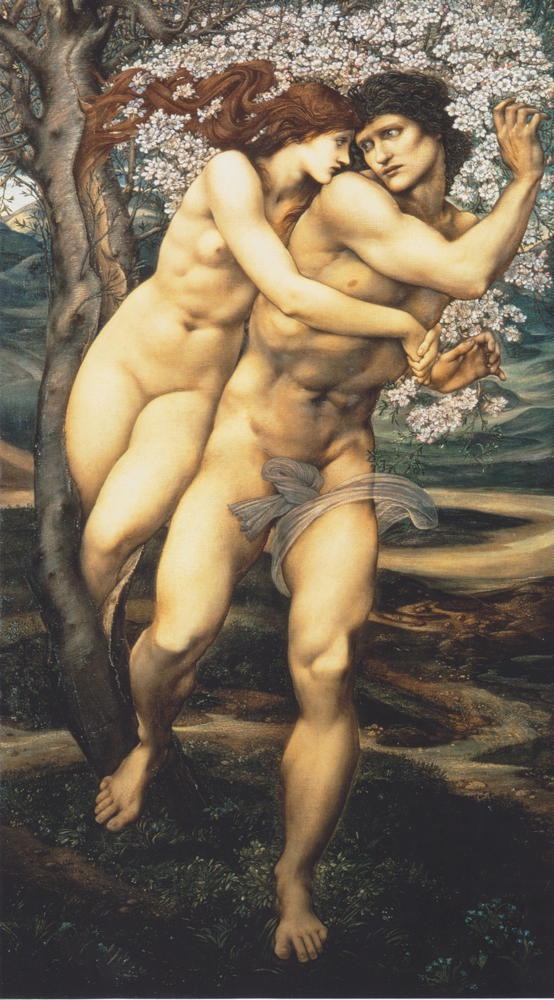
Sir Edward Coley Burne-Jones: The tree of forgiveness (1881-1882)
——
&Retribution
“Let us, in our future, not go quite so blindly into any upcoming darkness or sunrise.”
This EndDays Story finds me examining the limitations of retributive justice — and wondering if justice itself might be a sophisticated form of denial.
In this EndDays Story, I confessed to my own revenge fantasies, which proved enormously satisfying right up until they produced revulsion — right up until they insisted I commit a legal murder to settle the score. The process of retribution seemed at best paradoxical, requiring that the judge, jury, and executioner engage in what would otherwise be criminal behavior. The Columbia Gorge’s ragged burn scar, reduced to ashes and stumps by a thoughtless teenager playing with fireworks, reminded me that nothing any court might find will ever restore that pristine woodland. The worse the crime, the more inherently toothless the punishment. At Nuremberg, leading Nazis ultimately received anticlimactic deaths. Perhaps justice is just a sophisticated form of denial, a studied refusal to accept that we cannot fix any past. May we learn from their vengeance that vengeance might not have been the solution we historically held it to be. Let us, in our future, not go quite so blindly into any upcoming darkness or sunrise.
Sir Edward Coley Burne-Jones: Laus Veneris (1873 - 1878)
——
Impeachable
“Perhaps the founders intended this.”
This EndDays Story examines the Constitutional impeachment process and concludes that it amounts to little more than Constitutionally-sanctioned politics — inherently, inescapably corruptible.
In this EndDays Story, I traced the history of presidential impeachment: Andrew Johnson impeached for cause and acquitted by a cowardly Senate; Bill Clinton brought up on trivial charges and gratefully acquitted; Trump committing treason twice and acquitted both times by an equally guilty and complicit Senate. It takes much more than committing a crime to be considered Impeachable — even committing unspeakable crimes daily doesn’t rise to any Impeachable level if the incumbent’s party holds the legislature. This regrettable reality feeds an Invulnerability Myth, encouraging precisely the behavior the impeachment process was originally intended to address. I predict strategic chaos to emerge as the primary defense — troops deployed to sanctuary cities, phony US Attorneys arresting witnesses called by the prosecution. Impeachment seems nothing more or less than Constitutionally-sanctioned politics, and because of this, it seems inherently, inescapably corruptible. Our incumbent seems unlikely to live that long, anyway. Sigh! Perhaps the founders intended this.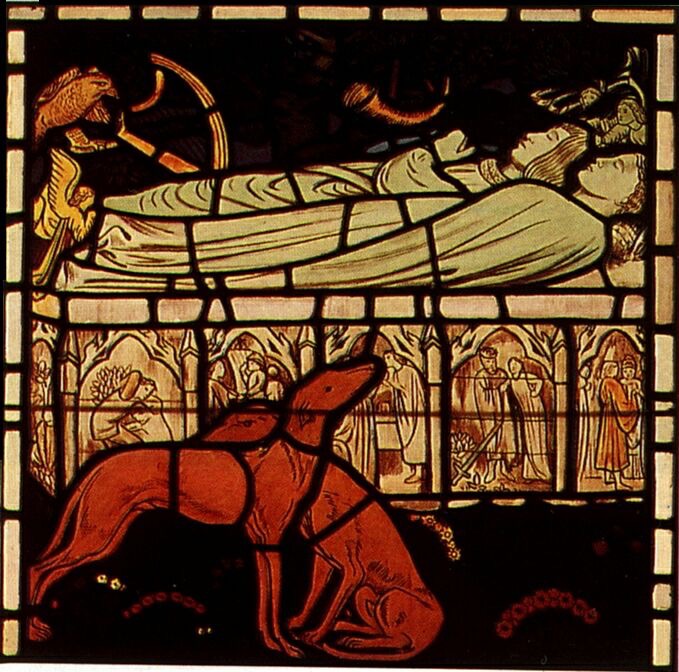
Sir Edward Coley Burne-Jones: The tomb of Tristram and Isoude (1862)
——
TheMidasPoint
“…awaiting somebody capable of riding a goddamned bicycle to take over.”
This EndDays Story finds our incumbent having arrived at TheMidasPoint — that place where commandments fail to elicit the expected response and checks and balances hem in the would-be authoritarian.
In this EndDays Story, I proposed that in a similar way that a bicycle is not a boat, our Democracy was explicitly designed not to be a kingdom, monarchy, or authoritarian state. Any odd President might mistake one for the other, but the context will quickly and reliably betray him. Our Founders had seen the troubles that too much latitude could foster, so they prescribed a more rigorous administration featuring strict roles and even stricter limits on any individual's power. Damned nearly everything required a fucking act of Congress to proceed, which meant any individual incumbent would feel like an admiral on a bicycle, toothlessly proclaiming "Damn the torpedoes, full speed ahead" to absolutely no effect. Our incumbent has reached TheMidasPoint: that place where commandments fail to elicit the expected response. The system was specifically designed to chew up and spit out such pretenders. The underlying Democracy stands essentially intact, awaiting somebody capable of riding a goddamned bicycle to take over.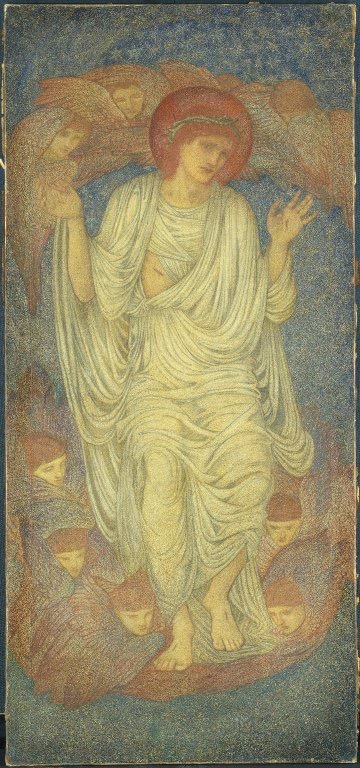
Sir Edward Coley Burne-Jones: Christ in Glory (Salvator Mundi) (circa 1874)
——
Retirement
“Good riddance to bad dictators.”
This EndDays Story surveys the widely varying Retirement options available depending upon whether one is a regular person, a democratically elected President, or a despot.
In this EndDays Story, I surveyed the retirement landscape: those who hold ten dollars in cash and no debt belong to the wealthiest portion of the population, yet few employer pensions remain since Reagan-era delusions replaced them with stock market speculation. About 78% of currently retired Americans rely on Social Security to pay necessary expenses, with the median senior living on less than $2,000 per month. Retirement features no dental insurance, no vision insurance, and Repuglican Congresses have, for years, cut the remaining meager benefits available to regular people. Despots, meanwhile, might retire with vast fortunes, though they face much greater uncertainty about whether they’ll live to see their Retirement. As for our current incumbent: denial serves as his 401(k). He over-contributes daily. Few expect him to live long enough to cash in his Social Security, though he probably wouldn’t need it anyway. He richly deserves poverty. Good riddance to bad dictators.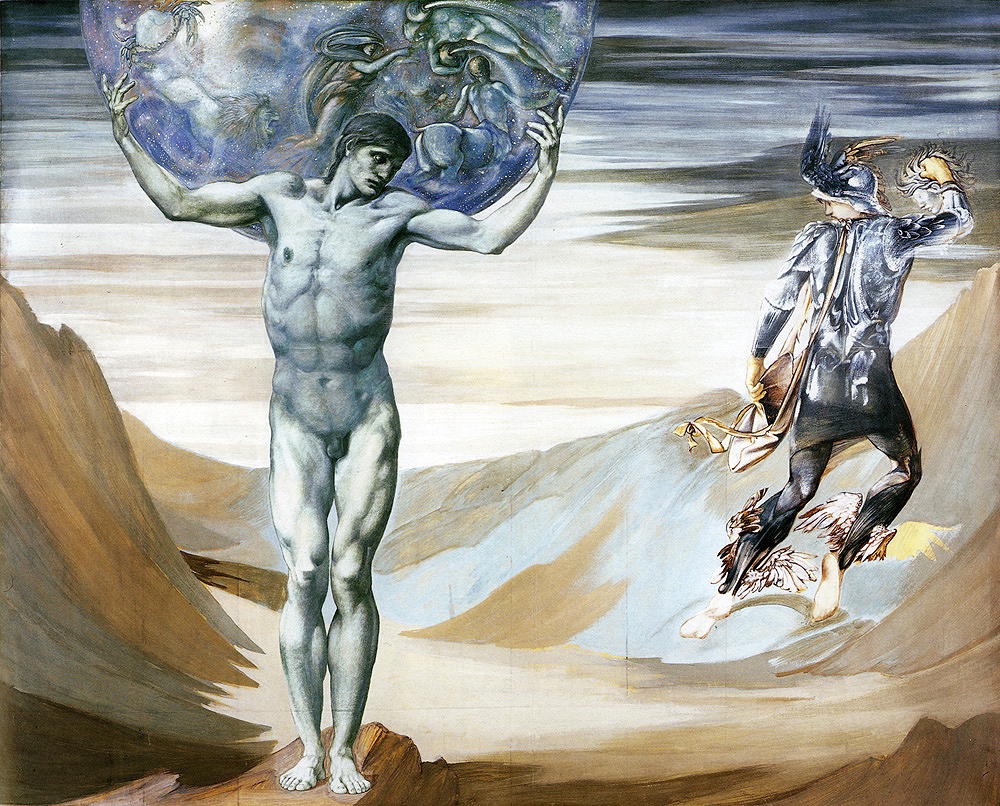
Sir Edward Coley Burne-Jones: The Perseus Series: Atlas Turned to Stone (1878)
——
Resigning
“…regrowing our backbones that render him powerless to do much more than resign in response.”
This EndDays Story considers the least likely but increasingly plausible conclusion to this administration — that our incumbent simply resigns, not from principle but from the reactive exhaustion of a man who has finally run out of room.
In this EndDays Story, I saved what I long considered the least likely EndDays scenario for last: Resigning. Even a Truth & Reconciliation Commission seemed more likely than anything resembling acceptance from our resident malignant narcissist. Yet recent events have suggested other possibilities. As his difficulties have exploded, his options have more than merely stilted. The courts have finally issued injunctions that have slowed what had seemed like inexorable downward momentum. He has recently become practiced at feigning indifference as he shuffles away from each fresh purely Pyrrhic victory. He governs like a drunken sailor dances, practiced at compensating for wave action but still stumbling his way around the dance floor. Our country was founded by a band of resisters, and we're never better than when we have something to passionately protest about. Against this growing force, we might not have found the greatness again that he overconfidently predicted, but we certainly seem to be regaining our backbone, rendering him powerless to do much more than resign in response.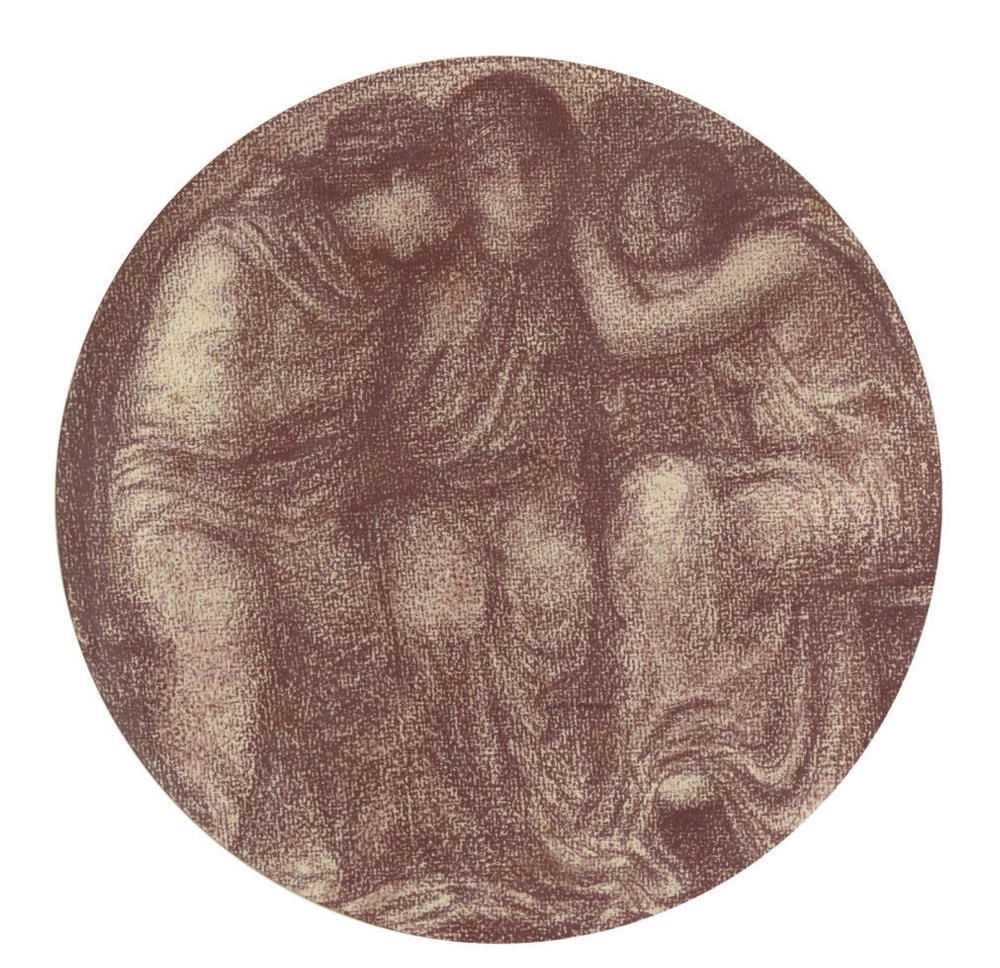
Sir Edward Coley Burne-Jones: The Three Fates, gesso rosso (circa 1868)
——
They Delighted Their Author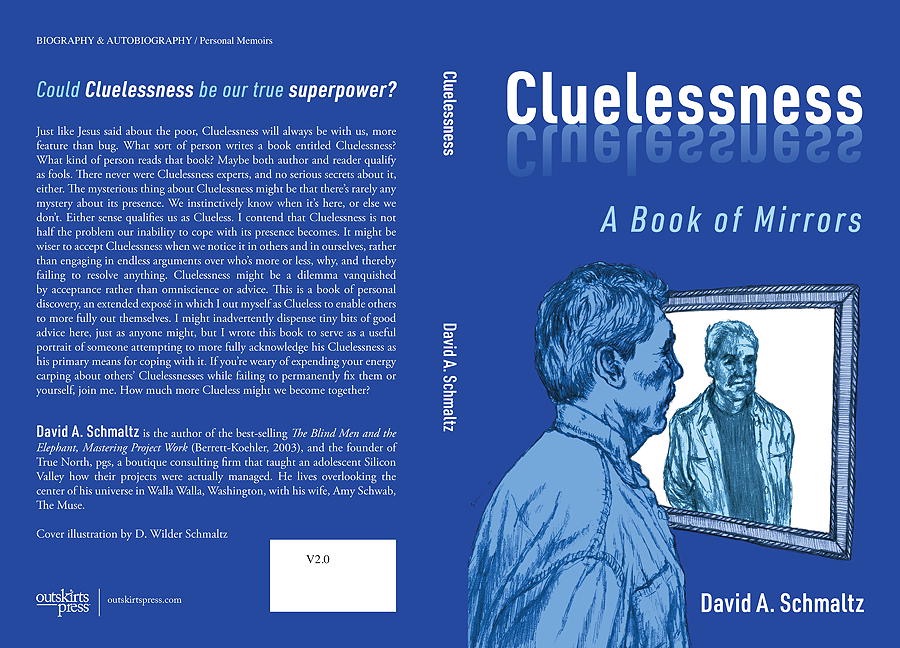
Not every performance manages to manifest as the best ever. Those arrive one at a time, and without precedent, so preparation proves impossible. I have practiced my writing, for instance, virtually every day for decades, but I remain less skilled than I imagine an actual master must be. Still, occasionally, even I experience the extraordinary. I might finally be experienced enough to understand that I very likely won't discover some previously hidden magic pattern that I might access to manifest this sensation more often. Such experiences don't seem nearly volitional enough to qualify as a skill. They can't be possessed. They seem more like visitations, the result, perhaps, of some alignment of invisible celestial bodies. Appreciated, sure, but essentially irreproducible.
It's just as well. Would such phenomena be explainable, I might be tempted to design a process or even (shudder!) muster a workshop where I could impart my wisdom as if mine came in anyone else's hat size. My wisdom seems indistinguishable from Cluelessness, most days, and I honestly only rarely ever aspire to anything different, as if there could be better. I figure the struggle I experience every damned morning might distill into an essential element of what I might mistake for my creative ability. It does not seem all that special to me. I swear it shouldn't seem all that special to anybody else, either.
But this week, the ideas and their conveying words just seemed to appear on the page. I'd fuss for an hour or two, trying to identify a worthy title or topic, then sit down and begin. The daily ritual varies little, except for the volume of procrastination I start with and the image I choose to inspire me before I begin. Maybe the images in this EndDays series carry some of the magic I've been experiencing, for I've used artwork for each installment created by Sir Edward Coley Burne-Jones, mostly in the second half of the nineteenth century. His subject matters and styles fascinate me, for they seem to combine familiar reality with the deepest fantasy, Sleeping Beauty as portrayed by the girl next door. Heroes with familiar faces; demons equally familiar.
I claim to have authored this week's stories, though I deep down doubt the veracity of that statement. Perhaps I channeled their creation. I found them revelatory, anyway. They leave me feeling like an Old Testament prophet, whether or not any of them actually manage to prophesy. I see how I might project a reality plenty and enough capable of sustaining me, even though it might be 99 and 99/100% fantasy, an Ivory soap of imagination. I feel as though I spent the week foretelling a future, even if none of what I disclosed ever comes to pass. The stories themselves, their structure and logic, delighted me for a few minutes, and lifted me up and out of a wearying and increasingly terrifying place. The fact that this MAGA crap is crap does not necessarily render it a joke.
I've reached another Thursday, grateful for my practice, the one that spawned my Cluelessness book, which might not ever become a bestseller, whatever that entails, but still inspires me to continue creating even though, or perhaps because, I still have little idea how to accomplish whatever it is I set out to achieve when I set my fingers to keys each morning. I encourage anyone who might happen upon this note to take a few precious minutes and attempt to waste them on this week's stories. I hope they delight you at least half as much as they delighted their author!
Thank you for following along!
You can order Cluelessness from Bookshop.org, Powell’s Books, or Amazon. It's now more widely available, just as the publisher predicted. I still haven't discovered the e-Book location for ordering the book, other than this Kindle link. (I didn't know that KIndle was still a thing, if it ever was.) I saw a .pdf link somewhere, but lost the location and couldn't find it again. My publisher is enamoured with their flashy portal that I keep getting lost in. See if you can do any better: Link To Publisher's Website Here
I employed Claude.ai, a commercial AI-powered text editor, using it to perform repetitive copy/pasting work and to create the above story summaries, prompting with: “Please briefly summarize this story in the first person while retaining the original voice.” I manually copy-edited each result.
©2026 by David A. Schmaltz - all rights reserved
Resigning
Sir Edward Coley Burne-Jones:
The Three Fates, gesso rosso
(circa 1868)
"…regrowing our backbones that render him powerless to do much more than resign in response."
I have saved what I have long considered the least likely EndDays scenario for this story, positioning it after presenting what I considered to be the more probable outcomes. Even a Truth & Reconciliation Commission seemed more likely to happen than anything resembling acceptance and contrition, because even the more mildly malignant narcissists rarely, if ever, come to anything resembling the acceptance necessary to engage in what I might recognize as Resigning behavior. That outcome seemed too far out of character to be plausible, if this incumbent can be said to exhibit any semblance of character. Resigning might constitute a strategic play, and this guy doesn’t exhibit much in the way of strategy, even on his few and far between better days. He seems to prefer reckless behavior over even self-preservation, perhaps because he had finally seen himself as being as powerful as he previously so often merely imagined he was. He certainly engaged as if no rules applied to him or his frail attempts at administration. He made bulls in china shops appear circumspect in comparison.
Recent events have suggested other possibilities.
Retirement
Sir Edward Coley Burne-Jones:
The Perseus Series: Atlas Turned to Stone
(1878)
"Good riddance to bad dictators."
Retirement plans vary considerably from employer to employer. Few offer pensions anymore, for they were replaced with a Reagan-era delusion that every man and woman should be able to earn ample Retirement income by speculating in the rich people’s stock market. That hasn’t worked nearly as well as expected. Medicare remains essential, if not always available, for those too aged to be covered by an employer’s insurance, though only about 60% of people under 65 have employer-sponsored insurance as of March 2025. Worker-specific numbers seem more nuanced. About 75% of workers are eligible for job-based coverage, down slightly from 2023. Access has always been deeply uneven. Employer-sponsored insurance covered only about 20% of people with incomes below 200%, compared to more than 80% of those with incomes above 400%, of poverty. Fewer than three-quarters of firms with 10 or more employees offer health benefits at all, with large employers (200+ employees) offering coverage at a nearly 100% rate compared to less than 60% of smaller firms. Cost-sharing seems significant, too, with covered workers contributing an average of 16% of premiums for single coverage and 26% for family coverage in 2025, with average family premiums reaching over $26,000 annually. Many retirees rely entirely on Social Security to provide a barely subsistence-level Retirement income.
Retirement features no dental insurance.
TheMidasPoint
Sir Edward Coley Burne-Jones:
Christ in Glory (Salvator Mundi)
(circa 1874)
"…awaiting somebody capable of riding a goddamned bicycle to take over."
In a similar way that a bicycle is not a boat, our Democracy was explicitly designed not to be a kingdom, a monarchy, or an authoritarian state. Those latter forms of government, while proven viable in some contexts, just don’t float here, in precisely the same way that a bicycle fails to float. Any odd President might mistake one for the other, but the context under which he might attempt to rule will quickly and reliably betray him and his intentions. He might, by simple delusion, convince himself of his successes, but few of even his most fervent followers will manage to follow along as his bicycle eventually strays ever further from land. Each form of governance requires certain contextual realities. Ours centers around laws, which might never qualify as inviolate but still fail to behave in ways similar to commandments, just as intended. One might command until they’re quite literally blue in the face to little effect. One might convince themself that they have The Midas Touch up until the reckoning comes due and Congress refuses to extend the purse. Curse as he might then, the incumbent has reached TheMidasPoint, that place where commandments fail to elicit the expected response and where checks and balances hem in the would-be authoritarian.
I’ve been speaking of options for removing an incumbent President, but have overlooked until now the possibility, indeed the inevitability, of disqualification, resignation, or simple self-negation.
Impeachable
Sir Edward Coley Burne-Jones:
The tomb of Tristram and Isoude
(1862)
"Perhaps the founders intended this."
The impeachment of a President takes separation of powers to dizzying levels. The indictment, brought by the House of Representatives, requires only a simple majority to be advanced to the Senate, where the Chief Justice of the Supreme Court presides in a trial. A supermajority of sixty-seven Senators must vote to convict there, and thereby remove the accused from office. The Senate may also optionally choose to bar the convict from ever again holding Federal office. Think of this process as a trial complicated by partisan politics played at their most frenetic by the terrified. Andrew Johnson and Bill Clinton were impeached and then acquitted in the Senate. Donald Trump was impeached twice, then acquitted in the Senate twice. Few equate this impeachment process with justice. Andrew Johnson was impeached for cause, only for a cowardly Senate to refuse to impose well-deserved justice. Bill Clinton was brought up on what history would recognize as trivial, if not trumped-up charges, only to be gratefully acquitted by a thankfully sane Senate. Trump committed treason twice and was acquitted both times by an equally guilty and complicit Senate.
It takes much more than committing a crime to be considered Impeachable.
Good For A Goose

Comeuppance (31)
Decency (90)
Decency Unscrolling (1)
EndDays (92)
Exiled (90)
Fambly (93)
FollowingChapters (93)
Grace (92)
Humor (2)
iAlogue (1)
Letters to the Editor (1)
NextWorld (91)
Personal (18)
Prosperity (94)
Steam Festival (4)
Unscrolling (89)
Vaporized (6)
Work (16)
September 2026
August 2026
July 2026
June 2026
May 2026
April 2026
March 2026
February 2026
January 2026
December 2025
November 2025
October 2025
September 2025
August 2025
July 2025
June 2025
May 2025
April 2025
March 2025
February 2025
January 2025
December 2024
November 2024
October 2024
September 2024
August 2024
July 2024
June 2024
May 2024
April 2024
March 2024
November 2006
October 2006
September 2006
August 2006
July 2006
June 2006
May 2006
April 2006
March 2006
February 2006
January 2006




_-_Sir_Edward_Coley_Burne-Jones_-_overall.jpg)
