MoveFast/BreakThings
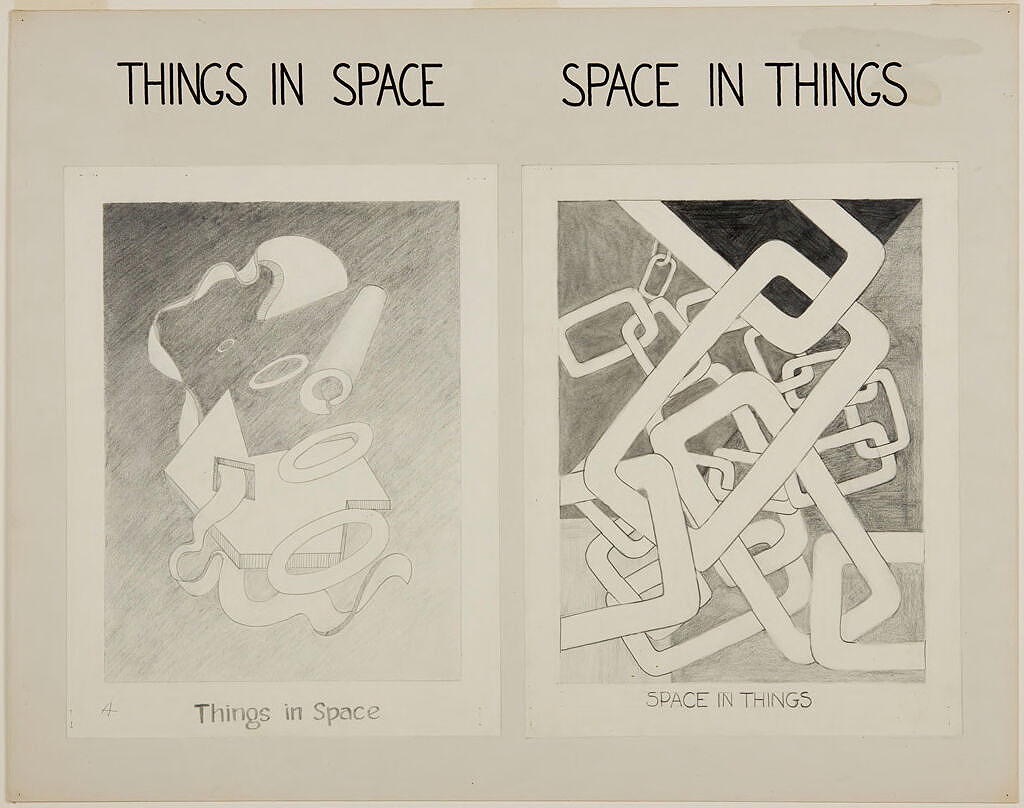
Unidentified Artist: Things in Space/Space in Things (1942-1949)
"This concludes today's lesson in engineering futures."
"Move fast and break things" was the original internal motto and core engineering philosophy for Facebook (now Meta). Coined by Mark Zuckerberg, it prioritized rapid development, risk-taking, and innovation over stability, guiding the company's culture until it was updated to "Move fast with stable infrastructure" in 2014. Business Insider (2/16/2022)
Social Media giant Meta’s first motto might seem both ironic and telling when considered from today’s distance from its founding. Then, it was young and filled with itself and hope, believing itself to already be master of a universe not yet concocted. Like anybody, its founder believed he could create his own rules of engagement because he was blazing trails. The history of such development has always been paved with just this sort of arrogance, the belief that reality was theirs to define rather than to align themselves to. This tiny perspective shift has been turning grand intentions to shit since way back before Egyptian times. If anything, moderns have only become more adept at deluding ourselves.
We might create seemingly sparkling new futures, but we also inadvertently concoct their eventual Achilles Heels. As near as I can tell, there’s never been a prescription that effectively prevented such negative outcomes, even in retrospection. Initial enthusiasms aside, we cannot seem to hide from such certain fates. Even should we somehow hold back long enough to measure three times before cutting, we still manage to engineer in a few terminal shortcomings. Later, auditors will stroll through the wreckage, dispatching the wounded, and some sort of reckoning seemingly has to take place. Some of the foundation laid in the earliest days will have to be replaced if the organization is to survive.
What’s lost in the furious race toward alluring futures might not have been possible to create, given the then state of comprehension. We are inevitably too late that smart, and can seemingly only learn some lessons after having royally screwed up something significant. Those who try to alleviate this shortcoming tend to fare no better, for they lose some critical development window and their future leaves the station without them aboard. Those who manage to catch that train might well understand what they’re missing when catching that train, but at least they’re moving into their future, even if their most entertaining challenges certainly remain before them. Their past will pursue them until it catches up to their progress at some truly inconvenient point.
While development hurdled forward, some inadvertent products were being produced along with the obvious targets. The organization’s DNA gets programmed into being while everyone’s distracted, being hyper-productive. Choices get made without due diligence, options selected with sublime inadvertence. The way things manifest there emerges from the fuss and feathers of a seemingly necessary great urgency. Patterns of coping with problems solidify into unspoken, often unspeakable doctrine. A corporate culture is born without an obvious father. However beligerent the ethos might seem, everyone involved becomes invisibly and inexorably indoctrinated. How We Do Things Here becomes the primary imperative. Those who violate the unspoken doctrine get singled out for reform or, most likely, nudged out along the way.
The company’s proudest asset becomes its greatest vulnerability. Twelve years later, after formally discarding his founding motto, that motto’s author gets called to testify in a trial trying to determine if one of the things broken when moving so quickly, so irresponsibly, into that future might have been a customer, perhaps a whole class of them, and more. The question seems out of context then, but only because it is. Anyone moving fast into their future leaves behind concern for the past they’re also creating. They intend to only speak vaguely, inspiringly, of breaking things, and never really intended to break anything valuable or vulnerable or irreplaceable. It was a smartassed slogan, for cripes sake, never intended to seriously damage anyone, especially anyone as vulnerable as a six-year-old. Our future might be the direct result of some smartassed slogan never intended to create whatever we actually ended up with. This concludes today’s lesson in engineering futures.
©2026 by David A. Schmaltz - all rights reserved
Good For A Goose

Comeuppance (31)
Decency (90)
Decency Unscrolling (1)
EndDays (92)
Exiled (90)
Fambly (93)
FollowingChapters (93)
Grace (92)
Humor (2)
iAlogue (1)
Letters to the Editor (1)
NextWorld (91)
Personal (18)
Prosperity (94)
Steam Festival (4)
Unscrolling (89)
Vaporized (6)
Work (16)
September 2026
August 2026
July 2026
June 2026
May 2026
April 2026
March 2026
February 2026
January 2026
December 2025
November 2025
October 2025
September 2025
August 2025
July 2025
June 2025
May 2025
April 2025
March 2025
February 2025
January 2025
December 2024
November 2024
October 2024
September 2024
August 2024
July 2024
June 2024
May 2024
April 2024
March 2024
November 2006
October 2006
September 2006
August 2006
July 2006
June 2006
May 2006
April 2006
March 2006
February 2006
January 2006