NoThings
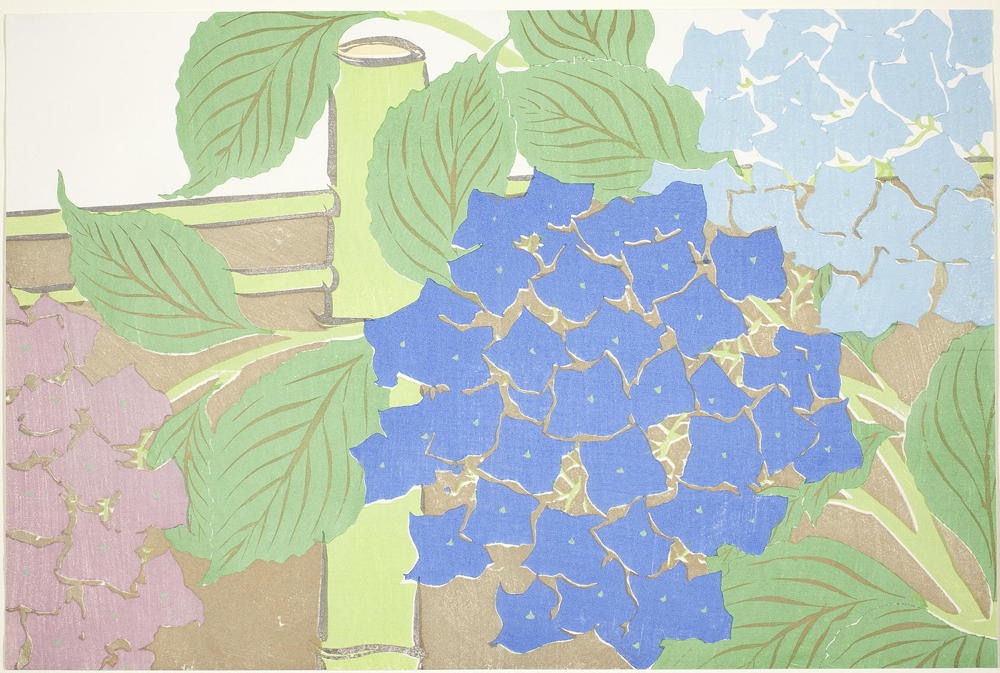
Kamisaka Sekka
Hydrangeas, from the series “Worlds of Things (Momoyogusa)”
(1909/10)
"Later, it becomes the imperative."
Many who seek Prosperity find themselves frustrated by its apparent elusiveness. One might start such a search with some clear notion of what they’ll find, but then their clarity of intention seems to somehow prevent discovery, as what seemed straightforward when planning became decidedly crooked in execution. Some abandon the effort, convinced that the game was somehow rigged against their favor. Others redouble their effort and quickly redouble their frustration. Some eventually stumble into something perhaps only distantly resembling whatever it was that they’d previously so clearly envisioned, and call that good enough, if only because it isn’t a complete disappointment. Success in this context has often proved difficult, if not impossible. Some seem fortunate enough to stumble into something more or less acceptable as their Prosperity without expending their entire youth in the effort. Others conclude that Prosperity wasn’t really made for somebody like them. However the search resolves, the indifferent world seems unimpressed with either failure or success.
The chief difficulty might be that Prosperity belongs to a curious class of things that do not really qualify as things. Whatever Prosperity is or isn’t, upon reflection, this one characteristic seems obvious upon even the tiniest reflection. Prosperity could never be a person, place, or thing, and yet we each naturally interact with “it”, as if it might be, should be, and could be such an entity. It can’t, couldn’t, and therefore won’t ever be. How silly that we so naturally pursue it as if it were such a thing, as if it should exhibit thingness, as if it could. Prosperity, though, does not stand alone in this category, for it has plenty of company there. It might even be that there are more ‘NoThings’ in this world than there are things, and that we each spend much of our existence pursuing similar phantoms, frustrating ourselves and baffled until we find a moment to reflect upon what we have the questionable pleasure of interacting with.
For years, back when I was a professional Project Management consultant, I reveled in that first afternoon of my workshop, when I would sit on the table in front of the participants, playfully dangling my legs, disclosing what might have been the key insight most would take away from the experience. After that first morning of the workshop, time they’d spent trying to wrestle their project into some manageable construct, I’d disclose what few in the room ever expected. I’d announce, with some fanfare, that I’d concluded that there is no such thing as a project. The potential irony was not lost on anybody in the room in that moment. There we were, a sixth of the way into a three-day experience intended to improve our projects, and the Jehu in front of the room insists that there’s no such thing as the object of this experience. Some were pissed at my pronouncement. I asked each to imagine themselves placing their project “thing” into a wheelbarrow. What would they place in there? I easily dismissed the list of likely suspects that the participants offered in defense. Once we’d successfully dispelled the naive notion that we might have been dealing with a run-of-the-mill noun of a thing, we began to make real progress “improving” their projects.
It’s not necessarily a problem when something turns out to not really be a thing. A slight shift of perspective allows most to manage the material much better than they ever had before, when they’d mistaken whatever it was for a tangible thing. Humans might be most masterful at handling NoThings, for we seem to populate our lives with them, insisting upon their presence as a standard precondition for engaging. We seem to need some notions before we can accept very much of anything as tolerable. We thrive and sometimes smother ourselves on faith, carefully regulating our interactions with it to ensure meaning and purpose, both of which also qualify as NoThings in this odd but oddly familiar etymology. We are things, though we seem to require many NoThings to make our experience here tolerable. We pursue our Prosperity as if it might have been a birthright, when it might have more likely only ever existed as an otherwise unsupported conviction.
The most curious property of all NoThings must be their remarkable ability to induce otherwise seemingly impossible outcomes. We run into trouble when we imprint ourselves on some finite recipe or expect tangible evidence of what we pursue, when we naively attempt to know what nobody could ever know. If we can keep the notion somehow clear in our heads and pursue with requisite passion and certainty—both NoThings, too, by the way— we seem to enjoy success at some rate better than randomness might predict. If not, we easily get tangled up in unresolvable problems. It’s no sin to pursue NoThings. It might exemplify the human condition. The sin, if any’s ever involved, seems to lie in failing to make that one, tiny distinction between something and NoThing at all. The fall came, and will come again, when the pursuit of NoThings mistakes its target for something, something that was supposed to be more tangible than it eventually, obviously isn’t. Pursuing the NoThings as if they were things then ensures the frustration nobody really deserves. That the cure might involve acknowledging the presence of NoThings never seems obvious at first. Later, it becomes the imperative.
©2026 by David A. Schmaltz - all rights reserved
Good For A Goose

Comeuppance (9)
Decency (90)
Decency Unscrolling (1)
EndDays (92)
Exiled (90)
Fambly (93)
FollowingChapters (93)
Grace (92)
Humor (2)
iAlogue (1)
Letters to the Editor (1)
NextWorld (91)
Personal (18)
Prosperity (94)
Steam Festival (4)
Unscrolling (89)
Vaporized (6)
Work (16)
September 2026
August 2026
July 2026
June 2026
May 2026
April 2026
March 2026
February 2026
January 2026
December 2025
November 2025
October 2025
September 2025
August 2025
July 2025
June 2025
May 2025
April 2025
March 2025
February 2025
January 2025
December 2024
November 2024
October 2024
September 2024
August 2024
July 2024
June 2024
May 2024
April 2024
March 2024
November 2006
October 2006
September 2006
August 2006
July 2006
June 2006
May 2006
April 2006
March 2006
February 2006
January 2006