Weekly Writing Summary For The Week Ending 02/19/2026
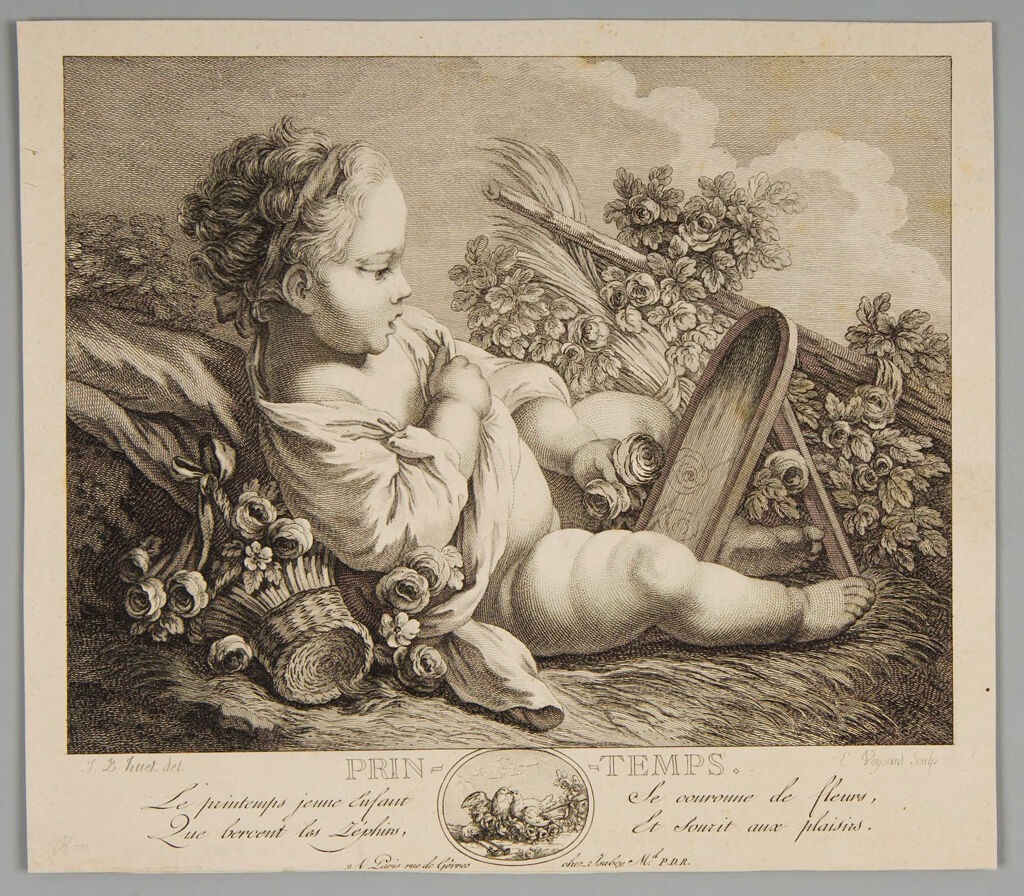
Étienne Claude Voysard: Printemps [Spring] (18th century)
This writing week saw the tone of this series shift from the personal toward the more general. I began following the jury trial of Meta and YouTube, who have been accused of trading in products harmful to children, from in here to out there. Out there, the world seems fairly preoccupied with presumptions about itself, notions not yet quite proven by experience or validated by science. We seem to be passing through an initiation with the outcome not yet certain.
I began by noting how large companies tend to come in only one of two flavors: Boobs or Sonsabitches. I noted how in the social media realm, UnusualConvergences seem common. I tried to identify and declare Specific Risks common to social media use, but found scientific analysis rare. I stumbled upon a handy distinction between habitual and addicted, learning that few social media users qualify as clinically addicted. I began a probable subtheme in this series by calling out InternetSmart as a troublesome part of social media use. I ended this writing week back in the courtroom, considering the testimony of somebody who certainly appears to be a BigMan. Thank you for following along!
`— — —
Weekly Writing Summary
Boobs&Sonsabitches
“These are who we’ve entrusted our precious attention spans to.”
This Unscrolling Story focuses on who we’ve entrusted our precious attention spans to.
I reflect on how easily we handed over our valuable attention spans to tech giants like Meta, Google, Amazon, and X. At first, these companies seemed friendly and accommodating, offering free services that helped us connect with others. But as their platforms grew, it became increasingly clear that we—the users—were actually the product, our data sold to advertisers. Algorithms began guiding our every click, turning social media into an obsession and rendering advertisers ecstatic with new insights into our lives.
These companies became powerful, even shaping public opinion and manipulating content to serve their own interests. Their leaders weren’t exactly benevolent, and as the businesses grew larger, they seemed to become ever more self-serving and less wise. I’ve learned that trusting these corporations might be a mistake—they always put themselves first. Despite their claims of serving society, they play by their own rules, prioritizing profit over people. Ultimately, these are the entities we’ve allowed to control our attention and, in many ways, influence our lives.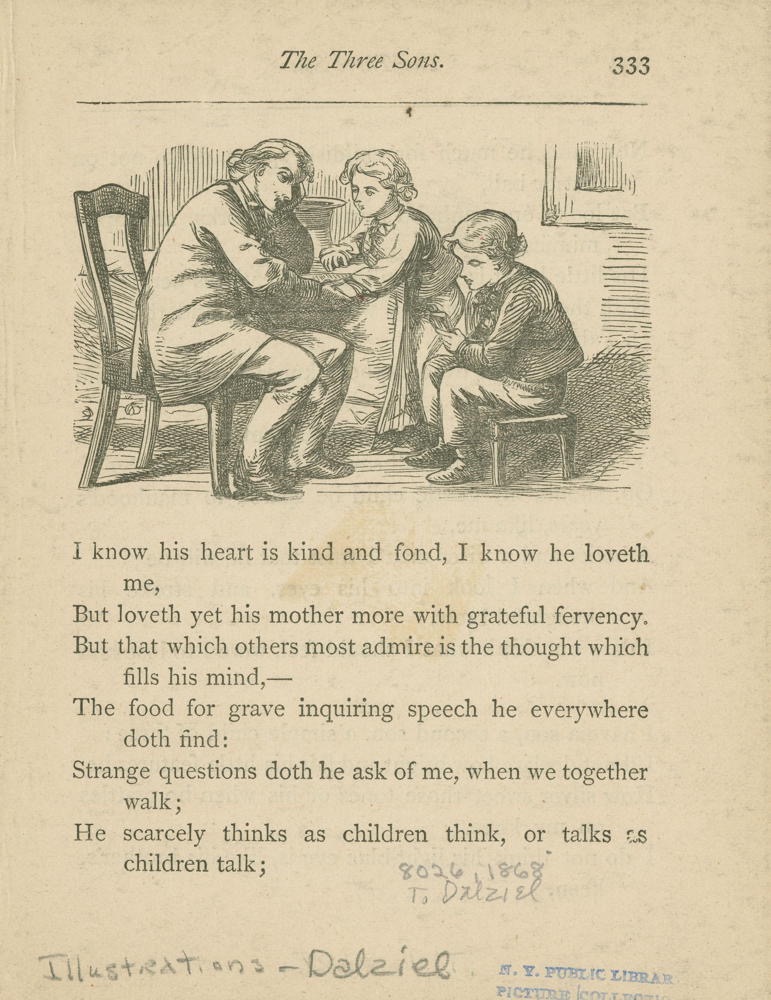
Thomas Bolton Gilchrist Septimus Dalziel: Illustration of “The three sons” by poet John Moultrie (1868) — The Miriam and Ira D. Wallach Division of Art, Prints and Photographs: Picture Collection, The New York Public Library. “The three sons.” New York Public Library Digital Collections. Accessed February 14, 2026. (https://digitalcollections.nypl.org/items/faee0690-c5bb-012f-199f-58d385a7bc34)
——
UnusualConvergences
“We have become our own foreign adversary now.”
This Unscrolling Story recounts how passing a law banning the TikTok app resulted in an uptick in its use.
Scrolling has suddenly become central to our lives, with social media dominating headlines and even our president using it to spread information—often misinformation. When Congress and President Biden passed a law targeting TikTok’s Chinese ownership, it was supposed to protect national security and prevent data misuse or manipulation. Yet, despite legal battles and restructuring deals that supposedly Americanized TikTok, nothing really changed. The platform only grew more popular, and I doubt any real control is possible except individual choice—if that still exists. I now see the addictive pull of these apps and question my own habits. With society distracted and obsessed, it feels like we’ve become our own worst enemy, undermining ourselves more effectively than any foreign power ever could.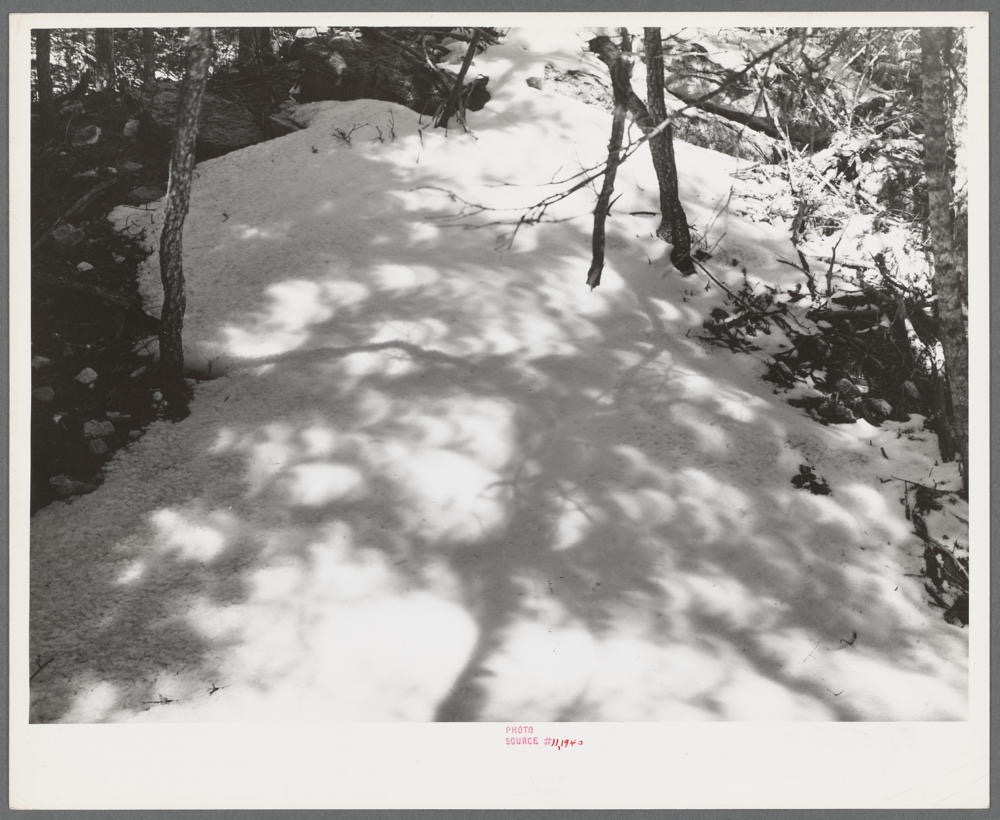
Russell Lee: Shadows on the snow in the mountains in Bernalillo County, New Mexico. The unusual crescent-shaped light in patches in the shadows was caused by the eclipse of the sun(04/1940) — United States. Farm Security Administration (Sponsor) — The Miriam and Ira D. Wallach Division of Art, Prints and Photographs: Photography Collection, The New York Public Library. “Shadows on the snow in the mountains in Bernalillo County, New Mexico. The unusual crescent-shaped light in patches in the shadows was caused by the eclipse of the sun,” New York Public Library Digital Collections. Accessed February 15, 2026. (https://digitalcollections.nypl.org/items/ba84e0f0-4993-0137-010c-2971ff3091f6)
——
SpecificRisks
“This world remains in flux.”
This Unscrolling Story considers the SpecificRisks which might be associated with social media use. The number of peer-reviewed studies appears to be increasing, and governments and litigators are taking action.
The European Commission’s finding that TikTok’s addictive design likely violates their Digital Services Act doesn’t surprise me. This law is supposed to make online platforms safer, but it’s clear from countless studies—some more rigorous than others—that social media is harming us, especially children. I’ve seen how kids’ attention and behavior shift for the worse, while adults, myself included, aren’t immune to increased anxiety and depression. It’s unsettling how the harm isn’t spread evenly—those who create and actively use social media tend to benefit, while passive users, often older or less privileged, suffer more. The evidence for regulating kids’ access is especially strong, and I can’t help but wonder if we’ll ever reach a point where the risks finally outweigh any benefit, leaving us to go cold turkey. The world feels stuck in this chaos, and I’m just watching to see what happens next.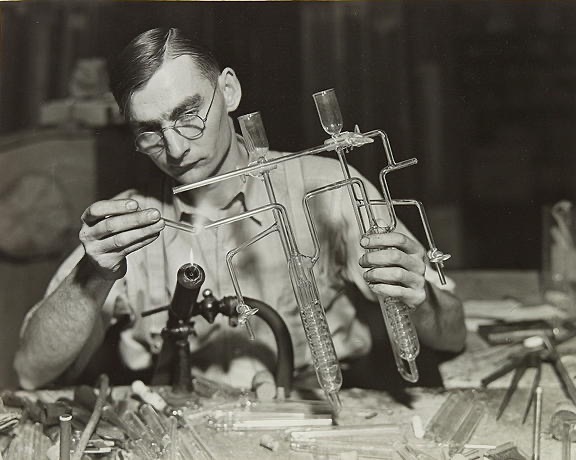
Lewis W. Hine: Making Apparatus for Laboratory, Glass Works, New Jersey (c. 1937)
——
HabitAddict
“I’m just not complying with their wishes at the moment.”
This Unscrolling Story offers some good news about social media for a change. You’re probably not addicted to your social media feeds.
I find it fascinating that so many of us, myself included, feel addicted to social media like Facebook, even though science says true addiction is rare. The field of social media research is barely off the ground, yet we’re already labeling and misrepresenting our experience, much as we’ve done with other new technologies. The difference between being a habitual user and being addicted is blurry; once I start calling my use an addiction, it’s harder to control, even if I’m not technically addicted. Science will keep evolving, but I suspect regulation and public opinion will shape our future more than research. For now, I’m reassured—I’m probably not truly addicted, and I can take control if I want. No catastrophe will result from me taking a break, even if the tech giants wish otherwise.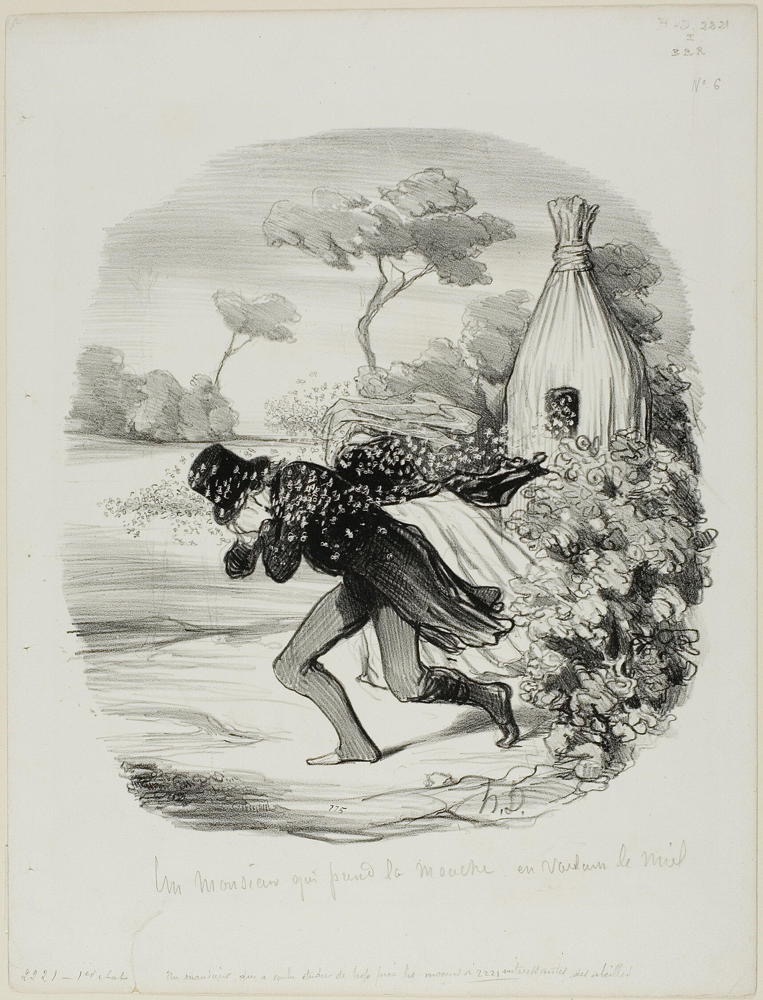
Honoré Victorin Daumier: A Gentleman Who Wanted to Study the Habits of Bees too Closely, plate 6 from Pastorales (1845)
——
InternetSmart
“…repeated social media use has introduced a much broader swath of the population to this sort of experience than has previously existed.”
This Unscrolling Story speaks to the sort of learning and the kind of intelligence that social media scrolling seems to foster: InternetSmart.
My compulsive social media use has me soaking up memes—those quick, visual shortcuts that feel like knowledge but lack depth or real understanding. I call this “InternetSmart,” a kind of second-hand intelligence built from face-value impressions and unexamined ideas. These memes settle into my memory as certainties, shaping my sense of good, bad, and identity itself. Social media’s randomness means we don’t all see the same things, which only deepens loneliness and nostalgia for simpler times. I see how this widespread, memory-driven knowledge has made us more divided and less able to cope with complexity.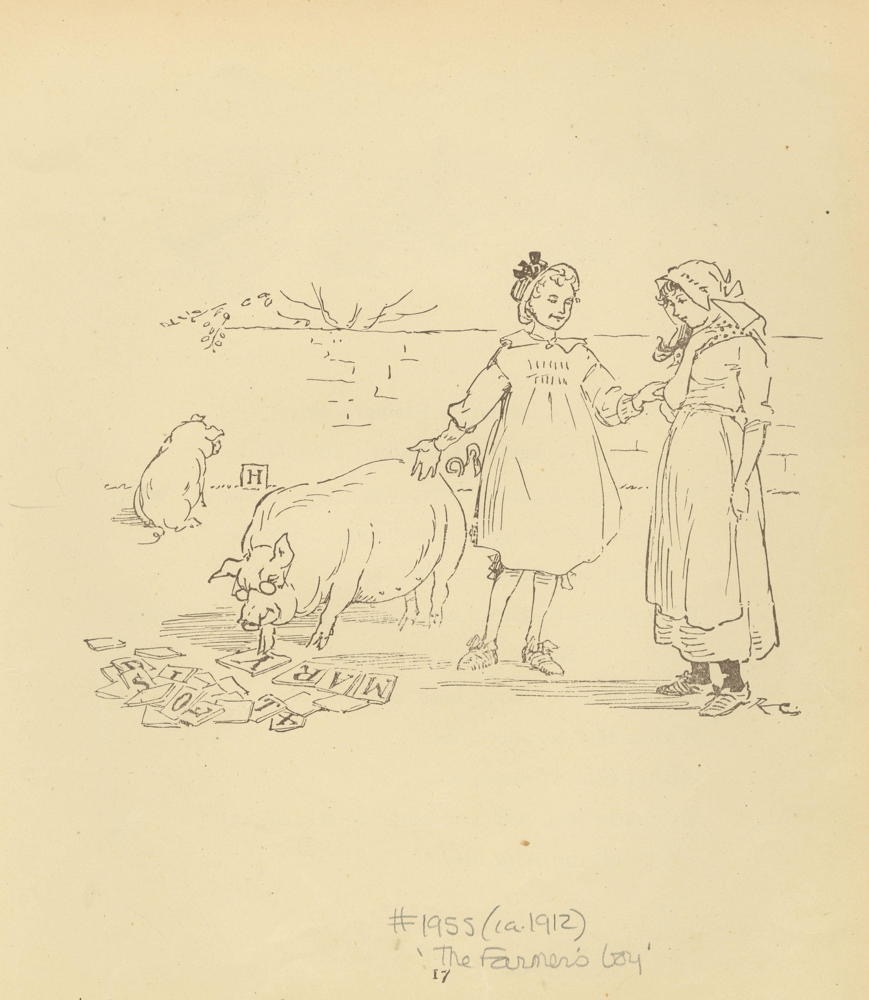
Unknown Artist: A smart pig—Caldecott -- Farmer’s boy (1912) — The Miriam and Ira D. Wallach Division of Art, Prints and Photographs: Picture Collection, The New York Public Library. “A smart pig” New York Public Library Digital Collections. Accessed February 18, 2026. (https://digitalcollections.nypl.org/items/b197e850-c5bb-012f-0e24-58d385a7bc34)
——
BigMan
“The value of its services explains why so many use them so much, not ‘clinical’ addiction.”
This Unscrolling Story finds me analyzing the appearance of the obligatory BigMan. Every calamity seems to demand that a BigMan appear to serve as the villain of the proceedings.
Watching the Meta and YouTube trial, I see Mark Zuckerberg playing the latest “BigMan” role, just like Rockefeller and Carnegie before him—trying to soften a ruthless image with awkward humility. It’s a bad time to be a billionaire, and Zuck’s robotic attempts to seem normal only highlight the gulf between oligarchs and the rest of us. On the stand, he claims the prosecution misrepresents things while victims and their advocates try to make him look all-powerful and indifferent to suffering. The trial feels like a performance, with the BigMan feigning meekness in the face of accusations that his platforms hurt the vulnerable. Despite denials of “clinical addiction,” the real harms and responsibility feel lost in a haze of nuance and legal maneuvering, and I’m left wondering if anyone can ever really hold these powerful people accountable.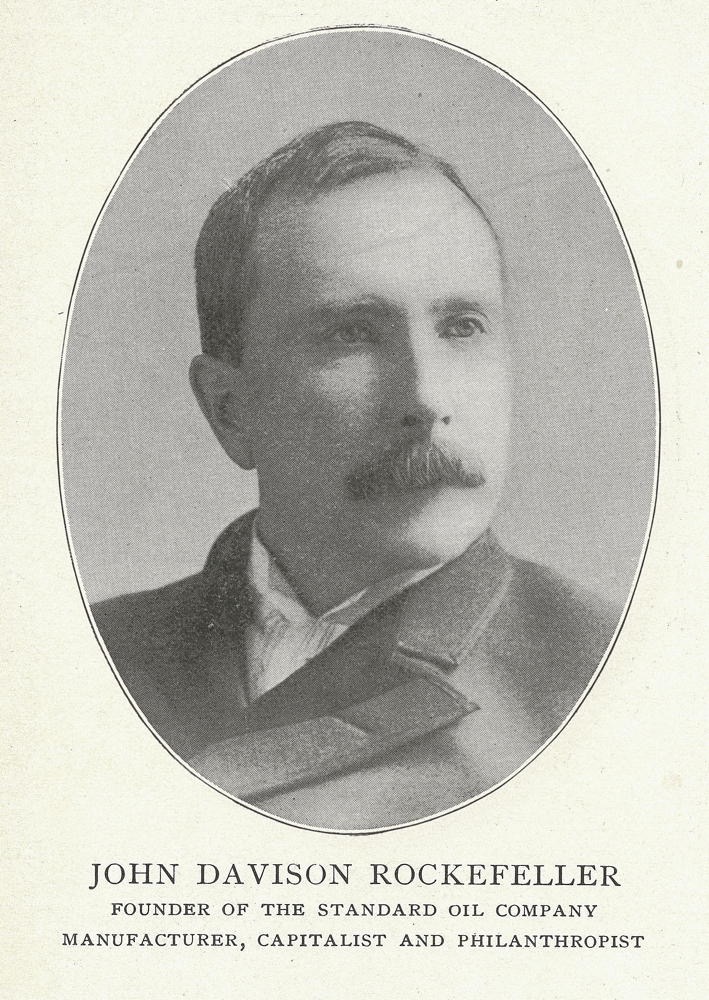
Moses King, Compiler & Publisher: John Davison Rockefeller (1899) —- Irma and Paul Milstein Division of United States History, Local History and Genealogy, The New York Public Library. “John Davison Rockefeller,” New York Public Library Digital Collections. Accessed February 19, 2026. (https://digitalcollections.nypl.org/items/87f79b40-86d4-0131-769f-58d385a7b928)That Seems For Sure
—— 
When It Becomes Available
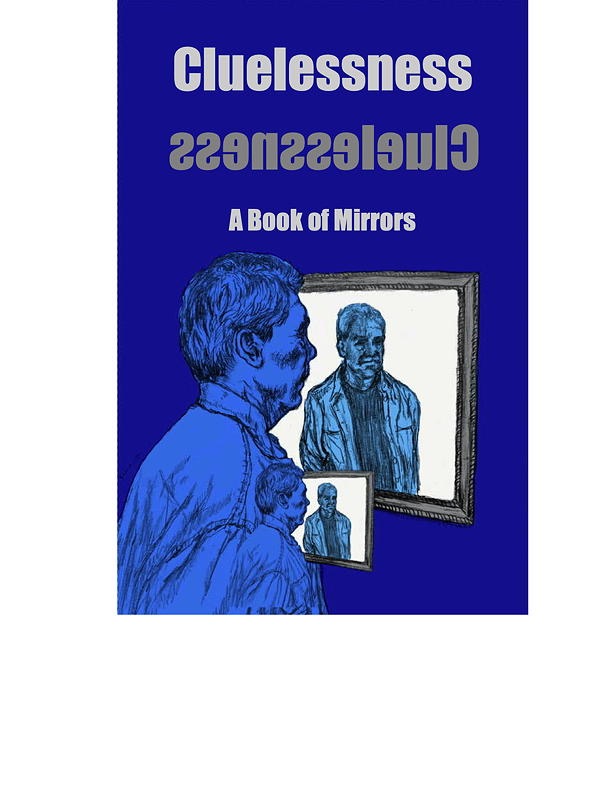
Four hundred and fifty-three days ago, I contacted a self-publishing firm, Outskirts Press, and began the process of turning my manuscript, Cluelessness, into a published work. The process was onerous for me and required every minute of those fourteen months and twenty-seven days. The Outskirts Press process complicated everything, for they have reduced their publishing process into a series of programmed choices featuring innumerable forms, and I’m form-phobic. They organized these forms into a system resembling one of those portals health care providers employ to prevent their patients from accessing personal information. Outskirts’ portal worked just about as well as the typical medical one. I was forever having to contact my publishing escort to ask for further information. Needless to say, the whole operation was under strict Pastword security that routinely left me unable to connect with whatever part of the system I’d been directed to access.
Much of the process induced a deep sense of hopelessness, but Outskirts had wisely asked for the money up front. This motivated me to continue pursuing the objective even when it seemed utterly unattainable. To be fair, I induced much of the long processing time by rejecting their offer to provide a copyeditor. I instead used my publishing contacts to access a copyeditor recommended by someone whose judgment I already trusted. Copyediting seems too personal and critical to farm out to just anyone. I also insisted on my son creating the cover image, as he’d done for my Blind Men and the Elephant book. I reread the work several times, each reread requiring several days. My enthusiasm for the effort waxed and waned as the timeframe expanded.
The final few weeks amounted to struggling over the galley proofs, a .pdf file containing page layouts displaying precisely what will be published. We tusseled over image rights, even though there are only two images in the whole work. Also, page numbering complications extended the effort by additional weeks, largely because I didn’t know how to manipulate and display the .pdf file. Overall, I’d say that the technical challenges far outweighed the literary ones. I was called upon to perform operations requiring more technical expertise than I brought to the effort. I kept reminding my publishing escort that I was the author of a book entitled Cluelessness.
Cluelessness will join about four million other titles published this year. I acknowledge that it has approximately zero chance of becoming a best seller. My purpose in publishing this work was never to create another best seller. I might embody Cluelessness, but I’m not that stupid. My purpose was to share this work, which I believe it to be important. I’ve never seen another book even remotely like this one. I intend to share it with my friends and a few new acquaintances. I’ll formally announce when it becomes available.
Thank you for following along!
I employed Grammarly, a commercial AI-powered text editor, to create the above story summaries, prompting with: “Please briefly summarize this story in the first person while retaining the original voice.” I manually copy-edited each result.
©2026 by David A. Schmaltz - all rights reserved
Good For A Goose

Comeuppance (31)
Decency (90)
Decency Unscrolling (1)
EndDays (92)
Exiled (90)
Fambly (93)
FollowingChapters (93)
Grace (92)
Humor (2)
iAlogue (1)
Letters to the Editor (1)
NextWorld (91)
Personal (18)
Prosperity (94)
Steam Festival (4)
Unscrolling (89)
Vaporized (6)
Work (16)
September 2026
August 2026
July 2026
June 2026
May 2026
April 2026
March 2026
February 2026
January 2026
December 2025
November 2025
October 2025
September 2025
August 2025
July 2025
June 2025
May 2025
April 2025
March 2025
February 2025
January 2025
December 2024
November 2024
October 2024
September 2024
August 2024
July 2024
June 2024
May 2024
April 2024
March 2024
November 2006
October 2006
September 2006
August 2006
July 2006
June 2006
May 2006
April 2006
March 2006
February 2006
January 2006