Weekly Writing Summary For The Week Ending 04/09/2026
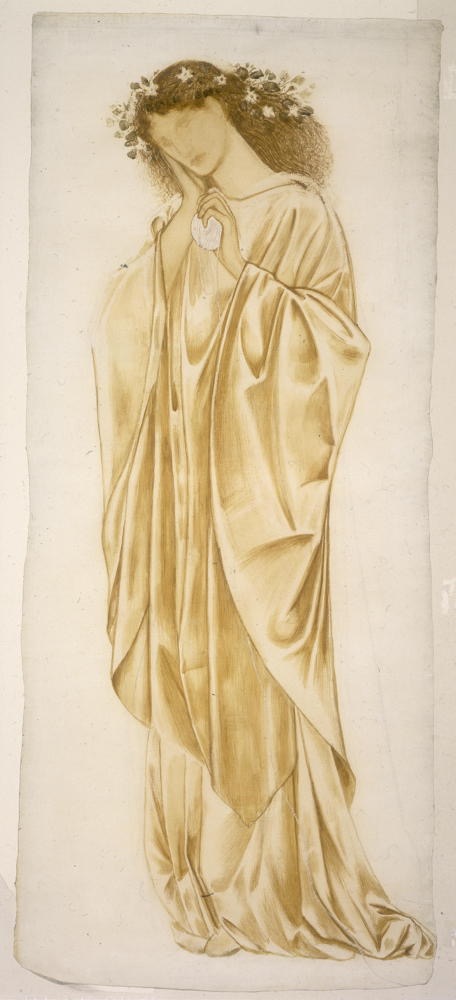
Sir Edward Coley Burne-Jones:
Ariadne
(1863/1864)
This week’s writing carried me deeper into the lived texture of EndDays — not the grand mythological architecture of the first week, nor the disorienting loss of landmarks from the second, but something more personal and more unsettling: the daily work of continuing to exist with dignity inside a world that seems determined to make dignity impossible. The week opened in HardTimes, where I found myself having to choose between accumulating reasons not to act and finding even one dog-eared reason to proceed. It moved through Restsurrection, a quietly subversive Easter spent on my knees in the garden rather than in any pew. NewlyNormalizing brought the recognition that we may never snap back, and that the disorientation itself has become our permanent condition. PlayingChicken named the incumbent’s chief governing strategy for what it is: a child’s game played by someone holding civilization’s steering wheel. EndingAWorld mapped the despot’s oldest trick — declaring victory over an apocalypse he himself manufactured — and Esteem closed the week by tracing the low self-esteem at the root of the whole sorry spectacle, from the incumbent’s throne to the society he’s poisoned. I did not expect to find this week’s theme until I reached the end of it. Thank you for following along.
— — —
Weekly Writing Summary
HardTimes
“Waiting for perfection only perfects waiting.”
This EndDays Story finds me facing HardTimes.
I completed the final approval hurdles for my Cluelessness book this week — a gauntlet of bureaucratic absurdity I nearly abandoned several times — and found myself reflecting on what it means to initiate anything during EndDays, when timing always seems poor, and reasons to defer accumulate faster than reasons to proceed. HardTimes are not EndTimes, I reminded myself. My first book launched the same week we went into Iraq in 2003, and it still eventually became a best seller, but not by the easiest route imaginable. Destiny takes no days off for inclement conditions, and waiting for perfection only perfects waiting. It happened to be the wrong time to go looking for an alternate route, and also, therefore, the perfect time.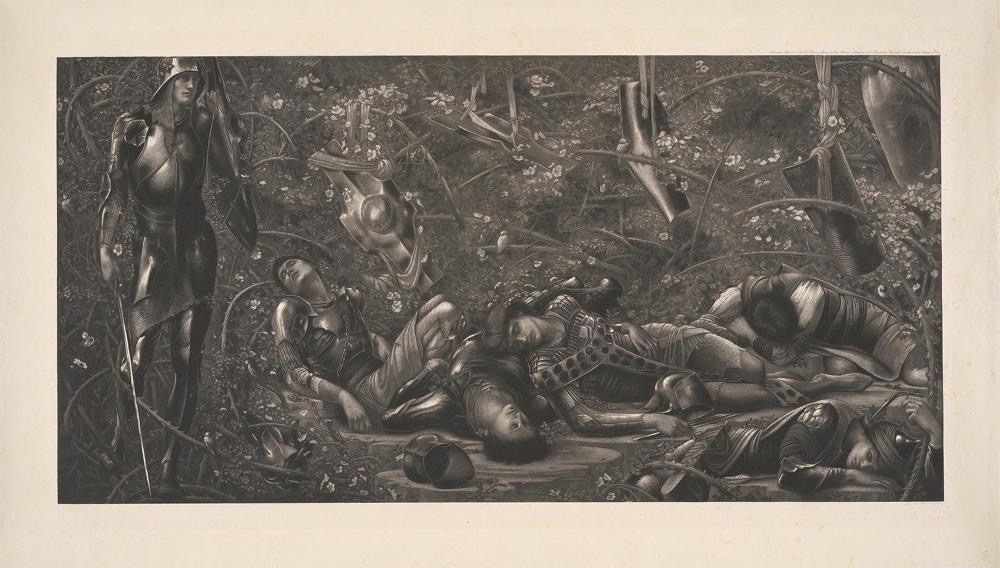
Sir Edward Coley Burne-Jones: The Briar Wood, photogravure print (1892)
——
Restsurrection
“… resurrected again until sometime after next Christmas.”
This EndDays Story celebrates a resurrection for Easter.
I realized again this week that I can no longer claim to be a Christian, though I remain a faithful observer of the calendar. The Muse and I no longer have grandchildren young enough to need us to color Easter eggs for them, so I went looking for Easter in our garden instead, spending an afternoon on my knees weeding the back beds, awakening the soil, finding a palm-sized piece of bubbly red basalt that looked every bit like a poisoned apple. By evening, I had induced a resurrection — an especially restful one, a Restsurrection — while inside, the Muse made Scalloped Potatoes, and we opened one of the better bottles. Then, we resurrected Jesus again until sometime after next Christmas.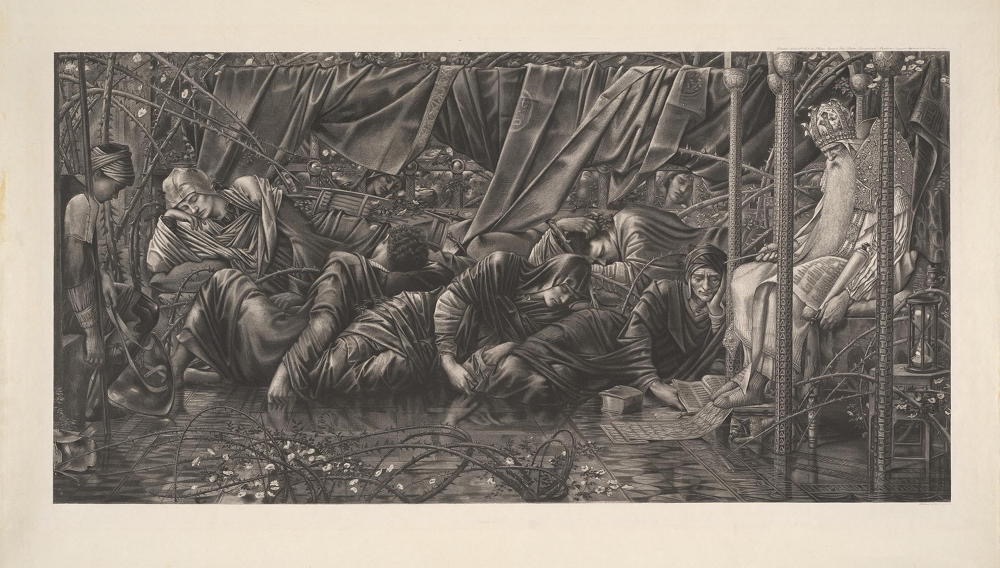
Sir Edward Coley Burne-Jones: The Council Chamber, photogravure print (1892)
—
NewlyNormalizing
“…Heaven help us since we can’t seem to help ourselves.”
This EndDays Story finds me repelling from the NewlyNormalizing.
A new normal does not follow from EndDays — just a continuing roil, unsettling ramifications, disorienting contentions with no apparent strategy guiding them. I did not agree to go along for this ride, yet here I am. What began as a local infection has taken on global intentions; dissatisfied with merely undermining this nation, the incumbent seems bent on ruining civilization wholesale. Our Easter gathering this year was less a celebration than a reunion — we marveled that we could still sit together around a table, speaking of uncertainties rather than coming of age, voicing concern over relationships straining under the weight of continuing abominations. A quickening continues. Heaven help us since we can’t seem to help ourselves.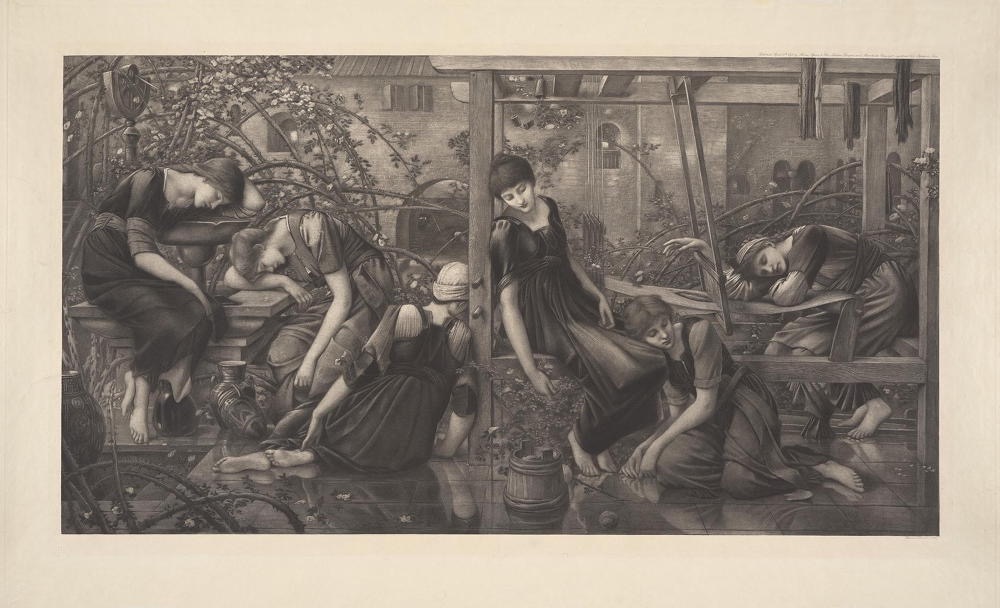
Sir Edward Coley Burne-Jones: The Garden Court, photogravure print (1892)
——
PlayingChicken
“Their approach reliably produces little else but chicken shit.”
This EndDays Story complains about children in big people’s bodies insisting upon engaging in meaningless finite games like Chicken.
I judge relative maturity by the games people choose to play, and PlayingChicken ranks among the least strategic imaginable — a contest where the only possible win is bragging rights, and the meaningful loser might be civilization. Our incumbent presents as an eight-year-old in most contexts, always playing dress-up as president, addicted to brinkmanship when his job description calls for engineering win-wins. James Carse distinguished Finite Games, played to end play, from Infinite Games, played to continue it. Diplomacy and democracy are necessarily infinite games; those who insist on always playing Chicken deal an ultimately losing hand. Their approach reliably produces little else but chicken shit.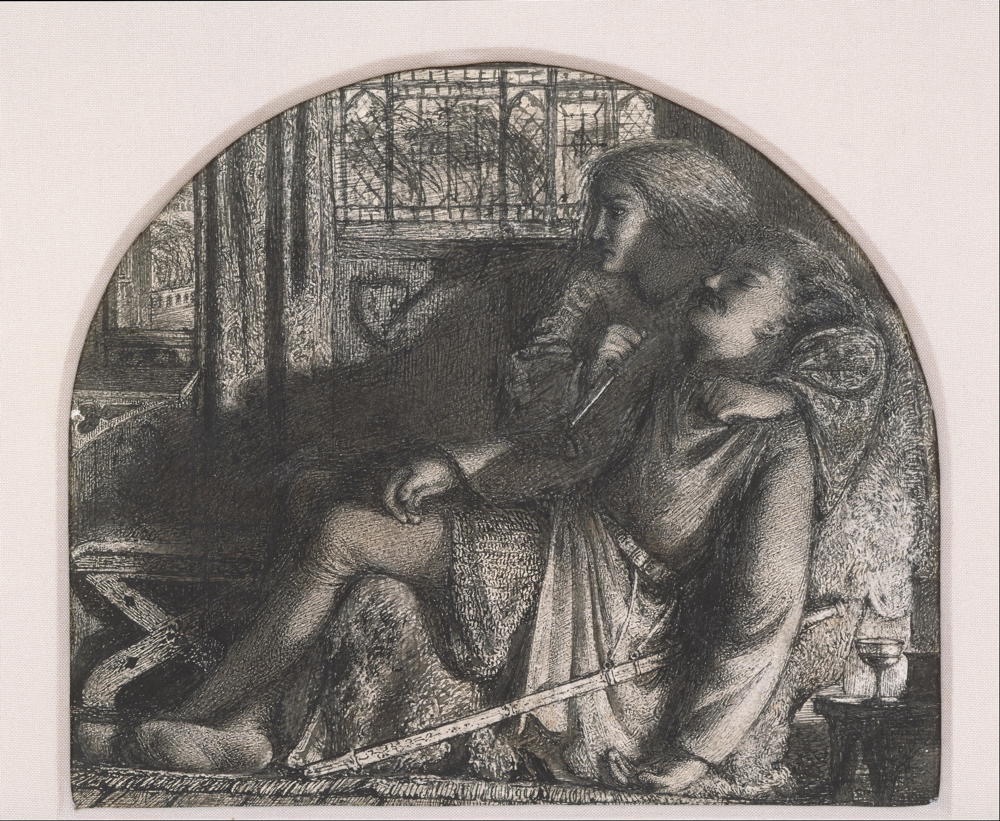
Sir Edward Coley Burne-Jones: “I rose up in the silent night; I made my dagger sharp and bright” (c. 1859-60)
——
EndingAWorld
“…expect to witness him ending worlds.”
This EndDays Story maps the despot’s oldest trick: manufacturing an apocalypse, then claiming credit for surviving it.
Every despot in history has eventually faced the absolute necessity of EndingAWorld — it demonstrates essential power like nothing else, a whisper vanquishing a hurricane, a shrug demolishing an ancient civilization. I traced this back to the apocalyptic religious sects of the early nineteenth century, whose prophets, when the predicted rapture failed to materialize, simply declared that the world had indeed ended but that God, in his benevolence, had protected the faithful from experiencing the cataclysm. That first-class sermon kept the congregation intact and strengthened their faith. Our despot operates by the same script: announce the apocalypse, renege on delivery, claim victory as savior. Expect the tap dancing to continue as long as he draws breath. Unless or until, expect to witness him ending worlds.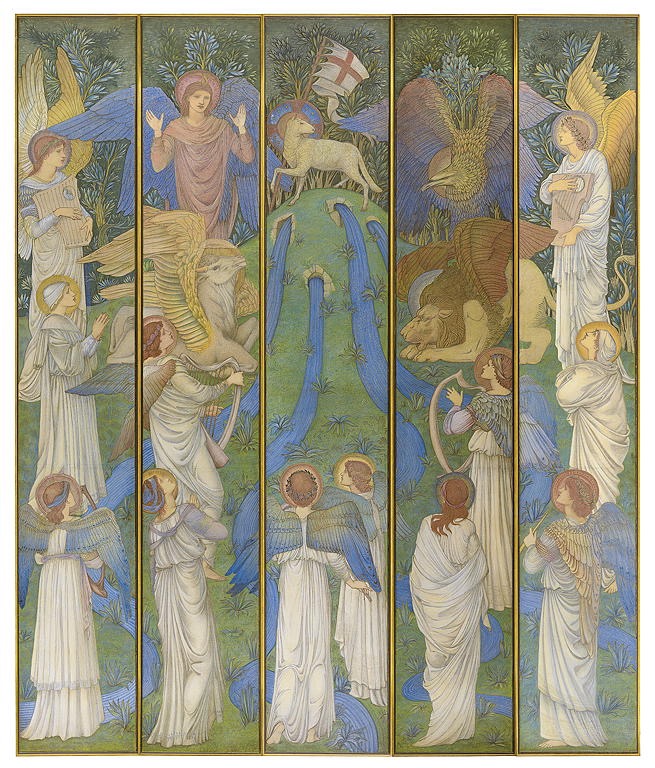
Sir Edward Coley Burne-Jones: Paradise, with the Worship of the Holy Lamb (c. 1875-80)
——
Esteem
“…the overwhelming stench of somebody chasing greatness.”
This EndDays Story traces low self-Esteem from the incumbent’s throne to the society he has infected.
Esteem must be one of the more curious human properties — more easily bestowed upon others than upon ourselves, yet both necessary and essential. I’ve found the surest path to self-Esteem runs through humility rather than greatness, since those who pursue greatness tend to forfeit their Esteem as the price of the chase. Our incumbent is a one-man low self-Esteem machine, spewing venom like a teething rattlesnake, lusting after everything and finding satisfaction in none of it, losing when he wins and insisting he wins when he loses. He cannot seem to hold himself in Esteem — perhaps his shit doesn’t stink to him, or it stinks more than he can readily forgive. I was once proud of my association with my country. I held both myself and it in high Esteem. Now I struggle to mount my throne each morning without feeling overcome by the overwhelming stench of someone chasing greatness.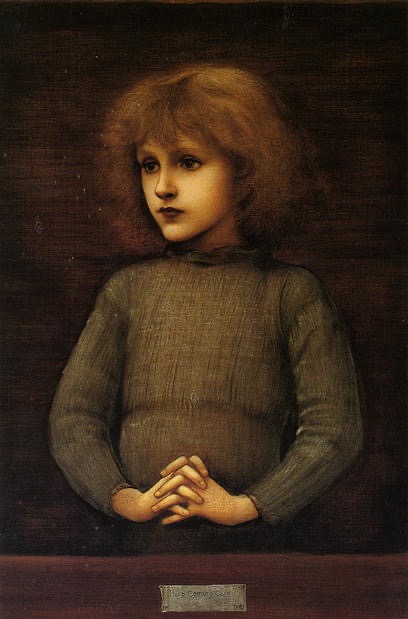
Sir Edward Coley Burne-Jones: Philip Comyns Carr (1882)
——
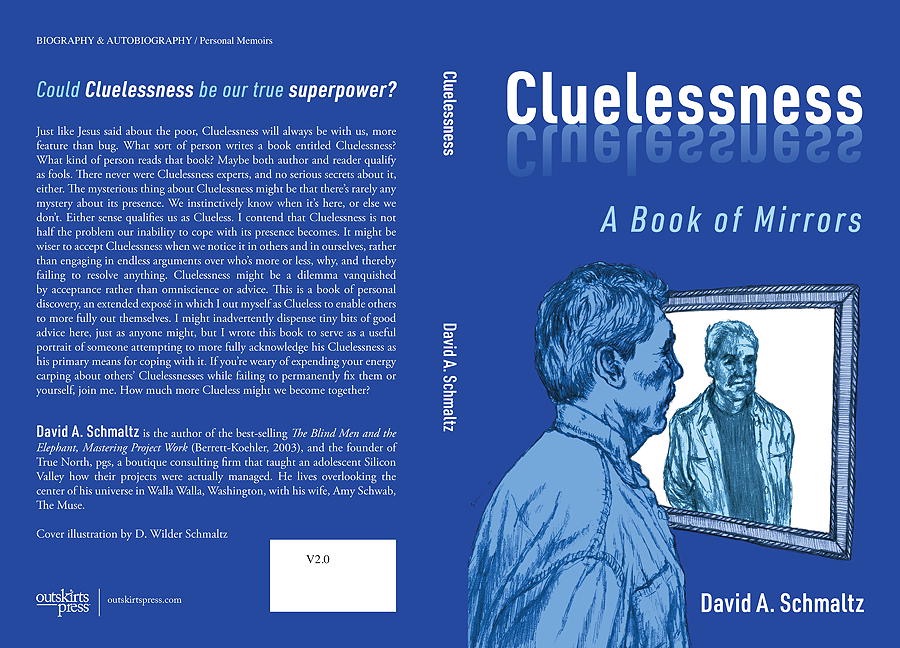
An Impervious Barrier To Completion
I learned after I'd posted my last week's Weekly Writing Summary that my final edits for my Cluelessness book had already passed muster. I was, as often occurs, waiting for a notice that had already been delivered. This experience seems more of a testament to email's design than any personal shortcoming, for my email queue has remained in the thousands—nearing ten thousand now—regardless of what I do. People have tried to clue me in to their winning email strategies, but none of them seem to work for me. My strategy might even be a testament to my inherent Cluelessness, but it more or less works for me, albeit with a few embarrassments and missed messages. No messaging system could expect to be perfect, especially when I'm involved.
But perfection turned out to be a subtheme of my Cluelessness work. I expected only my best work when creating it, for who would want to publicly exhibit anything but a manuscript at least aspiring to, if not necessarily approaching, perfection. But then, a perfect manuscript could only misrepresent Cluelessness. By rights, I guess, the text should be at least sprinkled with dangling participles and Oxford commas, if only to properly represent an authenticity. Paradoxically, though, I hired a terribly skilled copyeditor to scour the work before making it public. I hope and pray that the resulting almost perfection won't prove to simply utterly undermine its message.
It seems to me that anybody's book might just as well be entitled Cluelessness, for each should necessarily introduce its readers to frames of reference otherwise impossible to access. These should be properly quirky; otherwise, any old odd AI engine could have completed the work. A book should work on several levels above, below, and even far beyond the obvious. The odd bits might prove most defining and informative, though some coaches and copyeditors might attempt to influence those weird, potentially wonderful bits right out of a work. If that succeeds, why even bother?
I made significant progress teaching my AI Assistant, Claude (pronounced "Cloud"), how to assemble manuscripts from my daily postings, an effort that, without that assistance, tended to take me weeks and weeks and require thousands of picky little copy and paste operations and still turn out tangled. Claude insists that it's a master of copying and pasting, and if I can provide access—often little more than a CSV file or an RSS feed—it can assemble a reasonable semblance of a properly configured manuscript. I have had an ever-growing backlog of these efforts discouraging my future, but it seems that this year, perhaps even this quarter, I might render moot what had seemingly always been an impervious barrier to completion.
I employed Claude.ai, a commercial AI-powered text editor, using it to perform repetitive copy/pasting work and to create the above story summaries, prompting with: “Please briefly summarize this story in the first person while retaining the original voice.” I manually copy-edited each result.
©2026 by David A. Schmaltz - all rights reserved
Good For A Goose

Comeuppance (31)
Decency (90)
Decency Unscrolling (1)
EndDays (92)
Exiled (90)
Fambly (93)
FollowingChapters (93)
Grace (92)
Humor (2)
iAlogue (1)
Letters to the Editor (1)
NextWorld (91)
Personal (18)
Prosperity (94)
Steam Festival (4)
Unscrolling (89)
Vaporized (6)
Work (16)
September 2026
August 2026
July 2026
June 2026
May 2026
April 2026
March 2026
February 2026
January 2026
December 2025
November 2025
October 2025
September 2025
August 2025
July 2025
June 2025
May 2025
April 2025
March 2025
February 2025
January 2025
December 2024
November 2024
October 2024
September 2024
August 2024
July 2024
June 2024
May 2024
April 2024
March 2024
November 2006
October 2006
September 2006
August 2006
July 2006
June 2006
May 2006
April 2006
March 2006
February 2006
January 2006





.jpg)
