Weekly Writing Summary For The Week Ending 06/11/2026
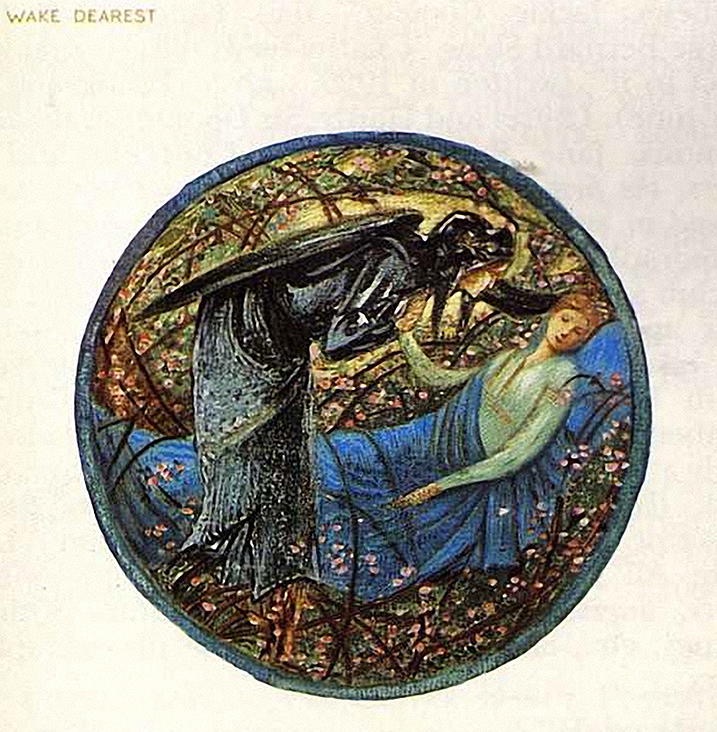
Sir Edward Coley Burne-Jones:
"Wake Dearest" a reproduction of a watercolor published posthumously (1905) by his wife
in "The Book of Flowers" one of 38 images in the book.
(1905)
This week’s EndDays dispatches arrived in the company of a deep tiredness, RattleFatigue, named outright by week’s end. The writing ranged from the Tibetan Buddhist speculation of InBardo to the frozen-in-place sardonicism of InLimbo, from the Scopes Trial parallel of MonkeyTrials to the contagious cynicism of Beleafing, from The Muse’s standing-room presentation in Opting to the rattly jalopy of RattleFatigue itself. The Muse presented “Why I Voted For The Data Center” to a packed Democratic Central Committee meeting and received thundering applause for calling out the ad hominem attacks she’s endured. The Villa Vatta Schmaltz will sit empty for a few days. We're heading to Newport (Oregon, of course), then home to mow lawn and freeze cherries, then Spokane for a Washington State Democratic Convention. The series will continue regardless of backdrop.
Thank you for following along!
— — —
Weekly Writing Summary
InBardo
“…greater respect than his soul’s former vessel ever once managed to.”
This EndDays Story considers the Tibetan Buddhist concept of Bardo — that transitional netherworld between states — as a framework for imagining our incumbent’s inevitable reckoning.
In this EndDays Story, I considered Bardo — the Tibetan Buddhist netherworld of transition between death and rebirth, and also between birth and death — as a framework for what our incumbent and his MAGA movement face once he leaves office. Without their dear, malignant leader to draw attention to the stage, the audience will very likely, rather quickly, disperse like a bathtub fart bubble. What experts have speculated must be evidence of encroaching dementia might just as easily be him slipping into Bardo, which might well appear identical to dozing. I tried to imagine what he experiences as he encounters his inevitable enlightenment — an Ebenezer Scrooge on steroids, a Manhattan Mussolini, goose-stepping in a skinny red tie. In Bardo, one performs the roles of one’s own judge, jury, and bloodthirsty executioner. I will hold faith that the fruit fly he’s very likely destined to be resurrected into will gratefully hold other fruit flies in greater respect than his soul’s former vessel ever once managed to. Namasté.
Sir Edward Coley Burne-Jones: The Golden Stairs (1880)
——
InLimbo
“…just imagine what will happen after the midterms render them lame geese.”
This EndDays Story finds our stymied administration frozen InLimbo, neutralized by courts, trading partners, and fickle public opinion, accomplishing nothing destined to survive its tenure.
In this EndDays Story, I considered another end state: a stymied administration that accomplishes nothing destined to survive its tenure. He cheats himself at golf, too. His Cabinet seems perfectly suited to his service — more at home on the cover of The Enquirer, defending the indefensible with another clever “I know you are, but what am I?” Those who long held that government was best served small enough to drown in a bathtub, welcome to your dream come true — except it’s more like a nightmare, isn’t it? Your oxen were gored right along with your opposition’s. He was never present in the first place — too busy administering himself. He was never more than a pretender to a non-existent throne, and was surprised when he discovered there was no real underlying power attached to the role. Fortunately, they remain suspended InLimbo. If they’re already lame ducks now, just imagine what will happen after the midterms render them lame geese.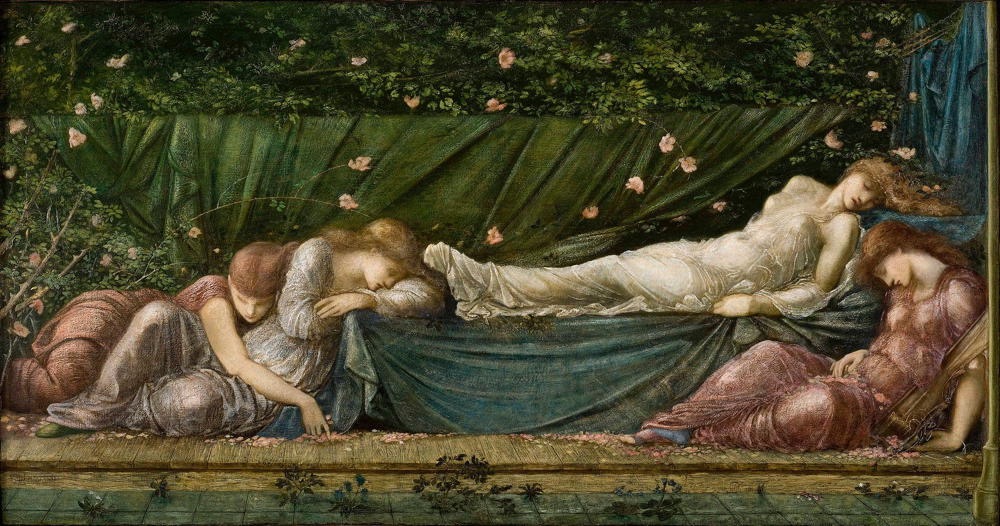
Sir Edward Coley Burne-Jones: The Sleeping Beauty from the small Briar Rose series (circa 1872 )
——
MonkeyTrials
“I am surrounded by legions of church ladies pursing their lips at modernity and reason.”
This EndDays Story coins MonkeyTrials, after the famous Scopes trial, to describe a justice system and a public discourse where the outcome is a given, evidence remains optional, and cruel certainty rules.
In this EndDays Story, I coined MonkeyTrials, recalling the 1925 Scopes trial where a packed courtroom of certain believers would have been satisfied with a guilty verdict before any evidence was heard. Today’s Justice Department acts as if presenting before Kangaroo Courts, while in the court of public opinion, the same ethic prevails: mobs forming around positions blessed by the absence of evidence. Our Data Center controversy has been deeply troubling me. When I attempt to correct a misconception, I receive an “I don’t believe that” and a look that tells me they’re now even more convinced they were right. I am no exemplar myself — I hold my own prejudices as gospel too, and I am at my most influential when I’m actively trying to convince myself. God might exclusively exist in inquiry, never in any answer. I am surrounded by legions of church ladies pursing their lips at modernity and reason.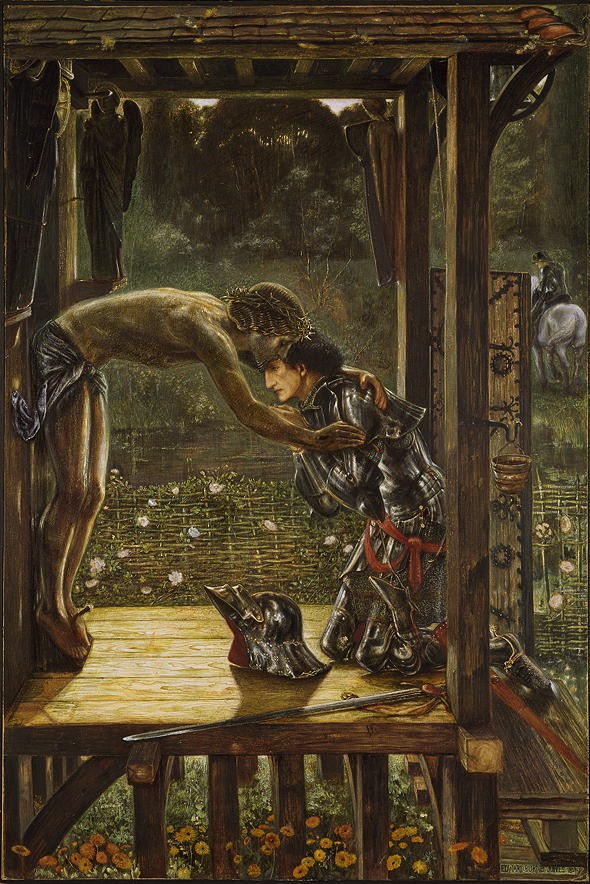
Sir Edward Coley Burne-Jones: The Merciful Knight (1863)
——
Beleafing
“Forgive me, for I seem to have intruded to satisfy myself and failed.”
This EndDays Story examines cynicism’s contagion — how it spreads even to those most opposed to it — and arrives at a personal confession about the limits of good-hearted correction.
In this EndDays Story, I considered cynicism as one of the most contagious infections — once present, it rapidly spreads even to those strongly opposed to it. Our incumbent brought a level of cynicism that influenced even its most vehement critics. My ends frayed in response. People even started wearing their pajamas to shopping malls. Perhaps the very best way to distance myself from another person involves attempting to inflict information on them for their own good. I genuinely believed you would appreciate my good-hearted attempts to correct your obvious errors. I discovered, for at least the ten-thousandth time, that you, like me, might be entitled to your misconceptions, and that even they might represent what we each genuinely need to believe. Forgive me, for I seem to have intruded only to satisfy myself and failed.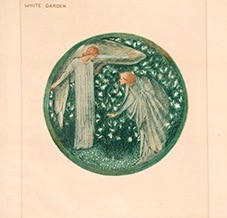
Sir Edward Coley Burne-Jones: “White Garden” a reproduction of a watercolor by Edward Burne-Jones (d. 1898) published posthumously (1905) by his wife in “The Book of Flowers” one of 38 images in the book. (1905)
——
Opting
“We can’t help but own our deliberate decision forever going forward.”
This EndDays Story recounts The Muse’s standing-room presentation, “Why I Voted For The Data Center,” and the choice both of us made to stay open rather than retreat.
In this EndDays Story, a data center opponent asked me where I’d parked my Corvette, certain that bribes must explain The Muse’s vote in favor. Last night, The Muse convened a presentation titled “Why I Voted For The Data Center” before the local Democratic Central Committee. The room was nearly standing-room-only. Her logic seemed inescapable: a county economy slowly fading after peak wine, a reputable operator with an independently verifiable environmental record. Opponents’ most common response has been “I don’t believe that” when she provides verifiable facts. The Muse is Opting to stay open and reveal the details of her reasoning, believing it might help accelerate healing, even if it renders her unelectable. We encountered a fork in the road and took it together, actively Opting rather than becoming victims of a madman’s aimlessness. We can’t help but own our deliberate decision forever going forward.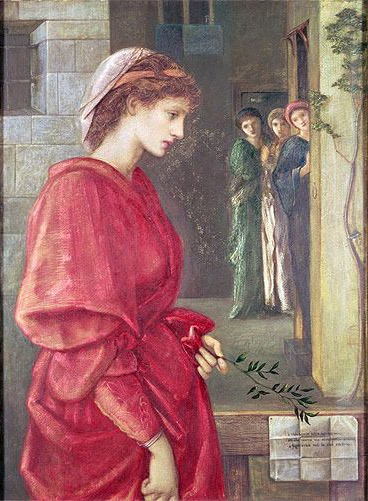
Sir Edward Coley Burne-Jones: Beatrice: Io vidi donne co’ la donna mia (1870)
——
RattleFatigue
“…wake me up, please, however exhausted I might seem.”
This EndDays Story names the exhaustion of sustained witness — RattleFatigue — after a rattly old jalopy of a tenure that has forced us all to live inside one man’s head.
In this EndDays Story, I confessed to RattleFatigue, the exhaustion of riding through these EndDays in a rattly old jalopy, windows dusty, engine unmuffled. Our incumbent has committed the only crime worse than living in our heads: he forced us to live in his. His tenure has been similar to some pest infestation: ants or wasps ruining every meal we’ve attempted since. He keeps railing about a third term, of course illegal, because he aspires only to illegal goals. I was raised by people trained in accepting disappointment as their due, who achieved an uneasy equilibrium and largely succeeded. To experience worse proved exhausting then, just when we had held so little in reserve. If I am asleep and this amounts to a dream, wake me up, please, however exhausted I might seem.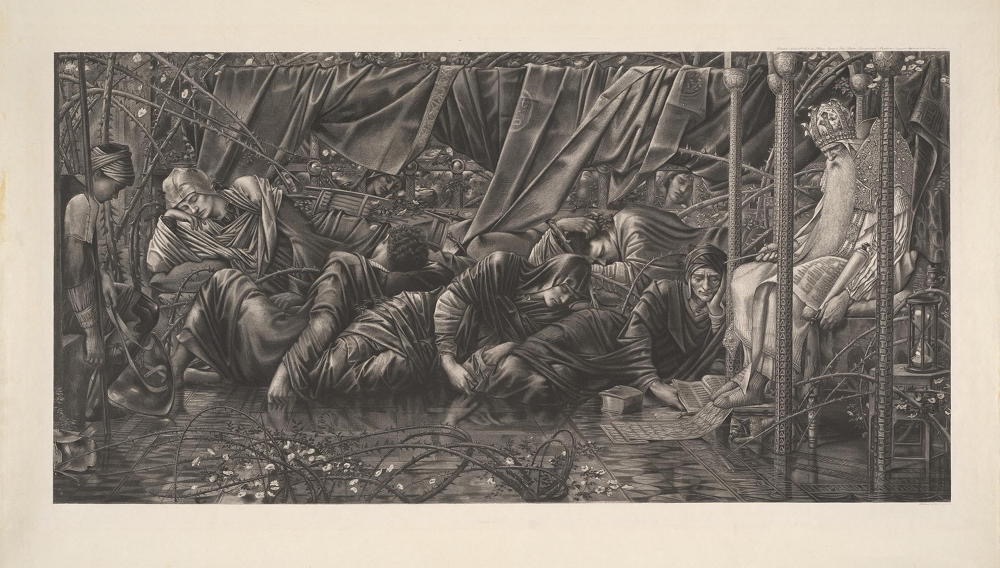
Sir Edward Coley Burne-Jones: The Council Chamber (1892)
——
How Much They Earn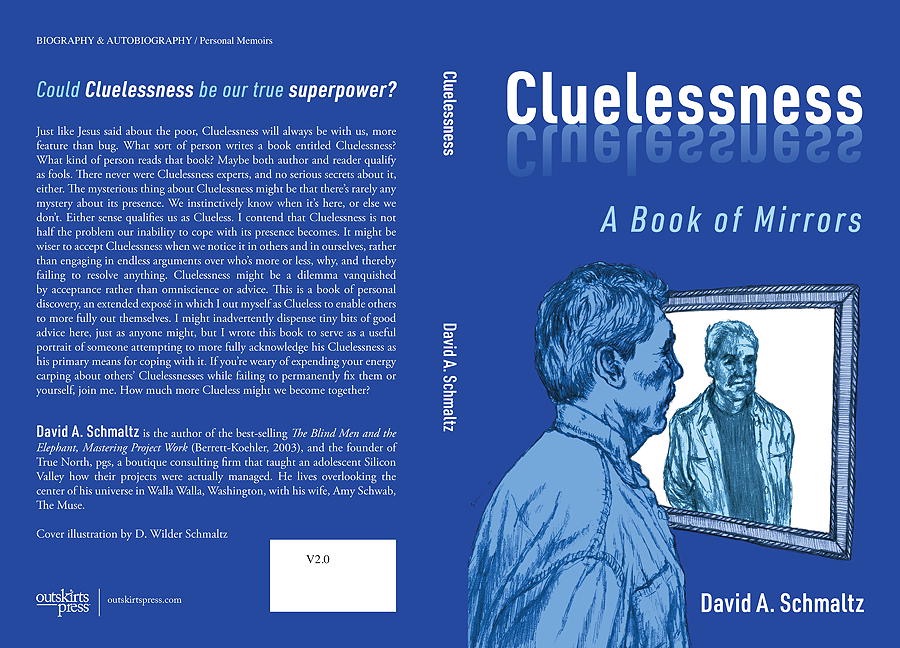
I self-published Cluelessness, by which I mean that I paid a company that specializes in publishing to format, print, and distribute the work. I chose not to avail myself of any of the many add-ons Outskirts Press offered because I had prior publishing experience. I declined their invitation to copyedit the work, choosing instead to contract with someone a trusted copyeditor friend recommended. Copyediting is certainly the most personal part of the publishing process, and rightfully should stay within family. One would never be wise to work blind with a contract copyeditor, for they might attempt to correct the prose. Actual copyediting accepts their author's quirks as personal style, and succeeds when the result sounds even more like the original than the original could possibly have.
Since the book was printed, not a week has gone by that I haven't received at least one invite to purchase yet another add-on service from the fine folks at Outskirts. This week, they sent a seduction to enter a presumably prestigious competition for an award bestowed upon self-published works of extraordinary quality: an entry fee of only $375. Award-winning works sell more books. As a self-published author, I feel an incredible sensitivity toward what certainly feels like encroaching overheads. Look, they don't refer to self-publication as "vanity press" for nothing. It's the route the less popular kids take to find a date for their prom. Neither love nor feral attraction brought my publisher and me together. We bonded over a short list of proven capabilities. It was almost as if we shared a covenant: I wouldn't write a best-seller, and they'd just format, print, and distribute for a fixed fee. I wouldn't be writing supplemental checks for last-minute "improvements." The purpose was never more than to see my work in print. Period.
I'm at least vain enough to understand that a $375 entrance fee costs me probably 75 book sales. I might make five bucks a copy if someone pays the full purchase price for the book. Almost everyone sells books at some obligatory discount. Only family and fans agree to pay the full retail price, and I don't have 75 of them following me around. I have parsed every other add-on marketing opportunity Outskirts has offered me with precisely this same calculus. How many book sales would it take to recoup that cost? My break-even point on the exercise hovers around 800 sales to begin with, an unlikely number even if I personally visit every bookstore and library on the West Coast and become unprecedentedly popular there. Vanity presses make their money selling add-ons to authors who suffer from Published Author Syndrome, a temporary psychotic state that can overtake an author's psyche following publication, which makes them feel as though the whole world aches to discover and love them. This psychosis usually extinguishes itself within a few months or a few supplemental thousands of dollars spent on post-publication add-ons, especially on anything marketed as "Marketing."
Like everything, authoring eventually becomes a self-correcting activity. It could never have gone on forever. For a writer, authoring usually proves to be completely optional. One writes for their own amusement and succeeds, or they ultimately fail to properly amuse anyone and fail, for few prove nearly entertaining enough to influence more than a few of their fellows. Vanity turns out to be an essentially painless process that costs less than a modest vacation but perhaps produces better life lessons. Watch that overhead expense. Consider the likelihood of ever recouping your costs, and never forget that you never once intended the exercise to be self-liquidating by turning a profit. Writing is not a profit-making occupation. Every writer becomes well-versed in creating loss leaders. It's up to each to decide how much they'd prefer to lose more than they'll ever determine how much they earn.
Thank youi for following along!
You can order Cluelessness from Bookshop.org, Powell’s Books, or Amazon. It's now more widely available, just as the publisher predicted. I still haven't discovered the e-Book location for ordering the book, other than this Kindle link. (I didn't know that KIndle was still a thing, if it ever was.) I saw a .pdf link somewhere, but lost the location and couldn't find it again. My publisher is enamoured with their flashy portal that I keep getting lost in. See if you can do any better: Link To Publisher's Website Here
I employed Claude.ai, a commercial AI-powered text editor, using it to perform repetitive copy/pasting work and to create the above story summaries, prompting with: “Please briefly summarize this story in the first person while retaining the original voice.” I manually copy-edited each result.
©2026 by David A. Schmaltz - all rights reserved
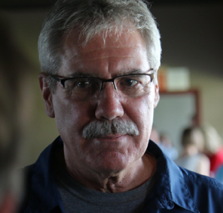
Good For A Goose

Comeuppance (31)
Decency (90)
Decency Unscrolling (1)
EndDays (92)
Exiled (90)
Fambly (93)
FollowingChapters (93)
Grace (92)
Humor (2)
iAlogue (1)
Letters to the Editor (1)
NextWorld (91)
Personal (18)
Prosperity (94)
Steam Festival (4)
Unscrolling (89)
Vaporized (6)
Work (16)
September 2026
August 2026
July 2026
June 2026
May 2026
April 2026
March 2026
February 2026
January 2026
December 2025
November 2025
October 2025
September 2025
August 2025
July 2025
June 2025
May 2025
April 2025
March 2025
February 2025
January 2025
December 2024
November 2024
October 2024
September 2024
August 2024
July 2024
June 2024
May 2024
April 2024
March 2024
November 2006
October 2006
September 2006
August 2006
July 2006
June 2006
May 2006
April 2006
March 2006
February 2006
January 2006