Weekly Writing Summary For The Week Ending 07/02/2026
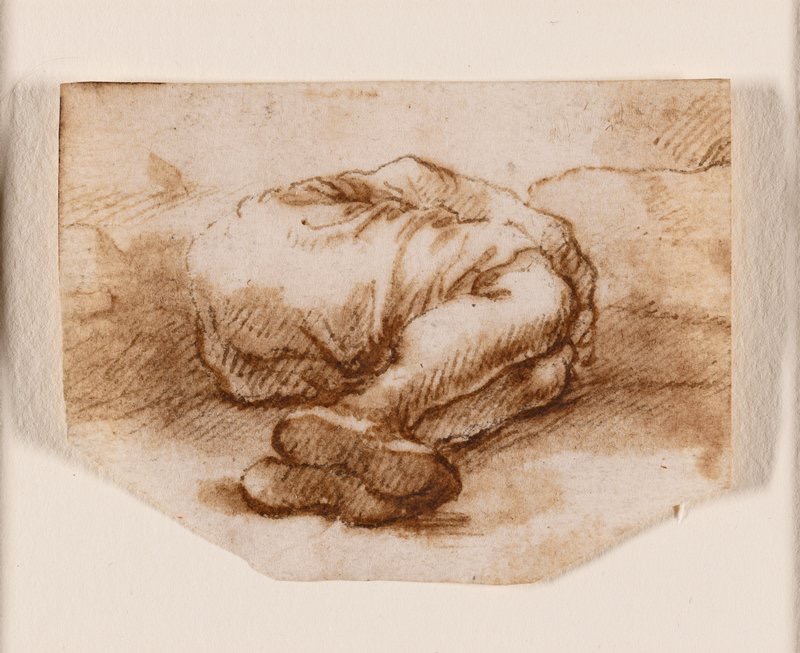
Salvator Rosa
Sleeping Boy
(17th century)
This week’s Prosperity dispatches arrived while I picked up a too-long-absent 1967 Martin D-18 guitar after SetTheory—does anybody remember that series from the Fall of 2022?—revealed itself as world-class prose as I listened to it in an AI-powered app (ElevenReader) that convincingly delivered it in Laurence Olivier’s voice. My Prosperity writing ranged from the abstract economy of Real_Work to the myth-making surrounding industrial development in Mythed, from the long economic betrayal of Posterity to the prosperous paradox of Profligacy, from the philosophical reframe of Foundational to the blushing self-awareness of Embarrassment. This series found its philosophical foundation this week.
Thank you for following along!
— — —
Weekly Writing Summary
Real_Work
“…regardless of what any economist insists.”
This Prosperity Story examines what Real_Work means in an economy where almost nobody engages in what our forebears would recognize as productive labor — and discovers that writing daily without compensation for twenty years still qualifies.
In this Prosperity Story, I considered how most people no longer engage in what our forebears would recognize as Real_Work — physical labor amenable to unambiguous measurement. We’re more Under Contract than actually employed, paid according to agreements that don’t depend on time cards, though employers still require them, even knowing their contents will necessarily be fictional. The AI layoffs are just the latest in a long history of serial displacement, each a born blood enemy of Prosperity. I haven’t figured out how to squeeze money from this economy in twenty years. If it weren’t for my patron, I would be out on the street or, more likely, dead. The Muse was always much more clever at reinvention, so Prosperity repeatedly visited her. I tagged along, doing my work, which adds not a cent to anybody’s Gross National Product — a backdoor sort of Prosperity, and Real_Work, regardless of what any economist insists.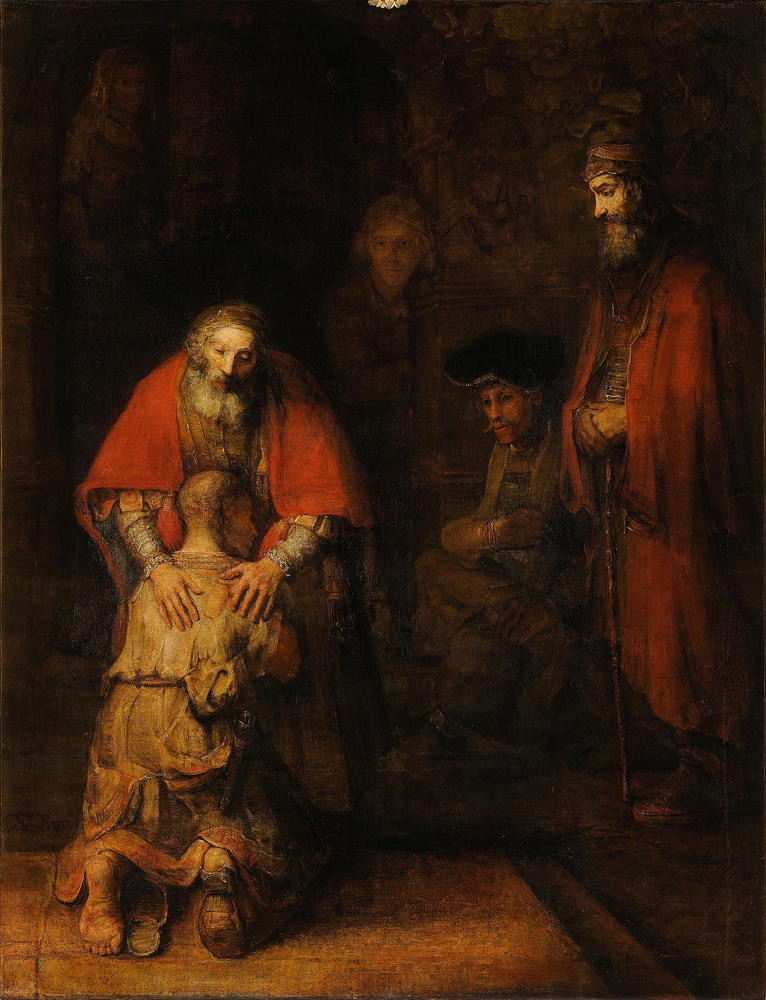
Rembrandt Harmenszoon van Rijn: The Return of the Prodigal Son (1668)
——
Mythed
“…constrained by law to consider facts rather than myths.”
This Prosperity Story examines how mythology surrounding industrial development damages Prosperity — and how those who feel free to make up facts always hold a curious advantage over those constrained by them.
In this Prosperity Story, I considered how The Muse, as Port Commissioner, developed information on the likely impacts of a proposed data center — some of which contradicted the propaganda distributed by opponents who had made up their minds without the benefit of actual data. The most frequent response she received when sharing facts was that the opponent “didn’t believe that.” Those who feel free to just make up shit always hold a curious advantage over those who hold themselves constrained by facts. In the first half of 2025, data center investment drove the overwhelming majority of US GDP growth — and without it, the US economy would have been essentially flat. Our existing industrial employers have been laying people off and closing operations. Austerity cannot produce Prosperity. Fortunately, the called-for public comment period for the data center’s mandated permitting process rapidly approaches, during which opponents and supporters can submit their questions and assertions for consideration by regulatory authorities, who are constrained by law to consider facts rather than myths.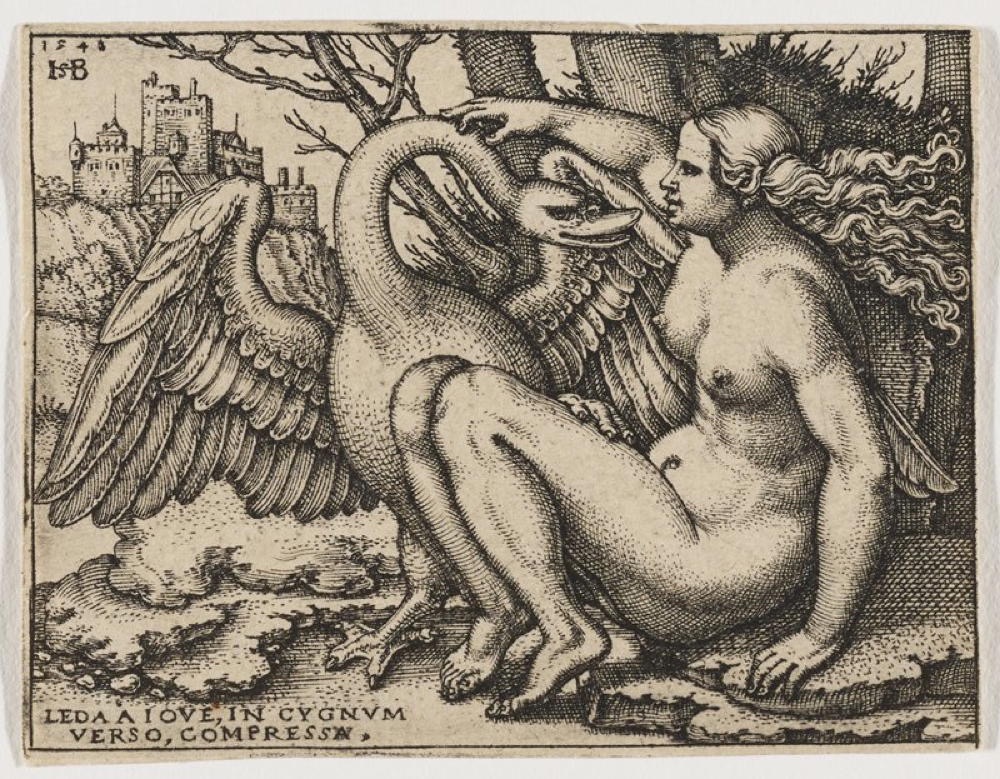
Sebald Beham: Haman Recognizes his Fate (1548)
——
Posterity
“May we choose to choose more wisely this time.”
This Prosperity Story traces Prosperity’s long betrayal across a lifetime of economic experience — from the Reagan Devolution through the telephony recession, the housing collapse, and the current incumbent’s radical economic policies.
In this Prosperity Story, I traced Prosperity’s elusiveness across my economic lifetime. The Reagan Devolution mortgaged our country’s Prosperity for considerably less than a handful of magic beans, plundering the poor and emboldening the wealthiest. The millennium telephony recession erased more wealth and laid off more people than the Great Depression — while we looked away at an “imperative” War on Terror. The Muse and I went bankrupt and entered our exile. My son and daughter found alternative ways to pay for college, since mom and dad had contributed what would have been their college fund to pay for that 15% mortgage and associated inflation. The radical economic policies of our current incumbent might successfully repel Prosperity for another generation. Prosperity means that every man gets to be the king of his realm and every woman her own queen, and that no realm is an Epstein Island unto itself, beyond decency and justice. My progeny’s Posterity — by which I mean ours — depends upon the choices we make today. May we choose to choose more wisely this time.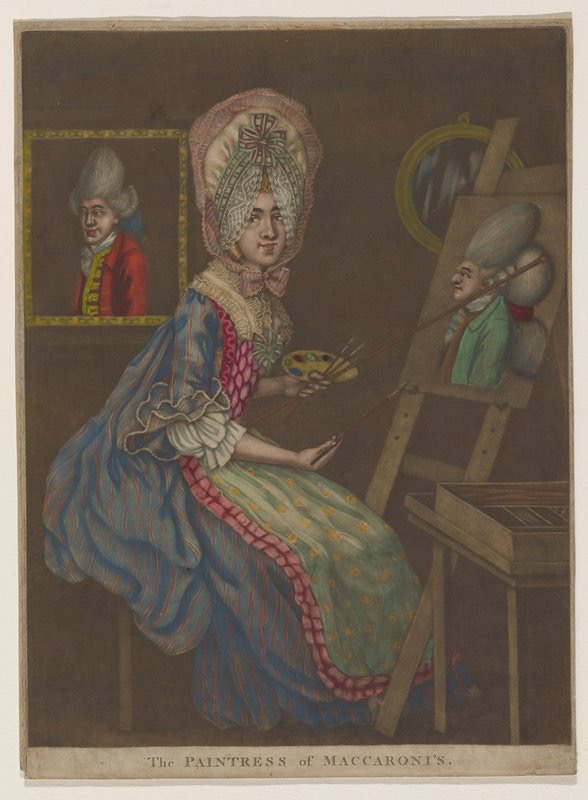
Robert Dighton: The Paintress of Maccaroni’s (1770)
——
Profligacy
“His adolescent attitude could ruin more than himself this time.”
This Prosperity Story examines Profligacy as Prosperity’s failure mode — the excess that knows no natural limit regardless of wealth, exemplified most dangerously by our gilding incumbent.
In this Prosperity Story, I considered how Prosperity seems curiously thrifty, even though it contains plenty. Something about Prosperity despises Profligacy. A pickup truck once stopped at our driveway offering premium frozen steaks at a cut-rate price. The Muse declared the meat probably edible. Of course, it was inedible — hardly suitable for making stock. We learned a small lesson again: there’s rarely any economic shortcut really worth taking. Our incumbent gilds crap that looks cheaper when gilded. He builds bigger what only ever seems properly scaled in miniature. He mistakes excess for success, so his taste reliably sucks. Our Founders understood the Profligacy Paradox and designed checks and balances to better ensure some discipline in administration. Unfortunately, our Profligate President doesn’t seem to respect these necessarily essential boundaries. His adolescent attitude could ruin more than himself this time.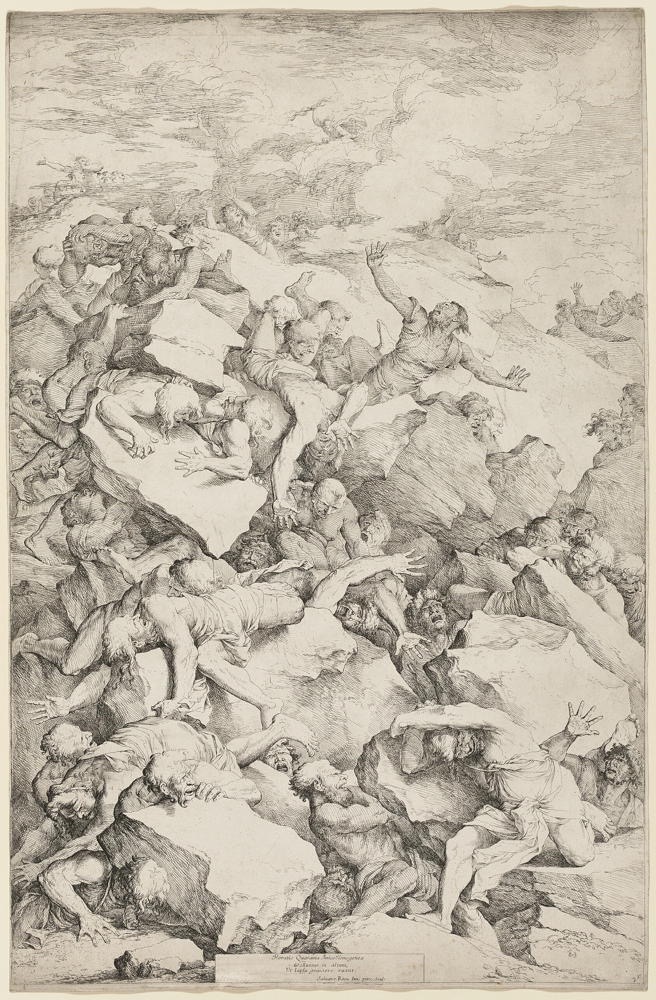
Salvator Rosa: The Fall of the Giants (1663)
——
Foundational
“Prosperity won’t necessarily make anything easy, but it might render pretty much everything easier.”
This Prosperity Story reframes the entire series: Prosperity not as endpoint or destination, but as Foundational — table stakes, prologue, a force multiplier for everything that becomes possible once it’s achieved.
In this Prosperity Story, I discovered that Prosperity might work better as context than as purpose. A target, certainly, but not an end-all or be-all objective — more a gate, one that, once passed through, enables investigating realms unavailable to those not yet supported by its presence. I held myself back from becoming a writer because I couldn’t properly use a keyboard. It wasn’t until I decided to ignore that self-imposed barrier and just get on with writing that I ever produced anything worth sharing. Decades later, I type no better than I did before I chose to consider what I already possessed as Prosperity enough. Once I passed myself permission to type anyway, my windshield filled with previously only distantly imagined possibilities. Prosperity appeared when I accepted my talents as they were — a clearly delusional conviction that nonetheless propelled me onward. Prosperity won’t necessarily make anything easy, but it might render pretty much everything easier.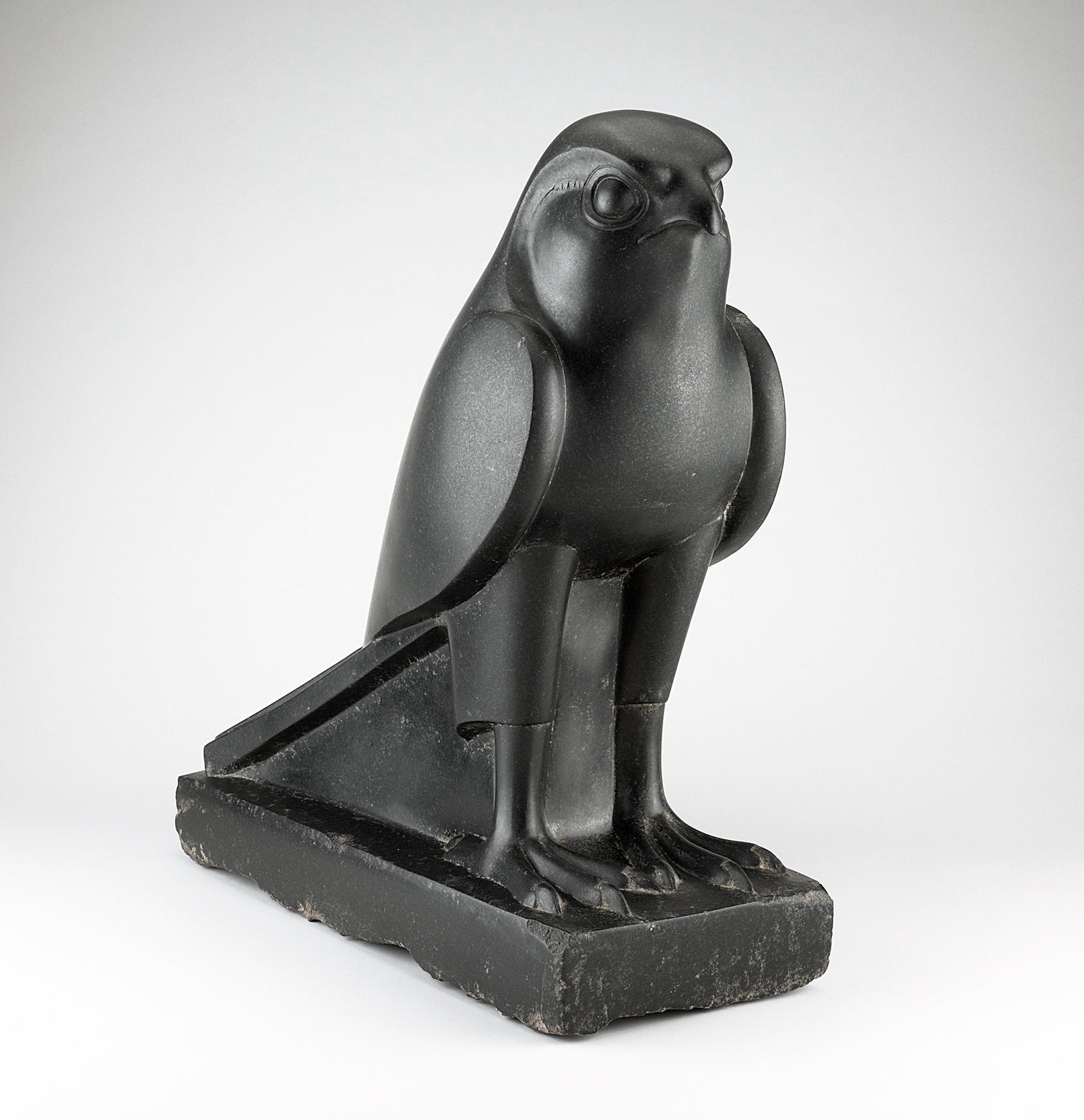
Unknown Egyptian Artist of the Ptolemaic Period Statue of Horus (332–30 BCE)
——
Embarrassment
“As Mark Twain long ago insisted, Humans are the only animals that blush, or need to.”
This Prosperity Story examines the Embarrassment of riches — and discovers that honest critique of others’ excess requires first acknowledging one’s own.
In this Prosperity Story, I considered how Prosperity neither appreciates nor requires great wealth. Beyond some uncertain point, wealth becomes more of a burden than an asset — an Embarrassment of riches. The tacky golden toilet. The personal jumbo jet. The twelve-car garage. These embarrass because they divert perfectly decent assets from useful circulation. The wealthiest somehow seem to lose their essential gag reflex. Those who exhibit Embarrassments of wealth seem incapable of experiencing the sorts of Embarrassment others feel when observing them. I try hard not to become jealous of the vast resources some control, mollifying my worst selves by acknowledging that such possessions possess their possessor most. I seem no more universally giving than the best of our billionaire class — and just being a billionaire seems like an unconscionable sin these days. As Mark Twain long ago insisted, humans are the only animals that blush, or need to.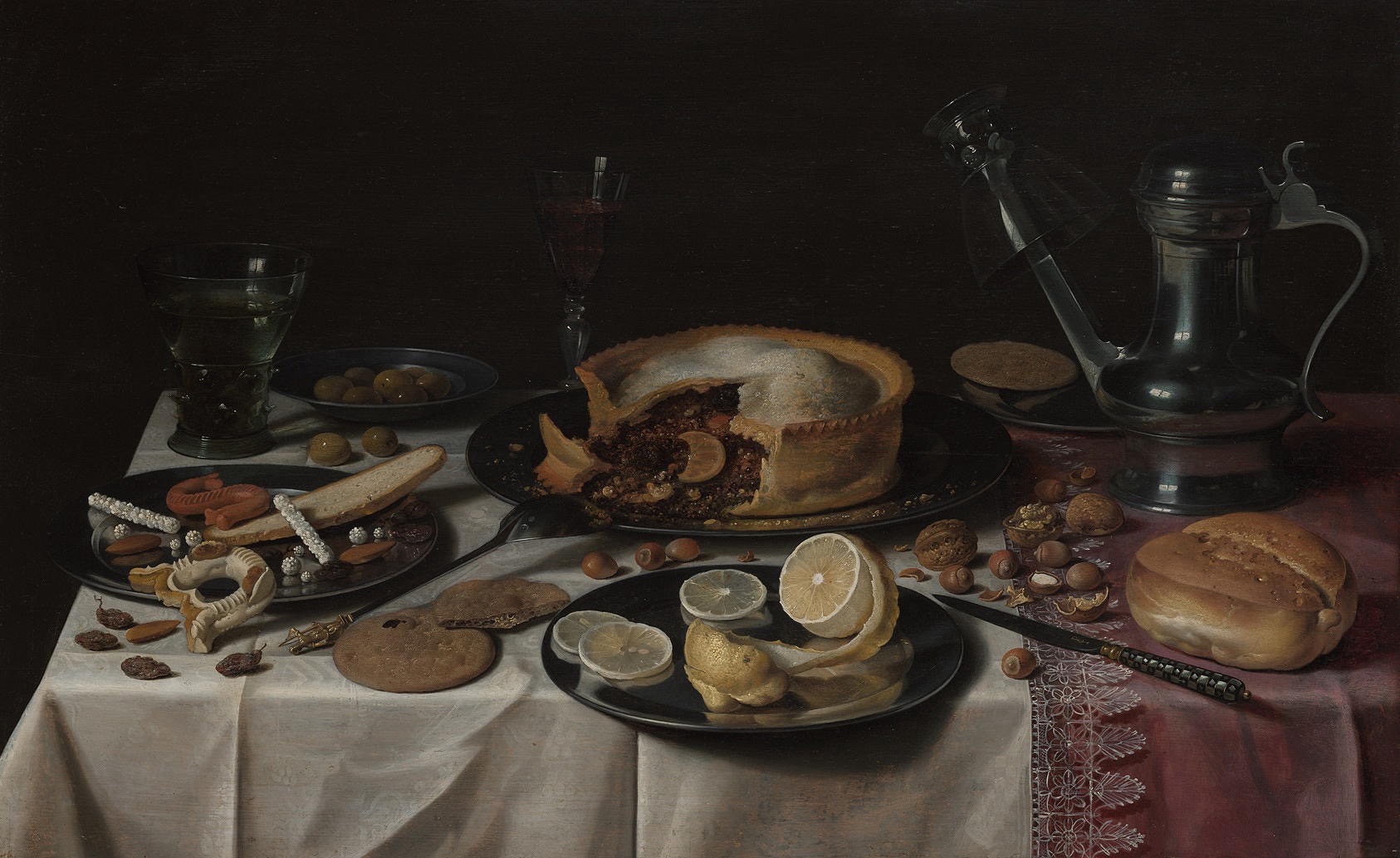
Pieter Claesz: Still Life (1625)
——
As Close To A Miracle As You're Ever Likely To See From Me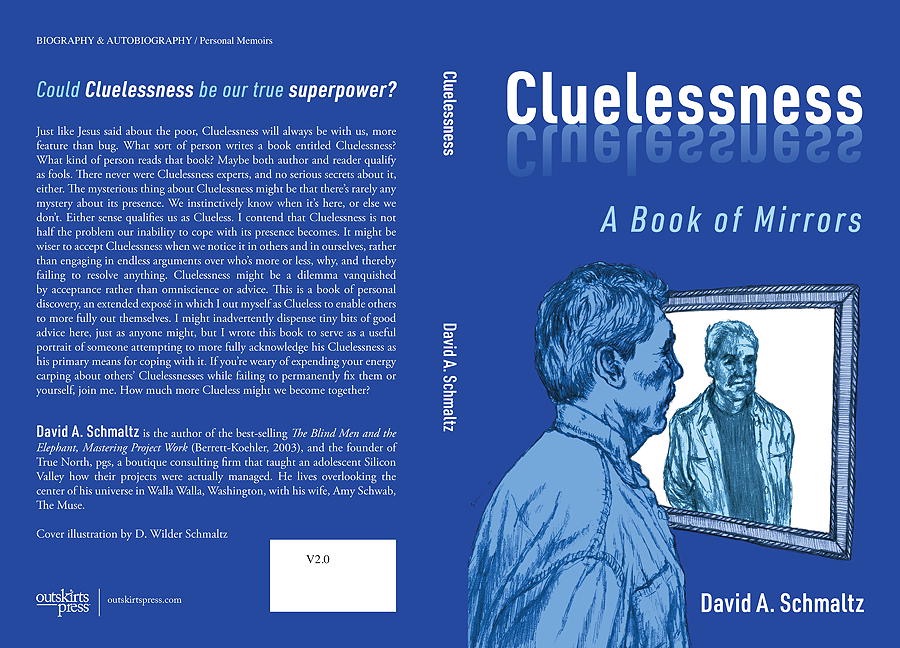
Writers who never learn to properly use their tools become Special-Needs writers like me. Those of us who still type with two and a half fingers after more than seventy years on the line understand that none of the labor-saving devices were ever once necessary. Sure, I take several times longer to produce the same volume as proficient typists, but I successfully fool myself into believing that my more leisurely pace probably translates into a better final product. I can't think at sixty or more words per minute, anyway, let alone deeply consider at anything even distantly resembling half that rate. I figure that I've been keyboarding at something approaching the blazing speed of eleven words per minute since I first ventured to two-finger type papers at university. I've successfully added another half-finger since then. I was usually all-nighting then, anyway, so speed never seemed a relevant element. It still doesn’t. I earned good enough grades the old-fashioned way, by carefully chiseling my prose onto paper tablets. No future ever cared less about how much effort any past successful project required, and shouldn't have.
Still, I am cruelly forced to inhabit a world obsessed with efficiencies. I am forced, if only by proximity, to employ a few of the more prominent so-called labor-saving apps. For a Special-Needs writer, these devices reliably translate into more effort than chisel and granite would have demanded. I discarded MS-Word as utterly unusable when it released its first feature-filled version, circa 1994. Before then, it was as easy as intuition to use. After, it featured menus and automated functions that could fuck up anything before I could even notice it was fucking with anything. I went on to use a series of later obsoleted writing applications, each with its unique features and shortcomings. Much of my catalog remains forever frozen in a no-longer-supported version of Framemaker or WordPerfect, and even those fell far short of anybody's notion of perfect, especially for us Special-Needs people.
My manuscript software, a concession I agreed to subscribe to because it was close to an industry standard, confuses me every time I relearn how to use it. I have to unsuccessfully relearn to use it every time I fail to successfully use it. It was designed by power users, the sort of people one should never trust to produce anything, especially software. It's typically much better to employ people not quite so sure of themselves, ones who might often question their own cleverness, than to assign the brightest people on the block to produce general-purpose anything. They are more than capable of out-clevering themselves without noticing or even imagining they could out-clever themselves, and might even inadvertently create a cult of those who somehow understand, to lord over the majority who won’t ever be able to get with the program. Scrivener belongs to the latter group. It employs a unique dialect, so even successful writers of over seventy years cannot grok the terms their system uses.
I went to bed last night, delighted that I'd, in under only three hours, managed to painstakingly copy and paste a manuscript from its original blog space where it was first posted, into Scrivener. I then attempted to execute a straightforward "compile," which I'd intended to produce a hard-copy manuscript I could share with anyone. The Compile produced an alarming variety of headings. I attempted to correct the obvious error, but failed. Multiple times. The headings menus were neither self-explanatory nor understandable. I asked Claude, who reported that Scrivener's compile menus were endlessly frustrating for most users, not just the Special-Needs ones like me. I was no exception this time, but the typical case.
I spent today on the Scrivener users' forum, where more experienced, Special-Needs users attempted to introduce me to a Scrivener I'd never before imagined existed. They introduced me to an Easter Egg link that opened a universe of additional possibilities, adding to the system's already overwhelming complexity, as if even more information stacked atop already too much might cure anything. They suggested that the application could do anything I wanted, but their suggestions strongly suggested that the instructions would require something much more than any Special-Needs user could successfully comprehend. I spent the following six hours, serially failing to delete a single errant heading from a single page of a nearly four-hundred-page manuscript. This exercise left me feeling like an idiot. (Not an unfamiliar experience as a Special-Needs user interfacing with professionally produced applications.)
Printing off a usable finished manuscript is harder than writing a manuscript in the first place, compliments of the effort-saving software created to streamline such efforts. I live in dread, not of some anonymous editor rejecting my proposal or of somehow failing to live up to my aspirations when writing, but of the sure and certain punishment the most pedestrian process in the whole damned sequence will certainly visit upon this Special-Needs writer. I live in abject fear of labor-saving devices. I feel terrified of the necessary final step in my chosen profession's creative process. It's a genuine miracle that I have ever once managed to deliver what I could consider finished material. The barriers to exit seem unbreachable. What you're reading here amounts to as close to a miracle as you're ever likely to see from me.
Thank you for following along!
You can order Cluelessness from Bookshop.org, Powell’s Books, or Amazon. It's now more widely available, just as the publisher predicted. I still haven't discovered the e-Book location for ordering the book, other than this Kindle link. (I didn't know that KIndle was still a thing, if it ever was.) I saw a .pdf link somewhere, but lost the location and couldn't find it again. My publisher is enamoured with their flashy portal that I keep getting lost in. See if you can do any better: Link To Publisher's Website Here
I employed Claude.ai, a commercial AI-powered text editor, using it to perform repetitive copy/pasting work and to create the above story summaries, prompting with: “Please briefly summarize this story in the first person while retaining the original voice.” I manually copy-edited each result.
©2026 by David A. Schmaltz - all rights reserved
Good For A Goose

Comeuppance (9)
Decency (90)
Decency Unscrolling (1)
EndDays (92)
Exiled (90)
Fambly (93)
FollowingChapters (93)
Grace (92)
Humor (2)
iAlogue (1)
Letters to the Editor (1)
NextWorld (91)
Personal (18)
Prosperity (94)
Steam Festival (4)
Unscrolling (89)
Vaporized (6)
Work (16)
September 2026
August 2026
July 2026
June 2026
May 2026
April 2026
March 2026
February 2026
January 2026
December 2025
November 2025
October 2025
September 2025
August 2025
July 2025
June 2025
May 2025
April 2025
March 2025
February 2025
January 2025
December 2024
November 2024
October 2024
September 2024
August 2024
July 2024
June 2024
May 2024
April 2024
March 2024
November 2006
October 2006
September 2006
August 2006
July 2006
June 2006
May 2006
April 2006
March 2006
February 2006
January 2006