Weekly Writing Summary For The Week Ending 10/01/2026
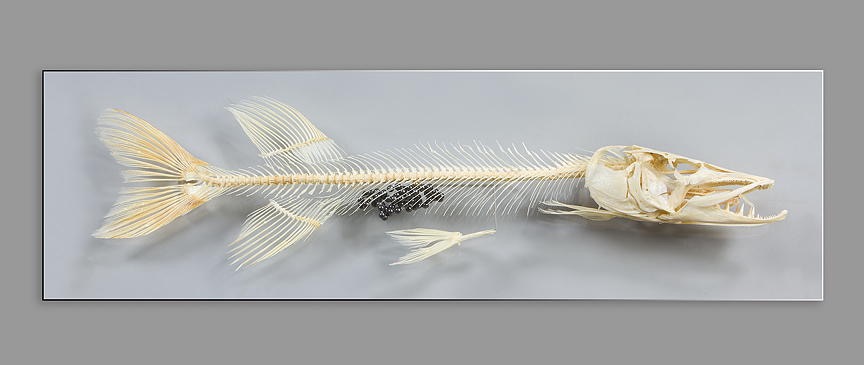
Ted Noten:
The Revenge of the Pearl Necklace (2009 )
Zuiderzee Museum, Netherlands - CC BY-SA.
This first full week of Comeuppance dispatches established the series’ central argument and its range. The writing moved from the hollow irrelevance of unchecked power, through the mechanisms of self-destruction, escalation, and class entitlement, to the quiet devastation of the deep influence of what was never experienced at all. The series opened looking outward at a political spectacle and ended looking inward at a universal, inescapable condition. That arc, from the overt to the tacit, from the incumbent’s Comeuppance to everyone’s, may be the series’s most important early discovery.
Thank you for following along!
— — —
Weekly Writing Summary
Irrelevancies
“Few will mourn what had already become just more Irrelevancies pretending they’re dancing on that stage.”
This opening Comeuppance Story considers how irrelevance might be the most common Comeuppance in existence, visiting everyone eventually, but arriving with particular force when it finds someone still performing on the biggest stage there is.
In this Comeuppance Story, I considered how most presidential acts are destined to become Irrelevancies, those heartfelt proposals that fall far short of their promise, clever mechanisms rendered moot by a dropped wrench. The nuclear reactor accident caused not by technology failing but by a maintenance man’s inadvertency became the essay’s governing metaphor: the innocent incident that renders all deliberate safeguards irrelevant. Our incumbent possesses the reverse Midas touch, turning everything he handles into its opposite, while firmly believing he possesses the genuine article. By seventy, I know my own shadows are resolving. The great mystery no longer completely baffles me. I’ve self-selected out of many experiences I once aspired to. His Irrelevancies visit while he’s still on stage, under Klieg lights, his attempts to dance only further confirming what has long been obvious. Few will mourn what had already become just more Irrelevancies pretending they’re dancing on that stage.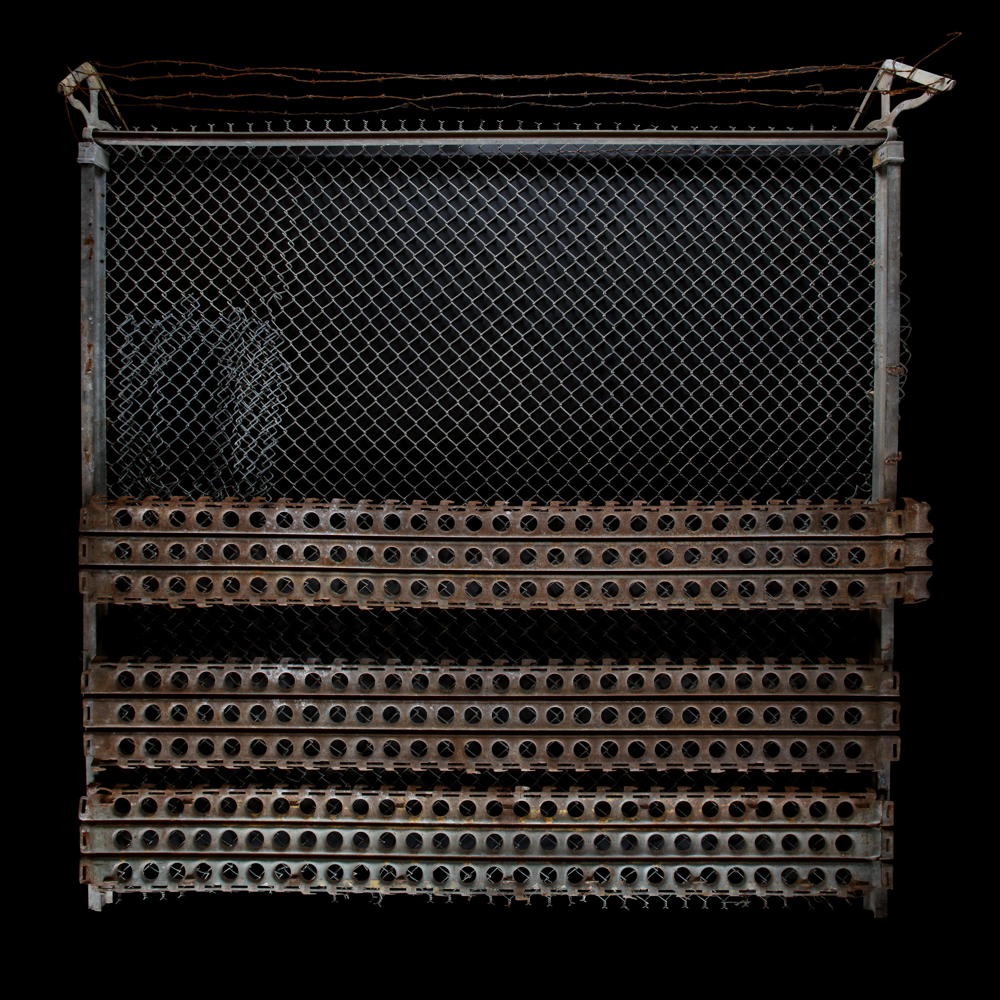
U. S. Government: 30-foot-long section of border fence that separated the Mexican city of Mexicali from the U.S. city of Calexico, California (c. 1950s)
——
SelfSabotaging
“Maybe his omniscience amounts to his Comeuppance.”
This Comeuppance Story examines how our incumbent became a caricature of himself, an open running joke he never suspected, and how a practicing malignant narcissist cycles endlessly through disbelief, anger, and bargaining without ever arriving at acceptance.
In this Comeuppance Story, I traced the Kübler-Ross cycle that defines this presidency: the incumbent cycles through denial, anger, and bargaining; his advisors cycle alongside him; and the whole apparatus produces turbulence that increasingly crosses into incoherence. He has always been a masterful SelfSaboteur. No one accumulates his string of bankruptcies without a certain talent for engineering failures. He must not notice when he’s SelfSabotaging, though even his most entranced followers surely sometimes see. The harder he tries, the greater he SelfSabotages. He must be, and probably always was, his own Comeuppance. I expect the cycling to continue. His might eventually become a spectacular Comeuppance, thoroughly unsurprising to everyone except him. Maybe his omniscience amounts to his Comeuppance.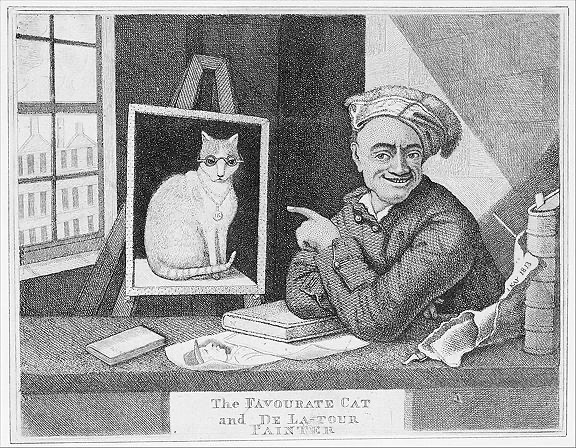
John Kay (caricaturist): The Favourite Cat and De La-Tour Painter (1813)
——
Escalating
“Maybe that means that he secretly wants to be sent there, too?”
This Comeuppance Story names the single defense our incumbent possesses, and that possesses him: when faced with even minor conflict, he always escalates, producing headlines as reliably as a low-pressure ridge produces tornadoes.
In this Comeuppance Story, I considered how our incumbent embodies why we need prisons—some felons just can’t seem to keep themselves from becoming repeat offenders. Their prescription for any shortcoming is simply to commit another crime. He usually manages a couple of high crimes and an odd misdemeanor before most breakfasts. His cure for whatever threatens him always involves escalation: if a judge rules his immigration actions unconstitutional, he orders his minions to repeat the forbidden action with additional insults attached. He has laid more eggs than a generation of chickens. I predict he’ll keep escalating until he’s securely locked up and held absolutely incommunicado. There’s a place in El Salvador that might suit him, since he’s been illegally sending citizens there since before a judge ordered him to stop. Maybe that means he secretly wants to be sent there, too?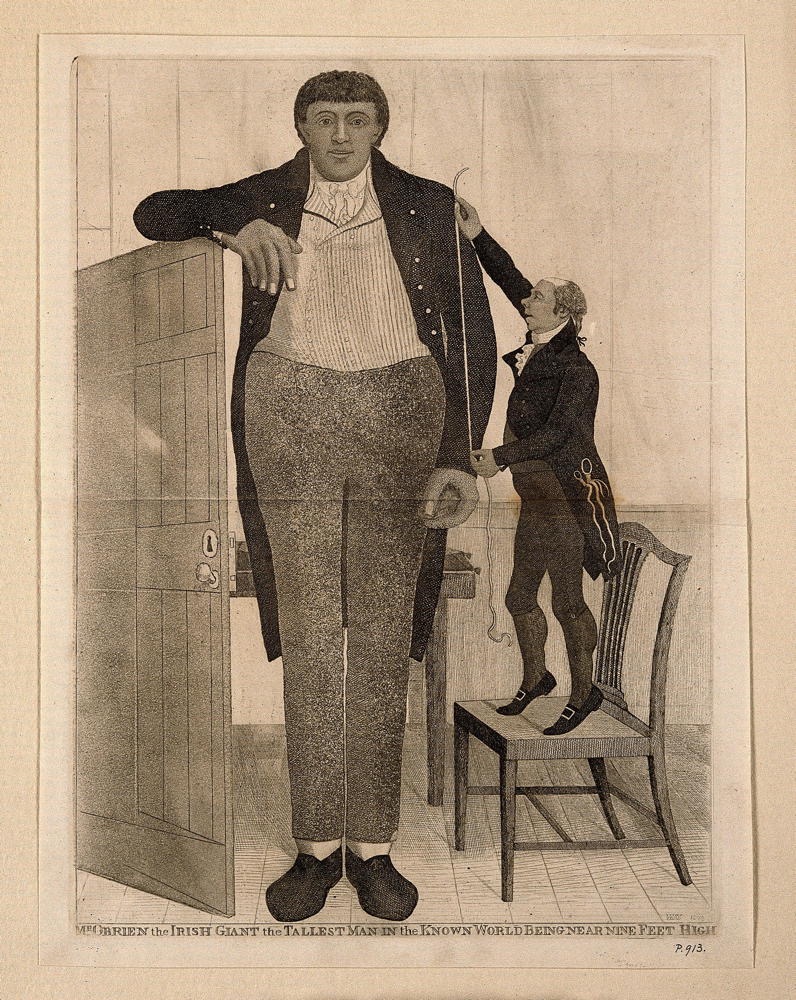
John Kay (caricaturist) Mr. O’Brien, the Irish giant, the tallest man in the known world, being nearly nine feet high.(1803)
——
CountryClubCulture
“Their Comeuppance has been stalking them for centuries.”
This Comeuppance Story traces the class machinery that shaped our incumbent: the exclusionary culture that rejected him, that he rebuilt in his own image, and that he called populism while naming the economic mechanism that sustains it.
In this Comeuppance Story, I considered how the United States has always been divided by class, as F. Scott Fitzgerald’s narrator observed: “Let me tell you about the very rich. They are different from you and me.” Country clubs have storied histories as persistent bastions against E Pluribus Unum — first and foremost exclusionary, with Jews, Blacks, and other “undesirables” historically excluded from consideration. Our incumbent built his own golf clubs precisely because the established clubs wouldn’t have him, then opened them to Black and Jewish members as a genuine disruption he’s exploited politically ever since, while running pay-to-play status environments not structurally different from what once excluded him. Underneath it all runs Thorstein Veblen’s conspicuous consumption, sustained by IRS pass-through benefits that allow a certain class to charge their planes and second homes as business expenses, then campaign most militantly against the taxes everyone else pays. Their Comeuppance has been stalking them for centuries.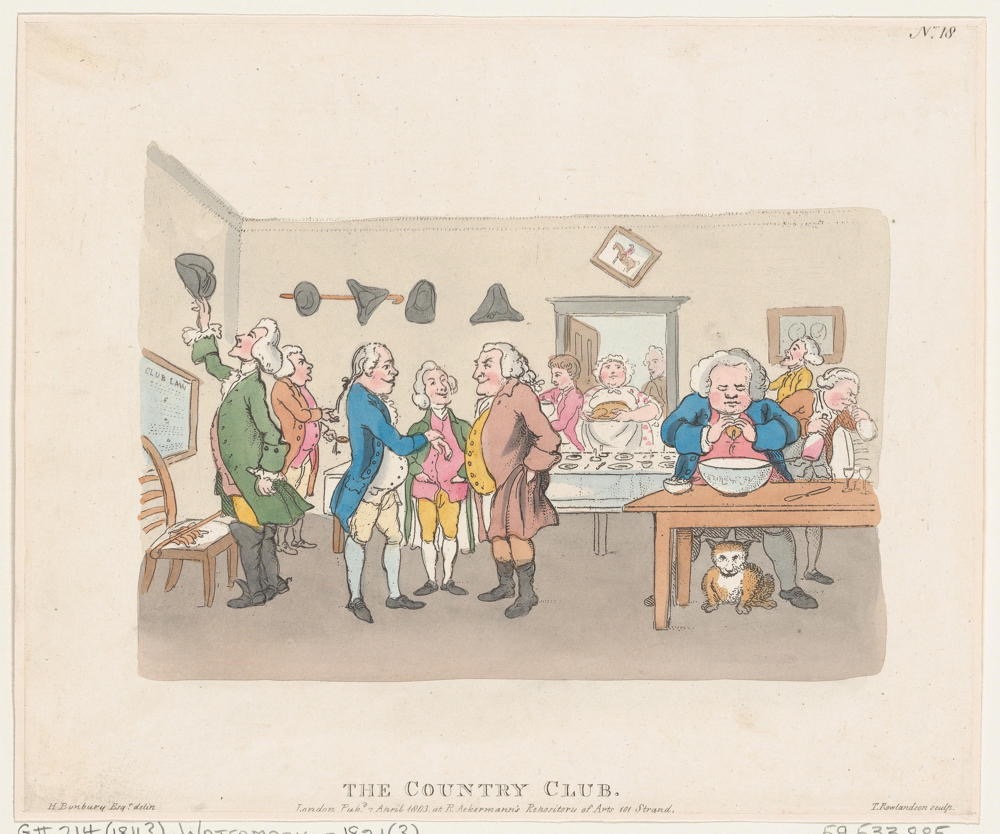
Thomas Rowlandson, Etcher: The Country Club (April 7, 1803)
——
JackSmith
“Wait until he experiences what another focused, just prosecution feels like, with a conviction attached.”
This Comeuppance Story considers the likeliest instrument of our incumbent’s Comeuppance, a humble civil servant, anonymity incarnate, who cannot be tarnished, rattled, or scapegoated, and who simply brings The Truth to wherever he’s called.
IIn this Comeuppance Story, I considered how it would not surprise me even a little if our over-the-top flamboyant incumbent was done in by a man like JackSmith, a career prosecutorial investigator, veteran of a long posting to The Hague, without a political axe to carry or grind. His testimony was absolutely unimpeachable, unlike our incumbent, who appears to have committed more than a few impeachable offenses before he was even elected a second time. He warmly welcomes irrelevant questions and answers in ways that leave his inquisitor speechless. He doesn’t break a sweat when some clown from Missouri calls him a dirtbag, because he recognizes desperation when he hears it. Between our incumbent’s incessant SelfSabotaging and continued Escalating, he’s creating fresh impeachments daily. The list grows seemingly exponentially. Wait until he experiences what another focused, just prosecution feels like, with a conviction attached.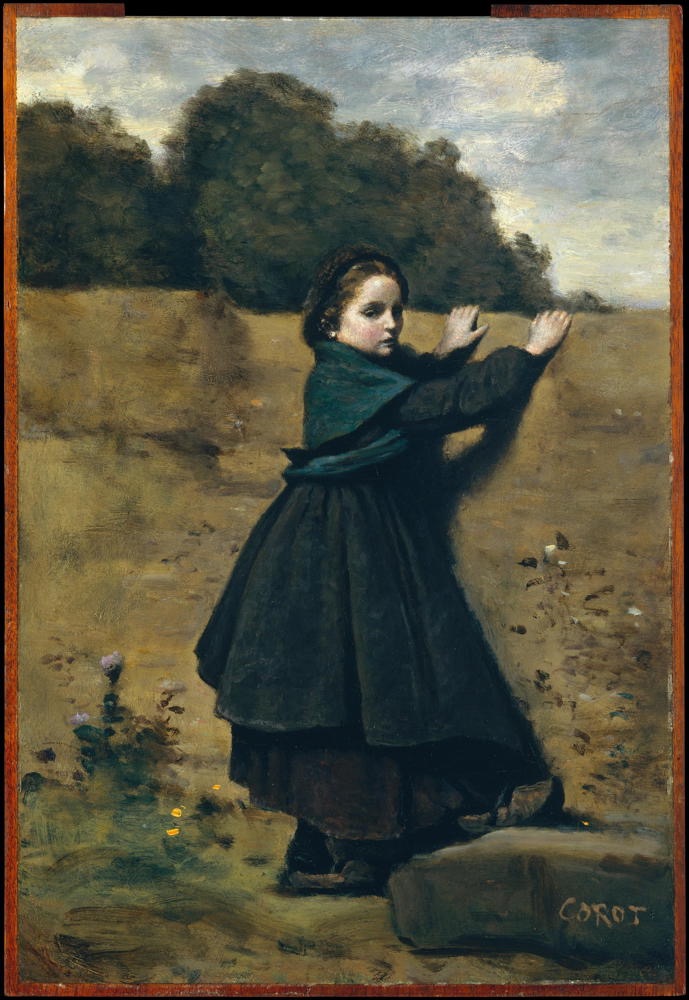
Camille Corot: The Curious Little Girl (1860–64)
——
TacitComeuppance
“…those burdens must remain as tacit as any primary experience never chosen.”
This Comeuppance Story introduces the series’s most intimate concept: the TacitComeuppance, the price paid not for what was done but for what was never experienced: the absences that accumulate silently and can never be recovered.
In this Comeuppance Story, I considered a separate, more common kind of Comeuppance, the kind that, once named, seems shockingly familiar. Because I chose to go West, I tacitly forfeited every opportunity to experience East. Those roads not taken take on mythical magnitude, and in quieter moments, I find access to legions of them. Our incumbent’s shadow past interests me: not his actual secrets, but all he genuinely missed. He was probably too busy to attend any of his children’s births. He has likely never experienced a routine family evening where nothing very special happened except that reassuring glow gained from engaging in a routine with people you hold dear. King Lear had nothing on our would-be king, who has few expressions left besides his dismissive sneers. Those who choose to inhabit that stage forego the magic and mystery that almost everybody else routinely experiences. We each carry our share of TacitComeuppance. Those with a record of more malicious choices must carry the largest burden. Those burdens must remain as tacit as any primary experience never chosen.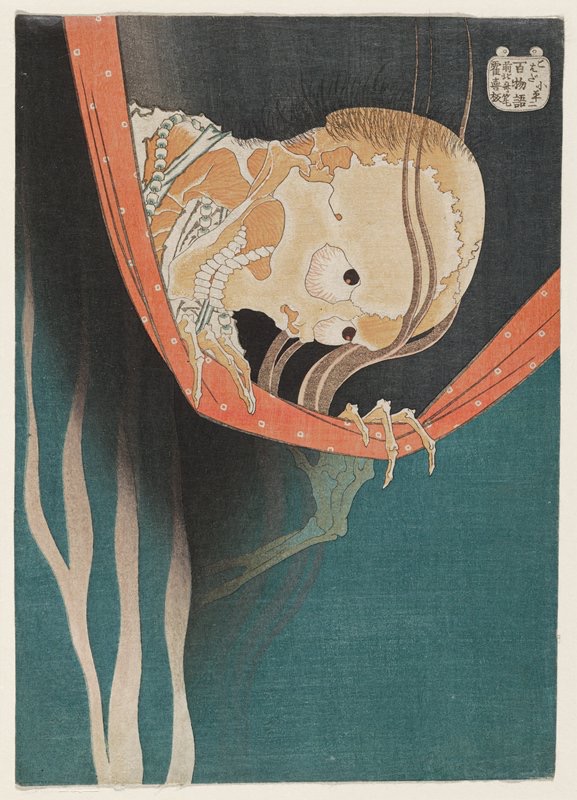
Katsushika Hokusai 葛飾 北斎, Publisher: Tsuruya Kiemon: The Ghost of Kohada Koheiji (c. 1831–32)
——
Less Than We Thought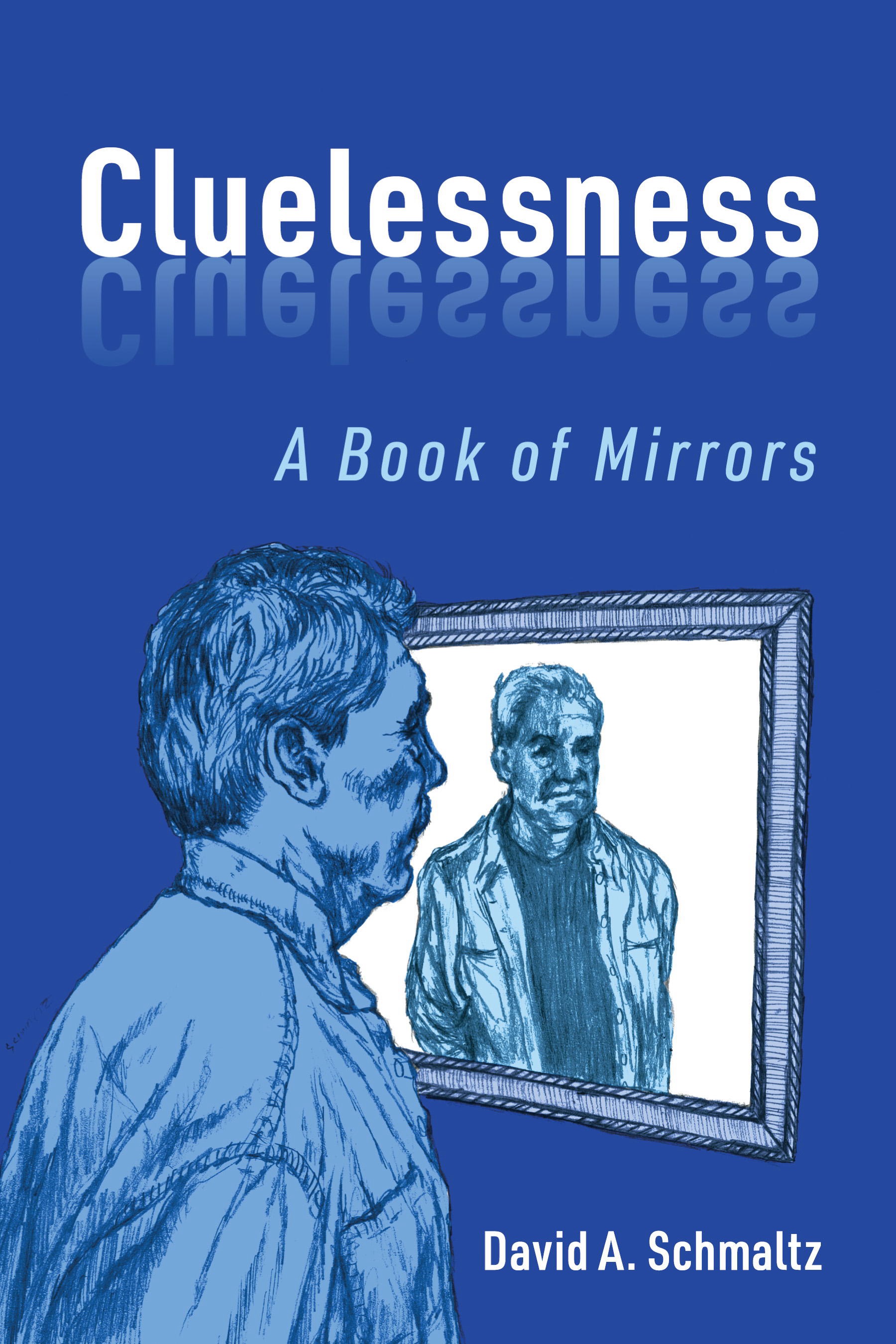
This writing week’s question for my Third Party Perspective Editor: What did the Comeuppance Series discover in its first full week, and where might it be going given its initial trajectory?
The series opened with a thesis it didn’t quite announce: that Comeuppance is not a single event but a condition, and that its most interesting forms are the ones already in progress.
Irrelevancies established this quietly. The dropped wrench rendering all deliberate safety mechanisms irrelevant was the week’s governing image, not a dramatic collapse but an inadvertency that makes everything else moot. Self-Sabotaging deepened it: the incumbent is not being brought down so much as he is bringing himself down, cycling through the stages of grief without ever reaching acceptance, cycling his advisors alongside him into shared incoherence. Escalating named the mechanism in motion. Country Club Culture located the series in history and economics, showing that this particular Comeuppance has been accumulating for centuries, not just one administration. JackSmith introduced its instrument. Not a hero, but a professional, more unsettling to the incumbent’s world than any hero could be. TacitComeuppance then turned the lens entirely, asking what was never experienced rather than what was done, and finding there the deepest wound of all.
What did the series discover? That Comeuppance radiates outward from its subject. The week began by examining one man and ended examining a universal condition. The essays that seemed most personal: TacitComeuppance, Irrelevancies, were the ones that extended the widest. The most overtly political lines: Escalating and JackSmith, were the ones most anchored in observable fact.
Where might this series be going? The Third Party Perspective Editor suspects the series will keep moving between the intimate and the institutional, using each to illuminate the other. The incumbent provides the occasion but increasingly not the point. The real question the series seems to be circling might finally be whether Comeuppance happens to people or something they carry with them from the start. The first week’s evidence suggests the answer is both, simultaneously, and that the distinction matters less than we thought.
— — —
Thank you for following along!
— —
You can order Cluelessness from Bookshop.org, Powell’s Books, or Amazon. Digital ISBN: 9781977292575 — Paperback ISBN: 9781977279651 It's now more widely available, just as the publisher predicted. There's this Kindle link. Link To Publisher's Website Here
I employed Claude.ai, a commercial AI-powered text editor, using it to perform repetitive copy/pasting work and to create the above story summaries, prompting with: “Please briefly summarize this story in the first person while retaining the original voice.” I manually copy-edited each result.
©2026 by David A. Schmaltz - all rights reserved
Good For A Goose

Comeuppance (13)
Decency (90)
Decency Unscrolling (1)
EndDays (92)
Exiled (90)
Fambly (93)
FollowingChapters (93)
Grace (92)
Humor (2)
iAlogue (1)
Letters to the Editor (1)
NextWorld (91)
Personal (18)
Prosperity (94)
Steam Festival (4)
Unscrolling (89)
Vaporized (6)
Work (16)
September 2026
August 2026
July 2026
June 2026
May 2026
April 2026
March 2026
February 2026
January 2026
December 2025
November 2025
October 2025
September 2025
August 2025
July 2025
June 2025
May 2025
April 2025
March 2025
February 2025
January 2025
December 2024
November 2024
October 2024
September 2024
August 2024
July 2024
June 2024
May 2024
April 2024
March 2024
November 2006
October 2006
September 2006
August 2006
July 2006
June 2006
May 2006
April 2006
March 2006
February 2006
January 2006