Treason!
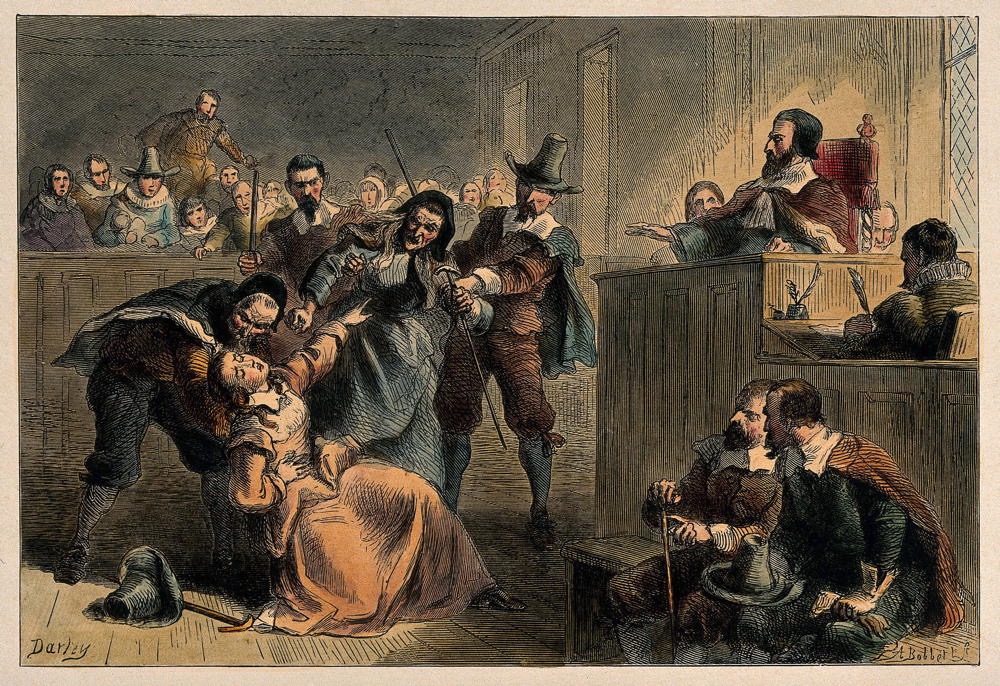
F. O. C. Darley:
Bacon's rebellion, Virginia, 1676-1677:
Lydia, the wife of the rebel Edmund Cheeseman, faints as he is condemned for treason by the governor of Virginia, William Berkeley; a toothless old lady is restrained from attacking her. Coloured etching by A. Bobbet after F. Darley.
(1935–43)
"We'd all be better off removing him from office
for some medical reason than for Treason!."
Probably the very least likely Comeuppance our incumbent might eventually face would be charges of Treason!. Not due to lack of evidence, since the papers seem filled with ample evidence that such evidence exists, but because of something else, something infinitely more insidious than even Treason!. Treason!, according to the Legal Information Institute at Cornell Law School, “consists only in levying war against the United States or adhering to its enemies by giving them aid and comfort.” It requires an overt act, not merely speech, and must be attested to by at least two witnesses to be successfully prosecuted. Our Constitution defines and prescribes its prosecution, which may occur either in a Federal District Court or in the Senate, presided over by the Chief Justice of the Supreme Court. Conviction might result in a death penalty or a prison sentence of at least five years and a fine of at least $10,000, and the loss of the right to hold future public office. It’s serious business.
But the necessary conditions seem essentially unattainable, though probably not because our incumbent has been indemnified against criminal prosecution for any actual duty of office he might commit by the Chief Justice and his kangaroo Supreme Court.
Comedownance
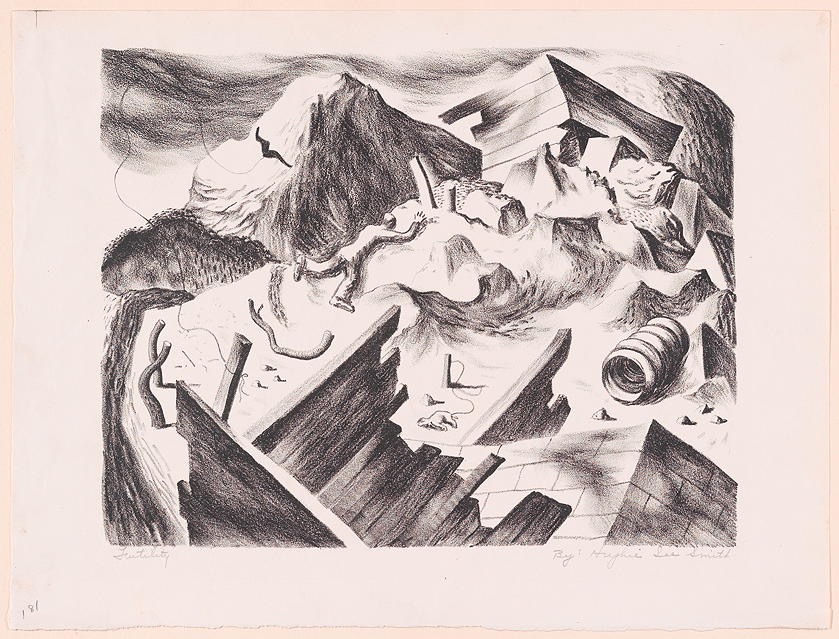
Hughie Lee-Smith:
Futility
(1935–43)
"…an at least as effective
and perhaps even more appropriate Comedownance instead."
In 1968, during the famous Earthrise NASA mission, astronaut and apostle Jim Lovell declared how perfect Earth seemed compared to the void of space surrounding it. He later expanded on his experience by famously declaring, “You go to heaven when you’re born.” He explained that people look for a distant heaven, yet Earth already has the perfect gravity, water, atmosphere, and distance from the sun to sustain life, making Earth the literal paradise we are searching for. We humans seem to maintain a rather proud tradition of underestimating our surroundings and experiences. We seek Comeuppances while, perhaps, already in the middle of experiencing an unrecognized Titanic one. Who’s to say that this isn’t that? Never having experienced any corruption as extensive as that practiced by our incumbent, what form might his Comeuppance naturally take? Would we necessarily know it just because we witnessed it, or might it appear too stealthily for anybody to readily recognize its presence? Maybe the blesséd event has taken the form of a Comedownance this time, a different direction than anybody expected, yet at least every bit as effective as any alternative Comeuppance.
The evidence seems ample if subtle.
TheAche
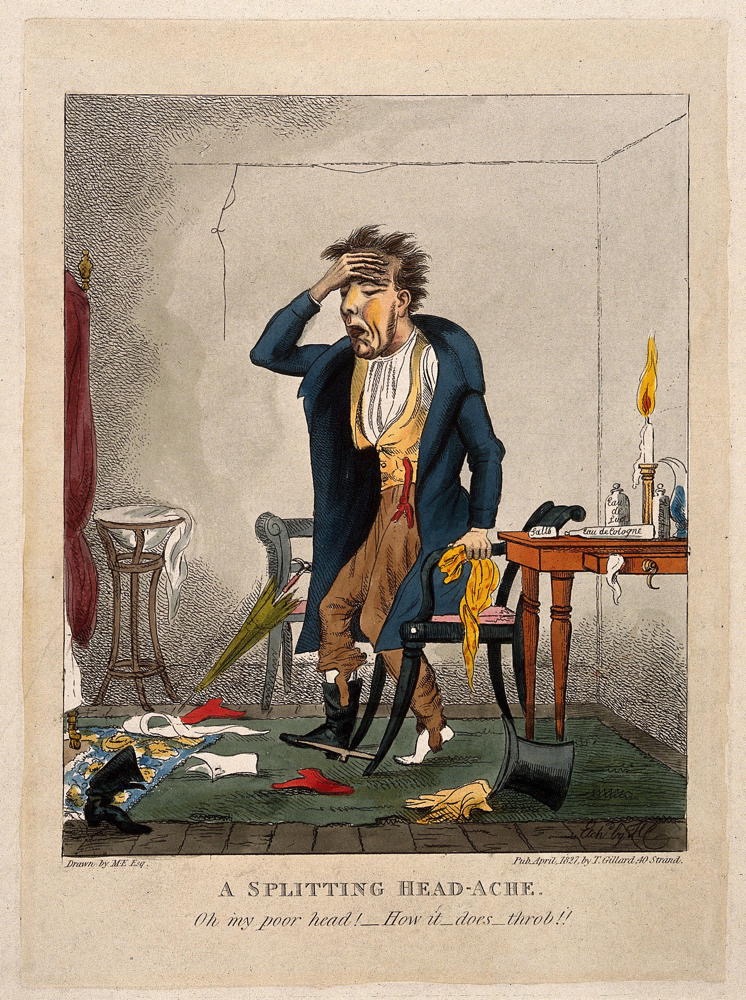
Henry Richard Cook:
A man with an excruciating headache.
(1827)
"This might be what TheAche has been so insistently whispering to me."
I find myself becoming more familiar with TheAche than I ever imagined I might become. I am not, and I never have been, a particularly vengeful man. I do not easily think ill of anyone, though in our incumbent’s case, I have almost gleefully made exceptions. The long months, now degrading into even longer years of irresolution, have left me genuinely bereft. Those I once thought well of, I can no longer hold off on my judgments. I cannot ascribe to inattention what only wholehearted support can explain. The erosion of our sacred norms undermines more than mere policy; it utterly degrades polity itself, leaving not even a recognizable shell behind. No logic known to man or demon defined this path to ruin. Only studied inattention could possibly explain the degradation. Will it be complete before we finally depose this weasel and his retinue, or might a few shreds of decency still remain flapping in a severely wounded breeze? I ache for the Comeuppance part of this story to wade in with real vengeance.
I acknowledge and almost accept that nobody gets to dictate any moment of Comeuppance.
Advocacy
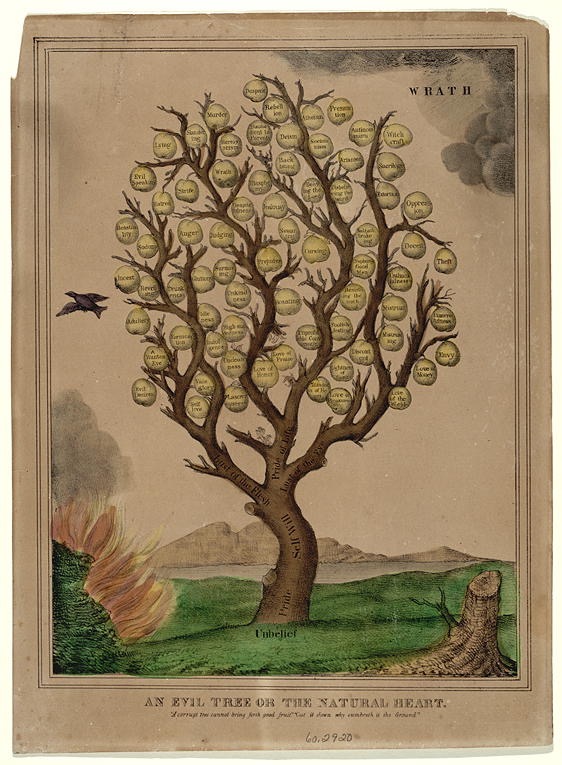
Harry T. Peters "America on Stone" Lithography Collection:
An Evil Tree or the Natural Heart
(c. 1830-40)
"Heaven or Edward Bernays, help us."
We seem to have become a society of partisans, endlessly arguing across an unfathomable abyss. The us-es and the thems, the for-s and against-s, discontents in frantic search of any cohering story, less E Pluribus Unum than Ex Uno Plura or, more likely, E Unum, Duobus, out of one, two, an eternal-seeming dichotomy. We have become the great either/or, the Janus-minded democracy, utterly dependent upon Advocacy, a popularly practiced form of blasphemy where everything’s considered fair, like in love and war. Any story promoting a favored policy seems automatically approved, regardless of its relative truthfulness. It’s judged by its ability to inspire and move hearts, minds, and butts—without any ifs, ands, or buts—not by adherence to any competing standard. Lies are always permitted, solely depending upon how effectively they sway. The ends always justify any means intended to advance the partisan position. Each advocate firmly believes that they, alone, enjoy God’s unconditional approval, and that they, alone or in close concert with cohorts, represent the higher righteousness regardless.
Advocacy does not debate.
Squall
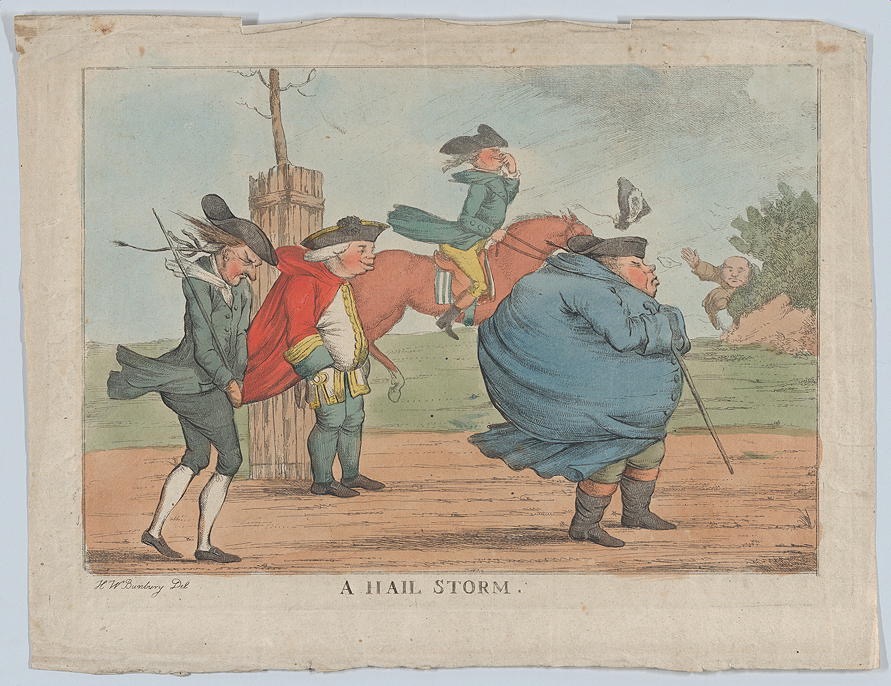
Henry William Bunbury:
A Hail Storm
(1800-1820)
"The Squall has started, and the world shudders in heartfelt anticipation."
Historians will later argue over precisely which idiosyncratic action ultimately did in his administration that, by its own admission, never seriously considered administering anything. There were no shortages of idiotic actions; the very premise of his tenure seemed anchored in stupidity, and that’s not just me speaking. By a very wide margin, the majority opinion became that his election had been a grave mistake, for his actions had finally awakened us from the most tenacious trance to overtake the nation since secession, and it had been every bit as poisonous. But when inflation rose at a nearly unprecedented rate, and the reality of what had been touted as big and beautiful finally came into ugly operating focus, people felt compelled to reject whatever had once been his mandate. He quickly became the most unpopular incumbent ever, after he blundered his way into a forever war that would never end any war. Then his delusions rendered him intolerable.
A Squall of past-due Comeuppances suddenly emerged.
Weekly Writing Summary For The Week Ending 10/15/2026

Warwick Reynolds:
EXPLOSIVOS NOBEL - GLASGOW
(UM 1900)
This week's Comeuppance installments turn the lens inward, discovering that the most persistent Comeuppances may not arrive from outside at all, but live embedded in the work, the dread, and the daily weather of an examined life. From self-generating reckonings to Sisyphean devotion, these six essays map territory the series has been circling since its first installment. The week ends with a quiet bookshop revelation and a confession that may be the most honest thing the series has yet produced.
Thank you for following along!
SisypheanComeuppances
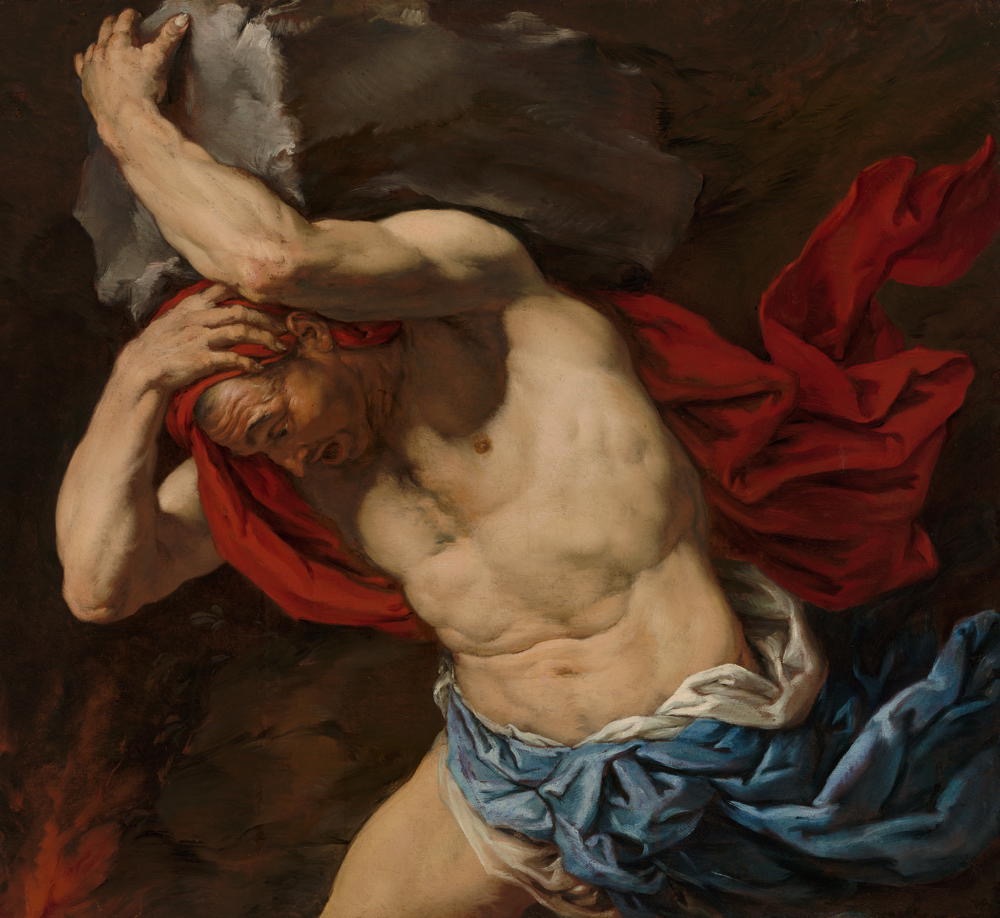
Antonio Zanchi:
Sisyphus
(1660/1665)
"I doubt that my modest contributions to literature really deserve much more than a decidedly Sisyphean existence."
Comeuppance doesn’t only occur at conclusions. It often, perhaps most often, occurs as what I might consider to be a lifestyle. Any task unlikely ever to be completed might exemplify this Comeuppance type, for its very uncompleteability might reasonably be considered a Comeuppance. Consider Sisyphus, that mythical king who, having offended some God or other, was sentenced to push a rock to the top of a very steep hill, only to have it roll back to the bottom once he’d successfully reached the top. His work might have been its own Comeuppance. In Sisyphus’s instance, he had no choice but to labor away unfruitfully each and every, literally, god-damned day. Most of the rest of us don’t have nearly as good an excuse for the obviously useless efforts we pretty much insist on engaging in each day. Often, a hobby stands in for formal employment, providing the means by which we might meaningfully pursue what anyone else might reasonably mistake for uselessness.
We should judge the relative usefulness of any effort more carefully, for the usual completion criteria fail to capture some of the more subtle, if even more significant, contributions the dung beetles among us routinely pursue.
EverydayComeuppance

Hermann Krauße:
Alltag im Dorf [Everyday life in the village]
(c. 1930)
"…bringing absolutely no significant alternative meaning to the pre-existing plotline. "
A Comeuppance doesn’t require a great calamity to appear. Many, probably most, arrive with little fanfare, more stealthily than those proverbial little cat’s feet, unanticipated and apparently undeserved. These are the EverydayComeuppances, the micro-penances that visit everyone occasionally, eventually. They connote no necessary guilty anything: pleasure, indulgence, or otherwise. They arrive unbidden and probably undeserved, though they rightfully spark a spate of questioning inside their victims, who must, at least for decency’s sake, ask themselves a few troubling questions to at least attempt to confirm that this wasn’t karma visiting to balance some invisible scales, to make certain this Comeuppance wasn’t the direct result of some sin of either omission or commission. Shit does, indeed, sometimes just happen, and the presence of a victim does not now and never has necessarily pointed to any actual crime having been committed. The punishment’s no different in either case, but the guilt sure is.
My latest EverydayComeuppance visited me at approximately 1:34 this morning.
DreadReconning
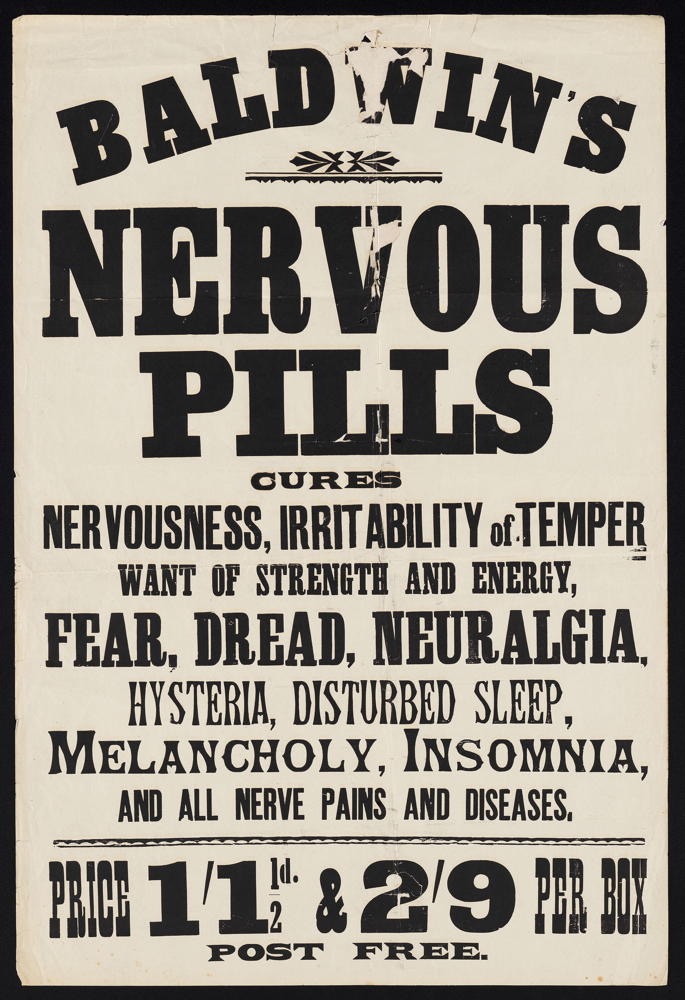
G. Baldwin (Firm):
Baldwin's Nervous Pills
(1900?)
"…the inept and corrupted performer taking way more
than his fair share of our stage."
Over approximately three years in the early 1970s, while I was wrestling to resolve a troublesome military draft problem, I lived every day in dread that I might be spirited away somewhere against my will. I gained Non-military Conscientious Objector status after a lengthy, terrifying process of petitioning my local draft board and appearing before a hearing. I’d thought I’d be assigned to change bedpans for half the prevailing minimum wage in some military hospital somewhere, but I learned no formal process existed for assigning Non-military COs. I was responsible for identifying an available position and convincing the local commanding officer that I was qualified. I was charged with reporting to the draft board’s “evil” secretary (a label I’d given her because I thought her job responsibilities were essentially evil) and showing proof of my attempts to secure an assignment. I wrote letters in my poor, if honest, hand, and dutifully photocopied them as evidence of my diligence. After a few months, the evil secretary confided that I could stop reporting to her each month because I’d demonstrated my due diligence. I still had to fulfill my CO stint, but I never got a response to any of my many letters. Still, I lived in constant dread that I would wake up some morning to find a couple of hostile MPs waiting on my porch to drag me off to my Comeuppance.
Because of my tenuous status, I couldn’t agree to take a permanent job, nor was I qualified to attend school.
DuelingComeuppances
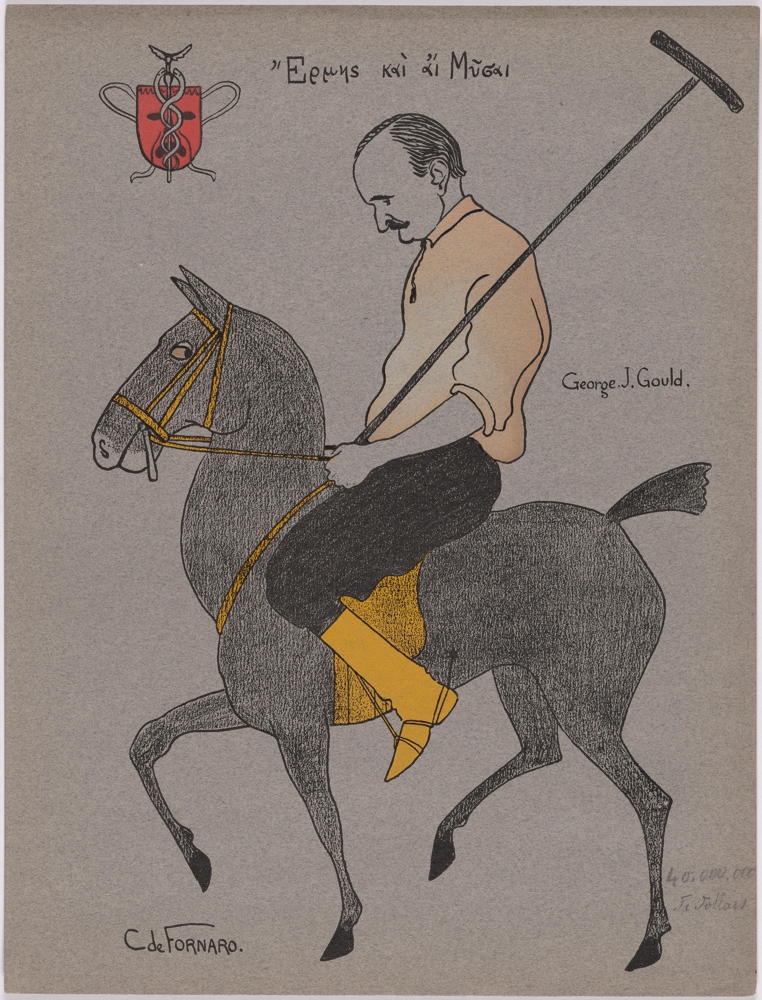
Carlo de Fornaro:
George Jay Gould
Portfolio: Millionaires of America
(1902)
"…any story that somehow manages to slip out around its edges…"
Most days, I feel as though I’m engaged in a contest of DuelingComeuppances. I feel almost certain that one or more of my activities, probably a combination, will ultimately contribute heavily to doing me in. Yet, I persist, if only because I honestly know no better. I don’t do my best, but I also rarely, if ever, really try to do my worst. I inhabit the horse latitudes of human behavior, experiencing far more calm than storm, with inspiration blessedly rare. I understand that living involves accepting certain complicities, that there never was, nor could ever be, immunity from any inevitability. I lack the vegan’s sincere dedication to any ideology. I soothe myself by insisting that at least I don’t kill my meat myself. Yes, I still feel urpy whenever I pass a feedlot, and likely always will. I am not engaged in any activity intended to reform or improve me. I have been known to drink to excess at times of celebration or sincere heartbreak, neither of which really offers a decent excuse for engaging in such obviously self-destructive behavior. I excuse these and many other personal shortcomings by touting how I no longer maintain any shred of tobacco dependence, but I’ve known the attraction to addiction in my time, and the depression that comes from denying even a perverse desire.
I am learning that Comeuppances are not just passion plays between good guys and worst ones.
Nobeled
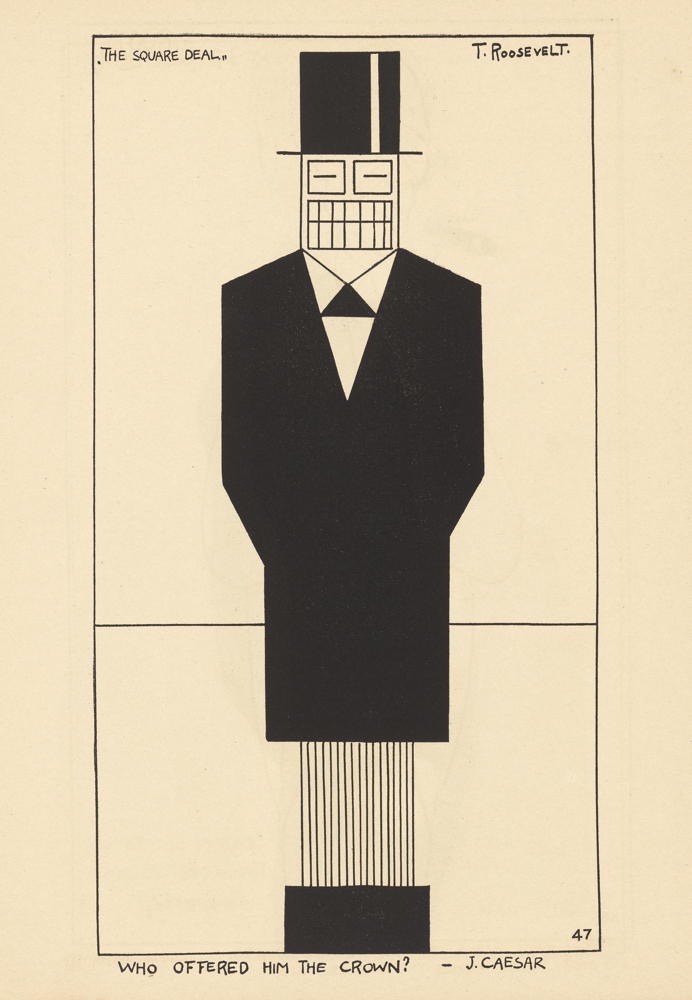
Carlo de Fornaro:
Theodore Roosevelt
(1911)
"Those never nominated also receive a prize."
Be especially careful about what you lust after, for these tend to turn into Comeuppances. Our incumbent has lusted after being awarded a Nobel Peace Prize, but has always been thwarted. Though he insists he ended eight wars in the first few months of his second term, maybe ten, depending on who’s counting, the Nobel Prize Committee still hasn’t considered him a serious candidate. One woman who earned her prize the old-fashioned way reportedly gave our incumbent her prize to gain favor with him, a favor that was won but which just as quickly evaporated as he failed to reward her with what she’d probably wanted. The latest winner was announced this week, which prompted a raft of fresh grousing from the general direction of the bathroom just off the Oval Office. He went so far as to declare sanctions against this year’s winner’s former employer, officially treating the International Court of Justice in The Hague as if it were a terrorist organization because it spoke of bringing an actual terrorist to justice. Between all his pouting and touting, Our Incumbent remains unnominated for the one prize he seems to lust after most. This failure to gain his heart’s desire seems like the perfect Comeuppance for him.
And so it might go.
Self-Generating
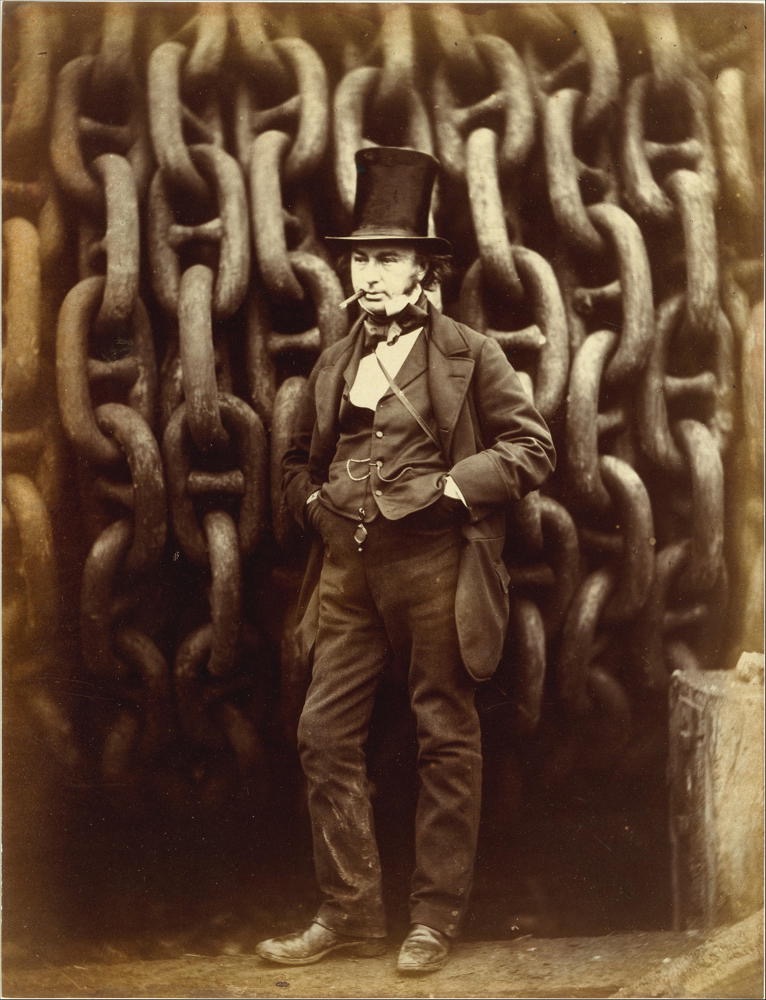
Robert Howlett:
Isambard Kingdom Brunel Standing Before the Launching Chains of the Great Eastern
(1857)
"Maybe there's always a Comeuppance."
The term Comeuppance suggests two players, one receiving and one delivering, but since I started this series three weeks ago, I’ve noticed that some Comeuppances seem more like the solo variety. At first, this felt like pounding one’s head against that proverbial brick wall, but this kind of Comeuppance doesn’t quite work like that. Some activities just seem to have some Comeuppance built right into them, as if the Comeuppance was an integral part of the experience, cause and effect so tightly coupled as to seem inseparable. I was reminded of this this morning when an old friend texted me that my email inbox reported itself full when he tried to drop me a note. Emails have always been my foil. I have not yet learned how to elegantly manage them, so they tend to manage me, and rather hostilely. I forever lose incoming mail, miss important messages, and get chastised by the sender. The same happens with voicemails and text messages, too; each silently builds a queue until it overwhelms the technology’s capacity to cope. Then an old friend or an upset creditor sends a note via another medium, and a self-inflicted Comeuppance begins.
I have received innumerable lectures on the proper ways to manage my message queues.
Weekly Writing Summary For The Week Ending 10/08/2026
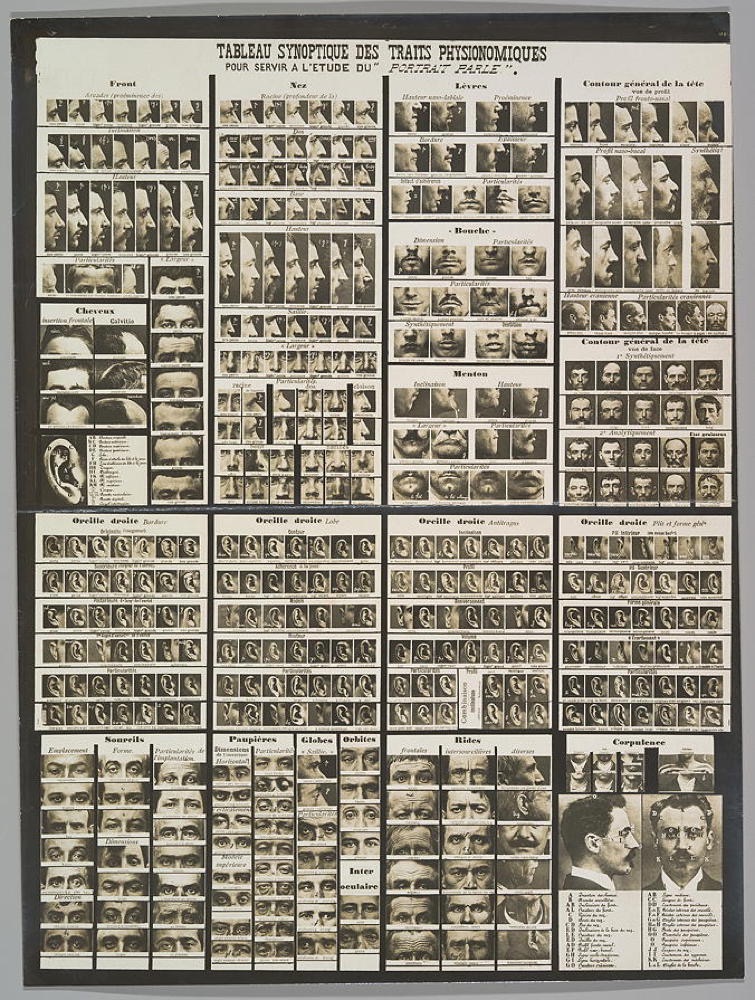
Alphonse Bertillon:
Tableau synoptic des traits physionomiques: pour servir a l'étude du "portrait parlé"
[Synoptic table of physiognomic traits: to be used in the study of the "spoken portrait"]
(c. 1909)
This week’s Comeuppance essays move through the series’s darker chambers, tracing the distance between how I imagine justice, mercy, and civic virtue and how I actually practice them. I offer no comfortable resolutions, only clearer maps of the territory where Comeuppance accumulates.
Thank you for following along!
ThePeople
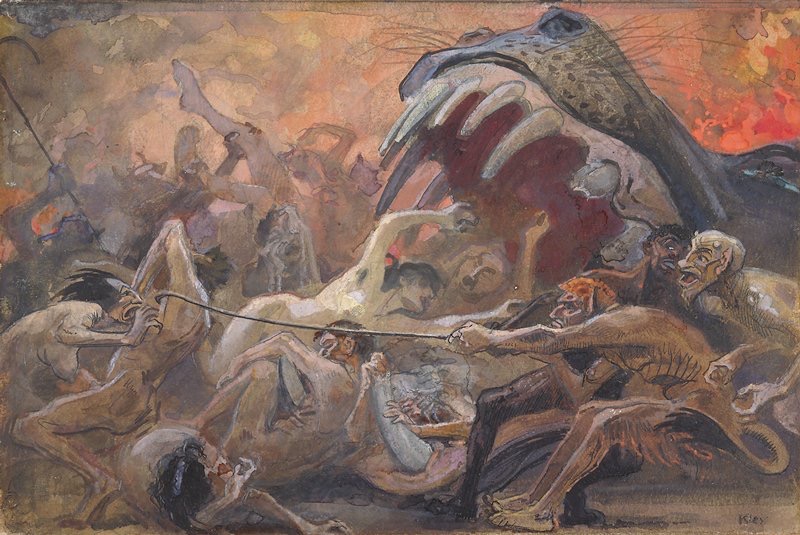
Heinrich Kley:
Demons Pulling People into the Jaws of Hell
(c. 1910–15)
"We nonetheless insist that this behavior represents a more perfect union."
The Founders wisely designated the supreme law of the land they founded as being of and by “We, ThePeople.” Individuals had previously signed the Declaration of Independence, but our Constitution addressed its contents in the name of a more amorphous presence. ThePeople suggests a majority opinion without hinting at any underlying dissent, though we know from personal experience that every law, every statute, was the product of disagreement and debate before ever being approved. Agreement was never the native state of even these United States. We rely on this studied misrepresentation to project a necessary sense of union. Dissent might better describe the advocacy we practice, though every minority, no matter how marginal their actual position, insists that their parochial perspective most accurately represents the opinion and will of We, ThePeople, echoing our founding and preserving ambiguity.
We, ThePeople probably serves as our most enduring virtue signal, for it designates the side where righteousness exclusively resides.
Stalker
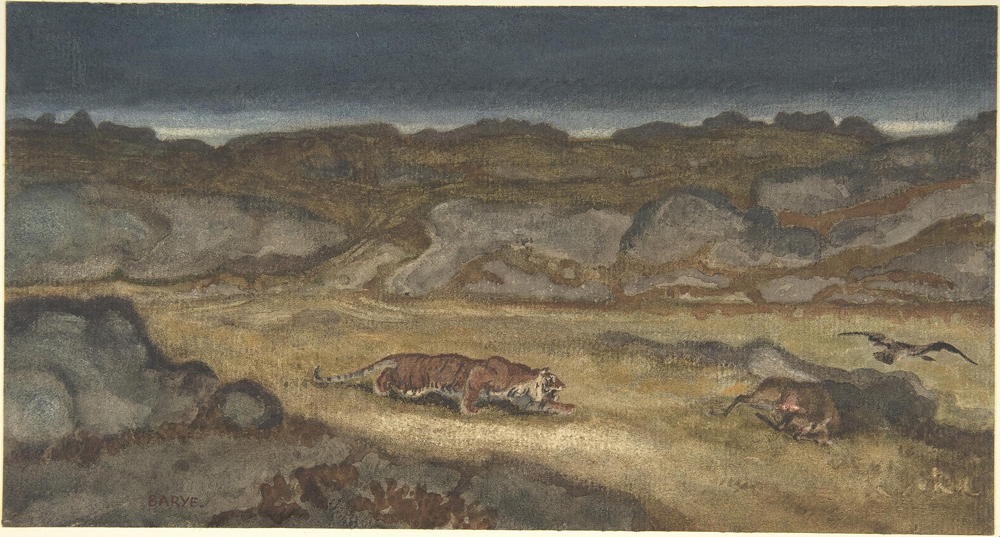
Antoine-Louis Barye:
Tiger Stalking Prey
(c. 1850)
"I, of course, know much better at least half the time…"
I hadn’t a clue I was a Stalker, even though The Muse had been steadfastly attempting to clue me in by complaining about my apparent obsession. No, I did not feel especially compelled to write about our incumbent. I honestly felt that I was performing a necessary public service by being a vocal critic. Hadn’t God given me the gift of criticism? What was I supposed to do with that gift, if not exercise it? Yes, vehemently at times, perhaps in tones that might have come across as overly strident. Had he not richly deserved every critique I dealt? Did I not still have the right to say whatever I damned well pleased, even if I also carried an equal and opposite obligation to not always say whatever I pleased in public?
I see now that I had been Stalking, though I still strongly feel that my effort was necessary and well within my rights, since our incumbent had been a public menace.
Paranoid
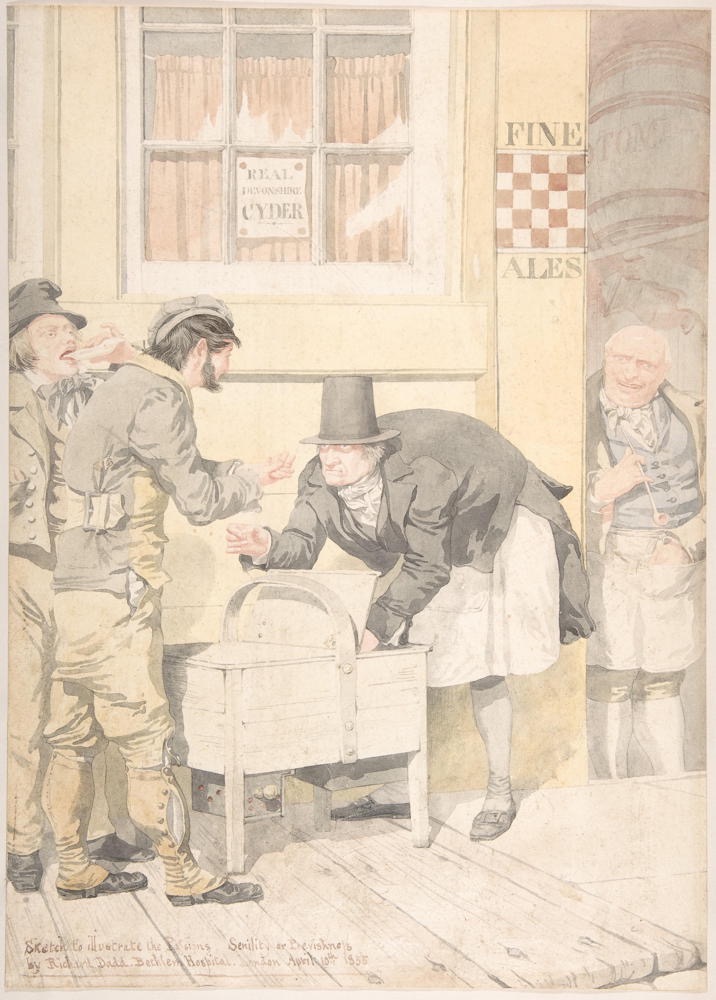
Richard Dadd:
Sketch to Illustrate the Passions—Senility or Peevishness
(1855)
"I fear we're just investing in an impending Comeuppance instead."
If I asked you to name the most likely outcome from a country being named the most prosperous in the history of the world, I doubt that you would reply, “Paranoia,” yet that’s what we find. We are that country. We could have been recognized as the most generous or the most peaceful in the history of this world, but we aren’t. We aren’t, and we’re slipping further into Paranoia. Congress allocates around 50% of our annual discretionary budget to Defense, though it comprises only about 15% of our overall budget. We spend more on mandatory spending like Social Security, Medicare, and Medicaid, but we also complain much louder about those choices. In some ways, our Federal budget mirrors our society’s Paranoia: we focus the bulk of our spending on ensuring our future security, yet we remain perhaps the most Paranoid country in the history of this world.
What justifies such a self-image?
Mercy
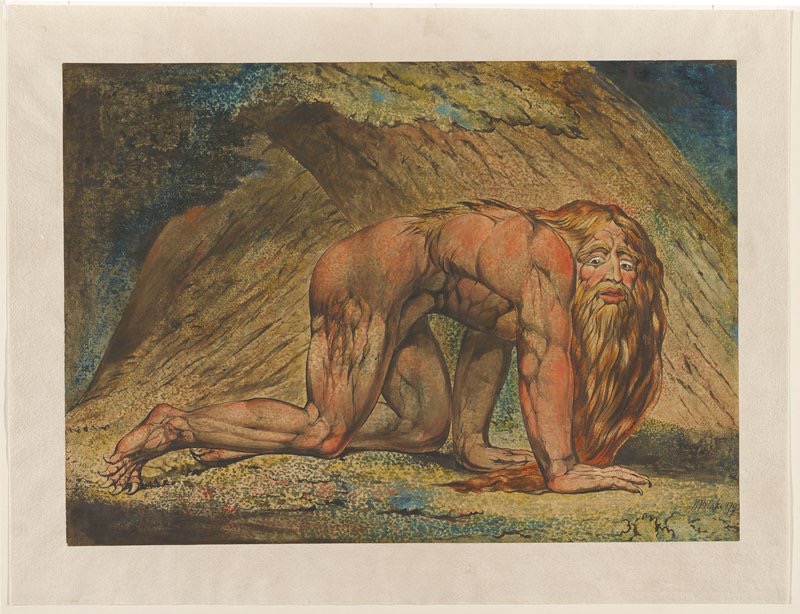
William Blake:
Nebuchadnezzar
(1795)
God stripped the king of his realm and drove him to “eat grass as oxen, . . . his body . . . wet with the dew of heaven, till his hairs were grown like eagles’ feathers, and his nails like birds’ claws” (Daniel 4:33)
Yea, we all could use a little mercy now
I know we don’t deserve it, but we need it anyhow
-Mary Gauthier
Mercy might represent the most powerful Comeuppance available anywhere, any time, to anyone. It seems to be the absolute antithesis of Comeuppance, though, almost the exact opposite of what first comes to mind when the word Comeuppance comes to mind. I think of vengeance first: swift, terrible swords and harsh words. Mercy seems beside any cogent point at the point of final punishment. Yet the choice remains, whatever the infraction, whatever the sentence, to mete out Mercy instead. But doesn’t that behavior just encourage what Comeuppance intended to discourage? Perhaps. Therein lies a rub. Mercy cannot possibly be a transactional response to any infraction. It might be the very soul of relationality, intent on enhancing a sense of community, just when that was supposed to be beside any remaining point. When I considered whether or not I really wanted to become the monster I intended to punish, when wreaking Comeuppance, I might have been deeply considering taking Mercy on myself first, less an act of generosity than self-preservation. It might be that no punishment ever adequately fits any crime, especially any peacekeeper.
In theory, Comeuppance seems quite obvious.
Justice
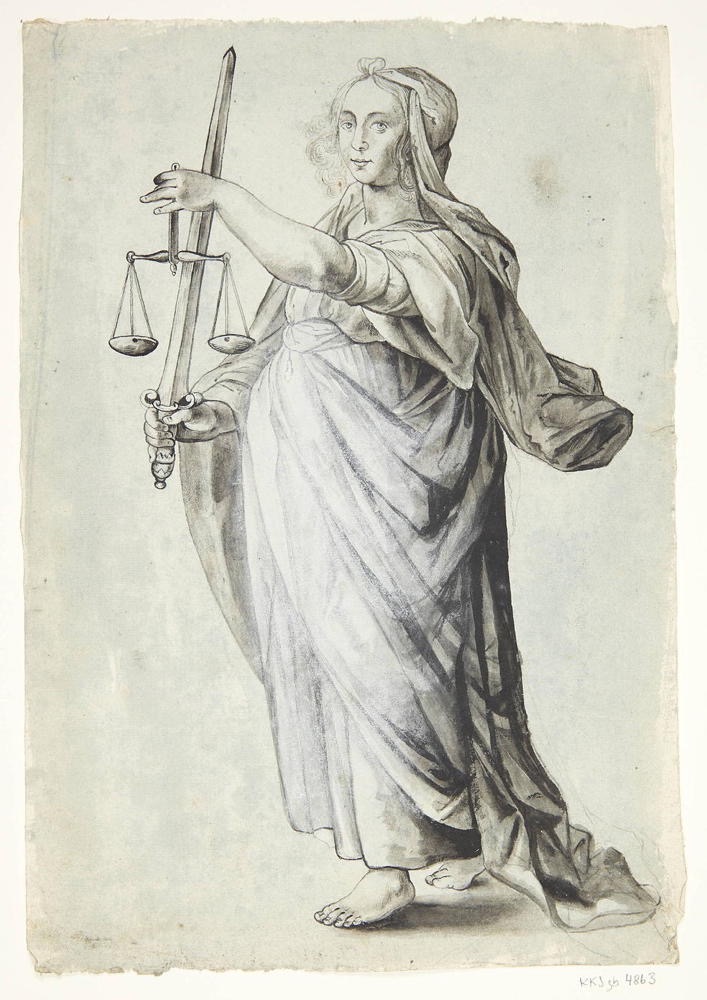
Unknown Artist, after Jacob Matham:
Justice
(17th Century)
"…just a self-proclaimed son of a bitch."
Justice serves as a secular society’s primary religion, for it promotes fairness, ethics, and even morals. It properly seeks to treat everyone fairly and as impartially as humanly possible. It performs retribution when necessary, but also seeks to restore and repair when harm occurs. In any society proclaiming freedom of or from religion, such as ours, Justice might well serve as the bastion defending any individual religion from persecution. In this second- or third-degree paradox, the secular protects the sacred. In an instance where a religious belief attempts to overtake a civil society, which one might reasonably argue describes the MAGA desecration our incumbent has attempted, Justice might reasonably be the first focus of insurrectionists because they might believe it properly threatens any other sacred movement’s dominance. Those who firmly believe, for instance, that these United States should properly be ruled as a White Christian Nation stand opposed to the secular religion that each formal religion’s practice utterly depends upon, be it Christian, Muslim, Taoist, or otherwise. White Christian Nationalists undermine their own insistences without recognizing they do.
Of all the insults visited upon our society by our incumbent and his minions, the assault on our sacred secular religion has proven the most terrifying.
Trespass
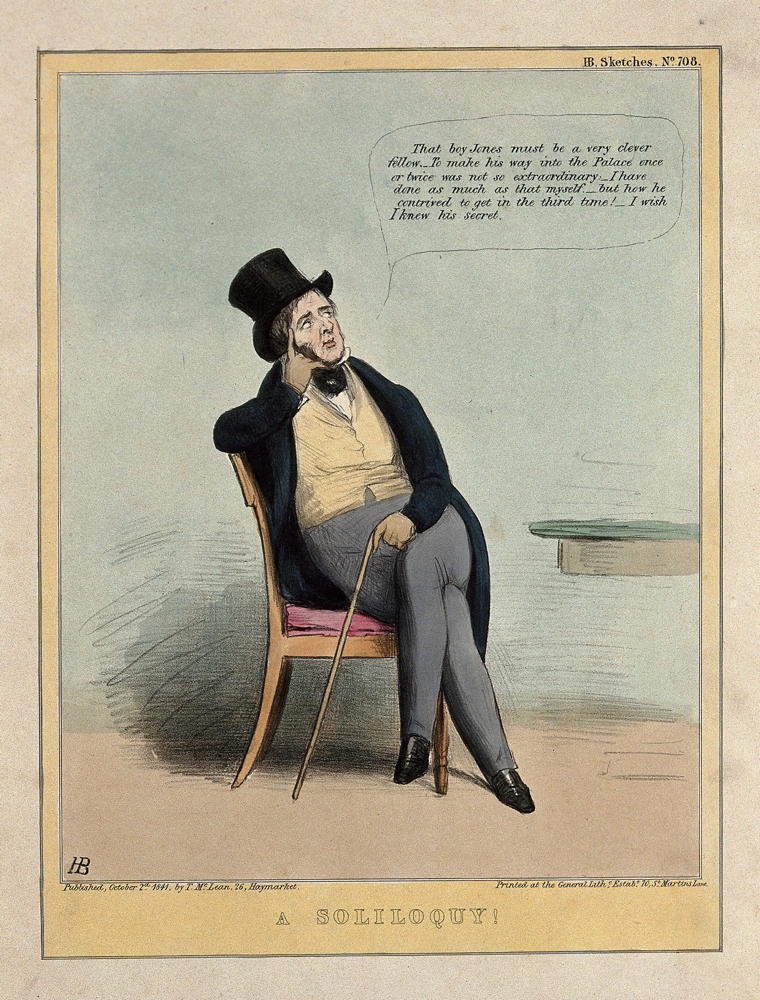
John Doyle (H.B.):
Lord Melbourne speaks his thoughts aloud. Coloured lithograph
(1841)
"…I will never know what is or isn't."
Of all the civil and criminal infractions, Trespass seems the most passive. One need not prove motive to bring charges against a trespasser. Nor does anyone need to prove physical damage, for the very act of presence serves as adequate evidence of the commission. If I “get in your space,” I might violate your subtlest rights, the rights to control your space. The Lord’s Prayer asks for forgiveness for any trespasses committed against us as well as those we might have committed against others, challenging more vengeful notions of jurisprudence, for any decent Comeuppance might well stem from any odd trespass both committed and unforgiven. Comeuppance seems unjustified in those cases where the Trespass was contritely forgiven. “No harm, no foul,” in the popular jargon. This convention suggests that jurisprudence might first demand an absence of forgiveness and, perhaps, at least a little taste for vengeance. Of course, many have characterized this universe as natively dog-eat-dog, with the wronged perhaps perfectly or even imperfectly, but nonetheless justified in pursuing redress to the extent any court might grant it.
I am eventually forced to ask myself if I really intend to encourage this dog-eat-dog nature by actively engaging in it.
Weekly Writing Summary For The Week Ending 10/01/2026
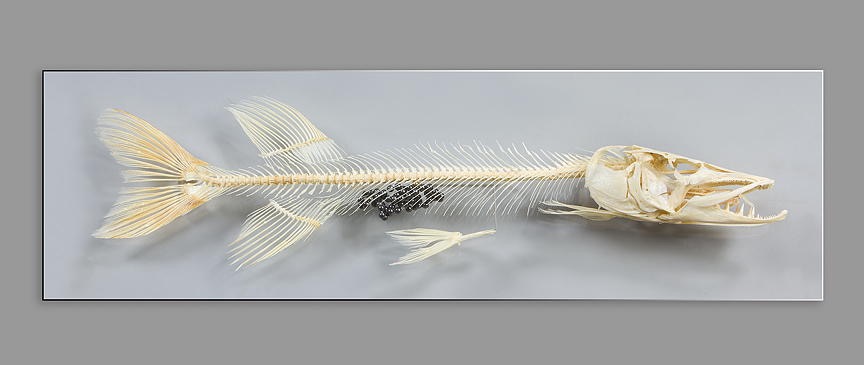
Ted Noten:
The Revenge of the Pearl Necklace (2009 )
Zuiderzee Museum, Netherlands - CC BY-SA.
This first full week of Comeuppance dispatches established the series’ central argument and its range. The writing moved from the hollow irrelevance of unchecked power, through the mechanisms of self-destruction, escalation, and class entitlement, to the quiet devastation of the deep influence of what was never experienced at all. The series opened looking outward at a political spectacle and ended looking inward at a universal, inescapable condition. That arc, from the overt to the tacit, from the incumbent’s Comeuppance to everyone’s, may be the series’s most important early discovery.
Thank you for following along!
TacitComeuppance
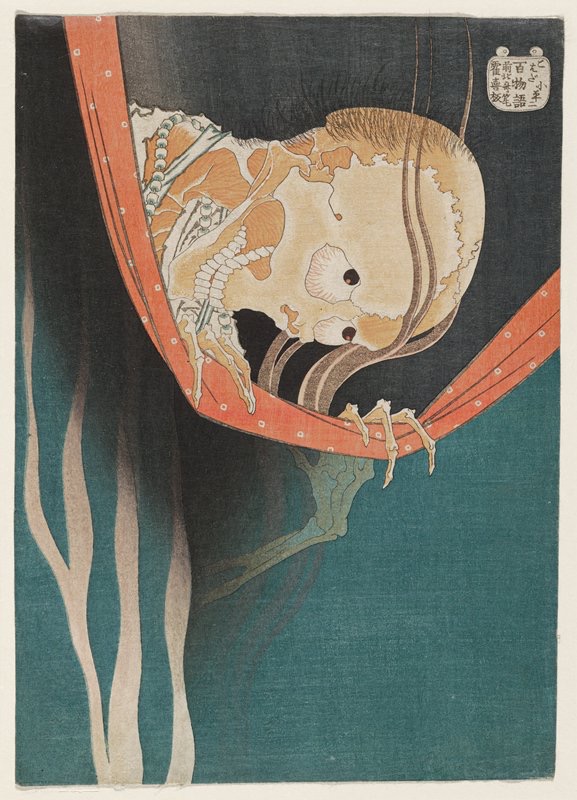
Katsushika Hokusai 葛飾 北斎, Publisher: Tsuruya Kiemon
The Ghost of Kohada Koheiji
(c. 1831–32)
"…those burdens must remain as tacit as any primary experience never chosen."
I usually think of a Comeuppance as an overt event, an active, observable verb, one of those actions often classified as equal and opposite, a tangible result. But in this story, I want to consider a separate and more common kind of Comeuppance, the kind that, once I mention it, might seem shockingly familiar: The TacitComeuppance. These occur as a result of choices or, perhaps, of events. Because I chose to go West, I tacitly forfeited every opportunity to experience East. That eastern extent of my former possibility, therefore, became forever inaccessible to me. Whether I forewent great good fortune or avoided catastrophe must, then, remain forever unknowable to me, except, of course, through imagination. That road not taken might well take on a mythical magnitude, a sense that it must have been beneficence foregone or a curse, but nonetheless lost.
I experience these as tacit events, if tacit doesn’t render them too indistinct to count as events.
Good For A Goose

Comeuppance (29)
Decency (90)
Decency Unscrolling (1)
EndDays (92)
Exiled (90)
Fambly (93)
FollowingChapters (93)
Grace (92)
Humor (2)
iAlogue (1)
Letters to the Editor (1)
NextWorld (91)
Personal (18)
Prosperity (94)
Steam Festival (4)
Unscrolling (89)
Vaporized (6)
Work (16)
September 2026
August 2026
July 2026
June 2026
May 2026
April 2026
March 2026
February 2026
January 2026
December 2025
November 2025
October 2025
September 2025
August 2025
July 2025
June 2025
May 2025
April 2025
March 2025
February 2025
January 2025
December 2024
November 2024
October 2024
September 2024
August 2024
July 2024
June 2024
May 2024
April 2024
March 2024
November 2006
October 2006
September 2006
August 2006
July 2006
June 2006
May 2006
April 2006
March 2006
February 2006
January 2006